
_edited.png)
COMMUNITY INTEGRATION SERVICES PROVIDER IN VERMONT
- Fatumata Kaba
- 6 days ago
- 3 min read

FOSTERING INDEPENDENCE, INCLUSION, AND SOCIAL PARTICIPATION THROUGH ENGAGEMENT IN MEANINGFUL COMMUNITY EXPERIENCES
Community Integration Services in Vermont support individuals with disabilities or acquired conditions in participating more fully in their communities. These services are designed to reduce isolation, build natural supports, and increase confidence by helping individuals explore and engage in community life based on their interests, goals, and abilities. Community Integration is covered under Vermont’s Medicaid Home and Community-Based Services (HCBS) Waivers and is authorized through an Individual Support Plan (ISP). Oversight is provided by the Department of Disabilities, Aging and Independent Living (DAIL), in collaboration with Designated Agencies (DAs) and Specialized Services Agencies (SSAs).
1. GOVERNING AGENCIES
Agency: Vermont Department of Disabilities, Aging and Independent Living (DAIL)
Role: Authorizes and regulates community integration services under HCBS Waivers.
Agency: Department of Vermont Health Access (DVHA)
Role: Manages Medicaid provider enrollment and reimbursement.
Agency: Designated Agencies (DAs) / Specialized Services Agencies (SSAs)
Role: Coordinate ISP development, authorize service delivery, and oversee quality and compliance.
2. COMMUNITY INTEGRATION SERVICES OVERVIEW
Community Integration Services help individuals connect with their communities through structured, supported, and person-centered engagement. Activities are designed to support skill development, relationship building, and meaningful participation.
Examples of covered services:
Accompanied access to libraries, recreation centers, or volunteer sites
Support to attend community classes or interest groups
Peer-to-peer engagement and social skill development
Participation in clubs, civic groups, or faith-based communities
Travel training for public transportation
Support in pursuing hobbies, cultural events, or wellness activities
Building informal support networks (friends, neighbors, mentors)
Services must be aligned with the individual’s ISP goals and emphasize integration, not facility-based care or segregation.
3. LICENSING & PROVIDER APPROVAL REQUIREMENTS
Prerequisites:
Register your business with the Vermont Secretary of State
Obtain EIN and Type 2 NPI
Contract with a Designated Agency or SSA for waiver service delivery
Enroll with DVHA (if billing Medicaid directly)
Maintain general liability insurance and background screening protocols
Develop a Community Integration Services Policy & Procedure Manual
Hire and train staff in person-centered approaches and community safety
4. VERMONT PROVIDER ENROLLMENT PROCESS
Step 1: Register entity, obtain EIN and NPI
Step 2: Apply to serve as a contracted provider through a DA or SSA
Step 3: Complete DVHA Medicaid enrollment (if applicable)
Step 4: Submit staff credentials, training plans, and Policy Manual
Step 5: Pass background checks and orientation requirements
Step 6: Begin providing services upon ISP authorization
5. REQUIRED DOCUMENTATION
EIN, NPI, Articles of Incorporation
DA/SSA contract or DAIL approval
Medicaid enrollment confirmation (if billing directly)
Community Integration Services Policy & Procedure Manual, including:
Service planning and activity risk assessments
Staff-to-individual ratio and supervision guidelines
Documentation and billing protocols
Emergency preparedness and community incident response
HIPAA, client rights, and consent procedures
Cultural sensitivity and anti-isolation best practices
Transportation safety and public interaction guidelines
6. STAFFING REQUIREMENTS
Role: Community Support Worker / Integration Specialist
Requirements:
High school diploma or equivalent (college preferred)
Experience supporting individuals with disabilities
Background check clearance
CPR/First Aid certification (recommended)
Optional Role: Program Coordinator
Responsibilities: Oversee service planning, training, and quality monitoring
All staff must complete:
Orientation on person-centered thinking and ISP goals
HIPAA and client rights training
Transportation and community safety procedures
Incident reporting and emergency response training
Annual skills refreshers and supervision sessions
7. MEDICAID WAIVER PROGRAMS
Community Integration is a covered service under:
Developmental Disabilities Services Waiver (DDSW) – Core habilitative support for individuals with I/DD
Brain Injury Program – Rebuilding social and community skills post-injury
Choices for Care (CFC) Waiver – For older adults seeking engagement and wellness
Children’s High-Tech / Transition Programs – For building independence before adulthood
All services must be documented in the ISP, goal-oriented, and delivered in inclusive, non-segregated settings.
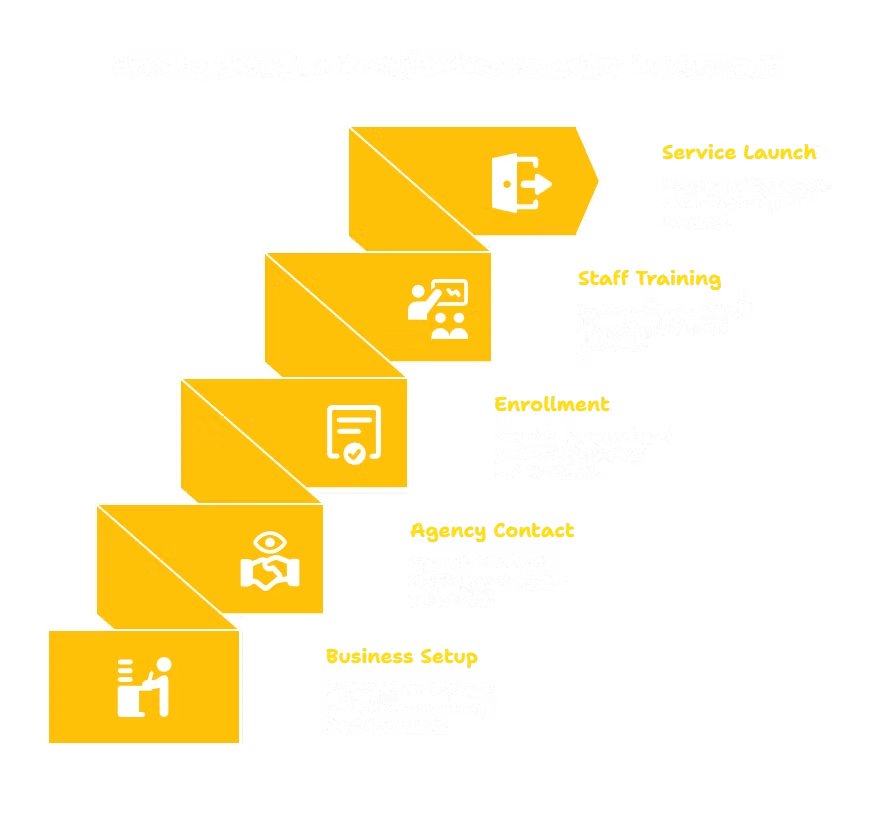
8. TIMELINE TO LAUNCH
Phase: Business Formation & Policy Manual Creation
Timeline: 2–3 weeks
Phase: DA/SSA Contracting & Medicaid Enrollment
Timeline: 1–2 months
Phase: Staff Hiring & Training
Timeline: 2–4 weeks
Phase: Service Launch
Timeline: Upon participant referral and ISP authorization
9. CONTACT INFORMATION
Vermont Department of Disabilities, Aging and Independent Living (DAIL)
Website: https://dail.vermont.gov
Department of Vermont Health Access (DVHA)
Website: https://dvha.vermont.gov
Designated Agencies Directory

WAIVER CONSULTING GROUP’S START-UP ASSISTANCE SERVICE — VERMONT COMMUNITY INTEGRATION PROVIDER
WCG supports providers in creating person-driven Community Integration Services that meet waiver standards and promote lasting connections between individuals and their communities.
Scope of Work:
DA/SSA and DVHA enrollment guidance
Community Integration Policy & Procedure Manual development
ISP-aligned goal tracking and progress documentation
Activity risk assessments and emergency response tools
HIPAA, incident reporting, and grievance compliance materials
Staff onboarding and person-centered training guides
Our Client Portal offers a wealth of resources that you can explore related to various programs and state requirements.


Comments