Why Ohio Behavioral Health Medicaid Applications Get Returned (Accreditation, OhioMHAS, Then Enrollment)
By Fatumata Kaba · 2026-07-02 · 5 min read
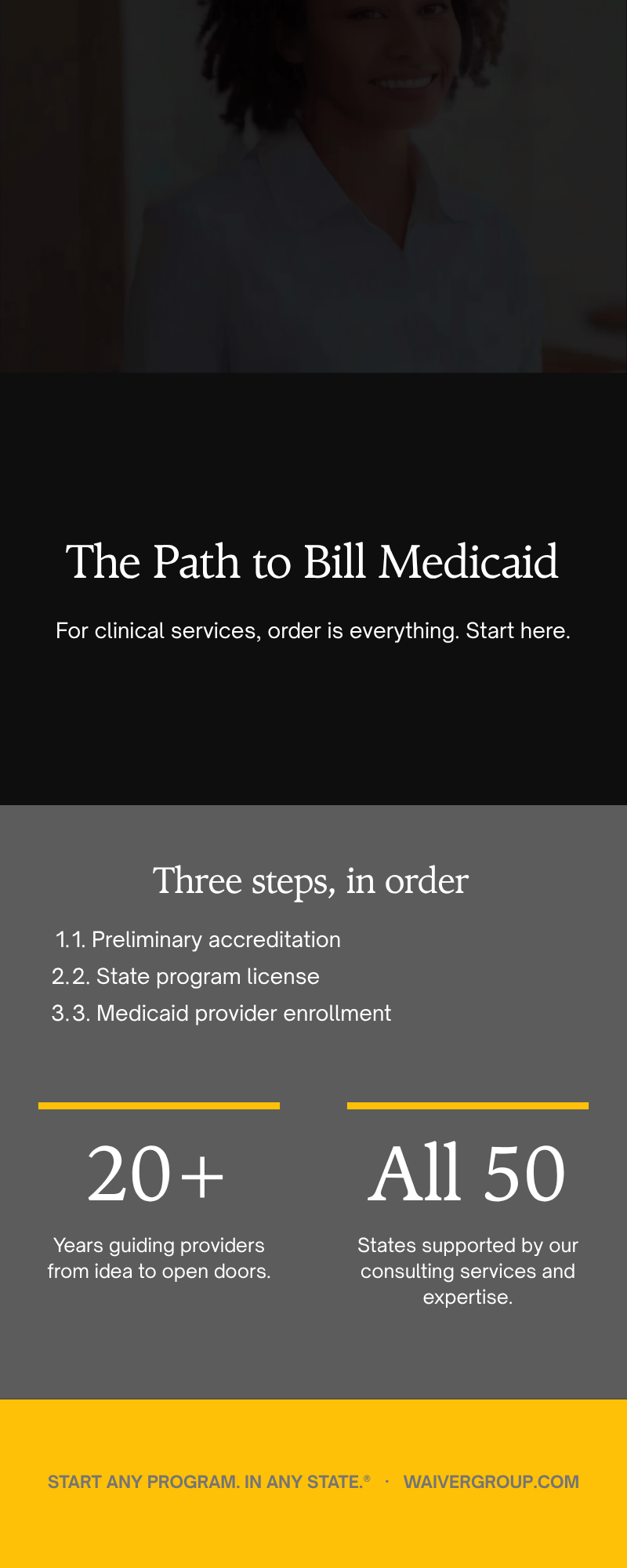
If your Ohio behavioral health Medicaid application is being returned by state reviewers, the root cause is rarely a clerical error; it is almost always a failure to adhere to the strict sequential dependency required by the state. Ohio operates a tiered regulatory hierarchy where credentials must be built upon one another in a precise, non-negotiable order: national accreditation, then OhioMHAS certification, and finally, Ohio Medicaid enrollment.
Understanding this dependency is the difference between a streamlined launch and a months-long cycle of rejected applications and administrative frustration. For new behavioral health agencies in Ohio, failing to respect this sequence means the state has no legal pathway to process your paperwork, resulting in inevitable denials.
The Regulatory Hierarchy: Why Sequencing Matters in Ohio
The Ohio Department of Mental Health and Addiction Services (OhioMHAS) and the Ohio Department of Medicaid (ODM) utilize a "deemed status" framework to streamline oversight, but this framework requires that providers secure their foundational credentials first. Each step of the process serves as a prerequisite for the next, acting as a gatekeeper for the subsequent application.
When an agency attempts to enroll in the Provider Network Management (PNM) module before securing OhioMHAS certification, the system lacks the necessary verified data to validate the agency’s eligibility. Because the state’s systems are interconnected, a missing link at the start of the chain renders all subsequent efforts futile. Approaching these agencies out of order effectively forces state reviewers to pause your application because they cannot verify services that have not yet been legally sanctioned under the Ohio Administrative Code.
Step One: Securing National Accreditation
Since October 3, 2023, the regulatory landscape in Ohio has shifted, placing national accreditation at the forefront of the provider startup process. New behavioral health providers are now required to obtain national accreditation from recognized bodies such as The Joint Commission, CARF, COA, or DNV before they can successfully petition for OhioMHAS certification.
Accreditation acts as the quality assurance backbone for your organization. The policies, procedures, and clinical workflows you develop during the accreditation process are not merely for the accrediting body; they are the very documents required to satisfy OhioMHAS requirements. By aligning your internal operations with these national standards from the outset, you create a "deemed status" eligibility that simplifies your subsequent state certification efforts.
- Select an approved accrediting body (The Joint Commission, CARF, COA, or DNV).
- Develop clinical policies that meet both national standards and Ohio administrative rules.
- Undergo the site survey process to obtain your official accreditation certificate.
- Maintain the accreditation status, as it serves as the foundation for your OhioMHAS application.
Step Two: Navigating the OhioMHAS Certification Process
Once your national accreditation is secured, you may formally apply for OhioMHAS certification. This certification is the official state recognition that your agency is authorized to provide behavioral health services. Without this state-level certification, you are not authorized to bill Medicaid, and the Ohio Medicaid system will not recognize your provider status.
The OhioMHAS application relies heavily on the documentation you generated for your accreditation. Reviewers will verify that your agency meets the specific service-level requirements mandated by the state. Because you have already completed the accreditation phase, you can provide the state with evidence of "deemed status," which often expedites the review process, provided that all organizational and clinical documentation is submitted correctly the first time.
Step Three: Enrolling in Ohio Medicaid via the PNM Module
Only after you have obtained your OhioMHAS certification can you effectively move into the final phase: Medicaid enrollment. This takes place through the Ohio Department of Medicaid’s Provider Network Management (PNM) module. This portal serves as the centralized hub for all provider enrollment, credentialing, and managed care contract management.
If you enter the PNM module before your OhioMHAS certification is active and updated in the state's internal database, your application will likely stall. The PNM system is designed to cross-reference your business information with the OhioMHAS registry. If the two do not match or if the certification is absent, the system will flag the application for return. Once your certification is officially reflected in the system, you can finalize your enrollment, establish your Medicaid provider ID, and begin the process of contracting with Ohio’s Managed Care Organizations (MCOs).
Managing Managed Care Contracts
Following your successful enrollment in the Ohio Medicaid program, the next operational objective is to establish contracts with the various Managed Care Organizations (MCOs) operating within the state. These plans handle the vast majority of behavioral health reimbursements in Ohio. It is important to note that MCOs generally will not grant a contract to a provider that has not completed the triad of requirements: accreditation, OhioMHAS certification, and Medicaid enrollment.
Administrators should view these MCO contracts as the final layer of the approval process. While the state handles the certification and enrollment, the MCOs represent your actual billing network. Maintaining your accreditation and OhioMHAS status is essential; if these lapse, your managed care contracts may be terminated, effectively cutting off your ability to bill for services.
Frequently Asked Questions
Can I apply for OhioMHAS certification while waiting for my national accreditation survey?
Generally, no. The current regulatory environment requires proof of accreditation to satisfy the state's prerequisites. Applying without the finalized accreditation certificate often leads to a returned application because the state requires the verified "deemed status" at the time of submission.
Does the Provider Network Management (PNM) module automatically update when I get certified?
While the systems are integrated, it is vital to monitor your status in the PNM module. Ensure that your OhioMHAS certification is clearly reflected in your profile before attempting to finalize your Medicaid enrollment, as discrepancies between these systems are a common cause for processing delays.
Is accreditation required for all behavioral health services in Ohio?
New behavioral health providers must hold national accreditation from a recognized body to meet the current standards set forth by OhioMHAS. It is the foundational requirement for the "deemed status" process, which is the standard path for licensure and subsequent Medicaid enrollment in the state.
Key takeaway: In Ohio, the order is accreditation, then OhioMHAS certification, then Ohio Medicaid enrollment through PNM. Out of order is the top reason applications get returned.
Last verified: February 2024. The information provided in this article is for educational purposes and does not constitute legal or professional advice. Requirements for behavioral health programs are subject to change. Always consult the official OhioMHAS and Ohio Department of Medicaid portals for the most current rules and regulations.