What to Do When Your Medicaid Waiver Application Is Denied
By Fatumata Kaba · 2026-06-24 · 5 min read
Receiving a Medicaid waiver application denial is a common hurdle in the provider enrollment process, but it is rarely a final decision. By treating a denial notice as a strategic roadmap rather than a permanent rejection, administrators can identify specific compliance gaps and systematically correct their application to meet state requirements.
When a state denies a Medicaid waiver or provider application as incomplete, it almost always indicates that specific documentation or administrative criteria were unmet, rather than a fundamental failure of the proposed program. The path forward requires a calm, methodical audit of the submission to address the deficiencies identified by the state’s certification or quality assurance units.
Protect Your Response Window and Administrative Deadlines
The most critical step following the receipt of a denial is securing your position within the state’s regulatory timeline. Most states enforce strict deadlines for submitting supplemental information or filing an official appeal, and failing to meet these dates can result in the permanent closure of your application, necessitating a completely new submission.
Carefully review the notice to determine the exact date by which your response must be received. Note whether the state calculates this time in calendar days or business days. Create a project plan that works backward from this deadline, allowing time for gathering missing documents, internal review, and final submission. Treating the response deadline as an absolute priority is the primary way to maintain the momentum of your provider agency’s launch.
Audit the Official State Record
Reviewers act exclusively on the materials they have on file, not on the intent or the quality of the program you believe you presented. A common error among applicants is assuming the state reviewer saw the same documentation that exists in the agency’s master file. Discrepancies often arise from clerical errors, portal upload failures, or mislabeled documents during the initial submission process.
Request an immediate copy of the application currently on record with the state. By comparing this copy to your internal master file, you can pinpoint exactly what was received versus what was intended to be sent. Contact the specific certification or quality assurance unit responsible for the review to request an itemized list of deficiencies. Relying on their specific feedback is more productive than guessing which elements of your packet were flagged as insufficient.
How to Systematically Address Cited Deficiencies
Once you have obtained the list of missing or insufficient items, approach the resubmission as a professional audit response. The goal is to make the reviewer's job as easy as possible by providing a clean, organized, and direct answer to every cited concern. Do not include unnecessary information; focus strictly on the items identified as missing or non-compliant.
Structure your resubmission to correspond directly with the state's denial notice. If the state identified three specific deficiencies, your cover note should address those three items in the exact order they were listed. This mapping technique ensures that the reviewer can verify compliance without having to search through a large volume of previously submitted material.
- Create a clear, concise cover note that references the application ID and the specific notice date.
- Attach supplemental documentation as distinct, clearly labeled files or sections.
- Confirm that every signature, date, and required credential is present and current.
- Ensure all required background clearances are active and attached to the specific sections requested.
Verifying Technical Compliance and Signatures
Many denials are issued due to "technical incompleteness," which is often related to administrative oversight rather than program quality. A missing signature on a policy document, an expired background check, or a lack of documentation for specific site-safety standards can lead to an automatic denial from an automated state portal or a busy reviewer.
Before resubmitting, perform a final quality control check of the entire application package. Ensure that all organizational documents, such as Articles of Incorporation or tax identification records, match the exact legal name registered with the state. If the application requires a specific format for certifications—such as notarized affidavits or specific professional licensure verification—confirm that these meet the current regulatory requirements before uploading them into the state’s provider enrollment portal.
Maintaining Communication with State Agency Personnel
Establishing professional communication with the agency representative assigned to your application can provide clarity that written notices sometimes lack. While state agencies are often understaffed, they generally provide guidance if the request is specific, polite, and professional. Avoid asking generic questions; instead, ask for verification on specific document formats or regulatory citations mentioned in the denial letter.
Maintain a detailed log of all correspondence with the agency. Include the name of the representative you spoke with, the date and time of the interaction, and a brief summary of the guidance provided. This log serves as your evidence of compliance and diligent pursuit should any disputes arise regarding the completeness of your resubmission.
Frequently Asked Questions
What should I do if the state portal is down or preventing my resubmission?
If technical issues with the state’s provider enrollment portal prevent you from meeting your deadline, document the issue immediately. Take screenshots of error messages, note the time, and email the support help desk or your assigned reviewer. This creates a digital audit trail proving that you attempted to comply within the window.
Can I add new program details while addressing a denial?
It is generally best to focus only on correcting the deficiencies cited in the denial letter. Adding new, unrequested information may confuse the review process or introduce new elements that the reviewer did not ask for, potentially delaying the approval further.
Is it better to withdraw and start over if I am overwhelmed by the denial?
Withdrawing an application is rarely the recommended course of action if you are within the response window. It is almost always more efficient to provide the requested information to the existing application file than to restart the entire process, which would involve new background checks, new filing fees, and significantly longer waiting periods.
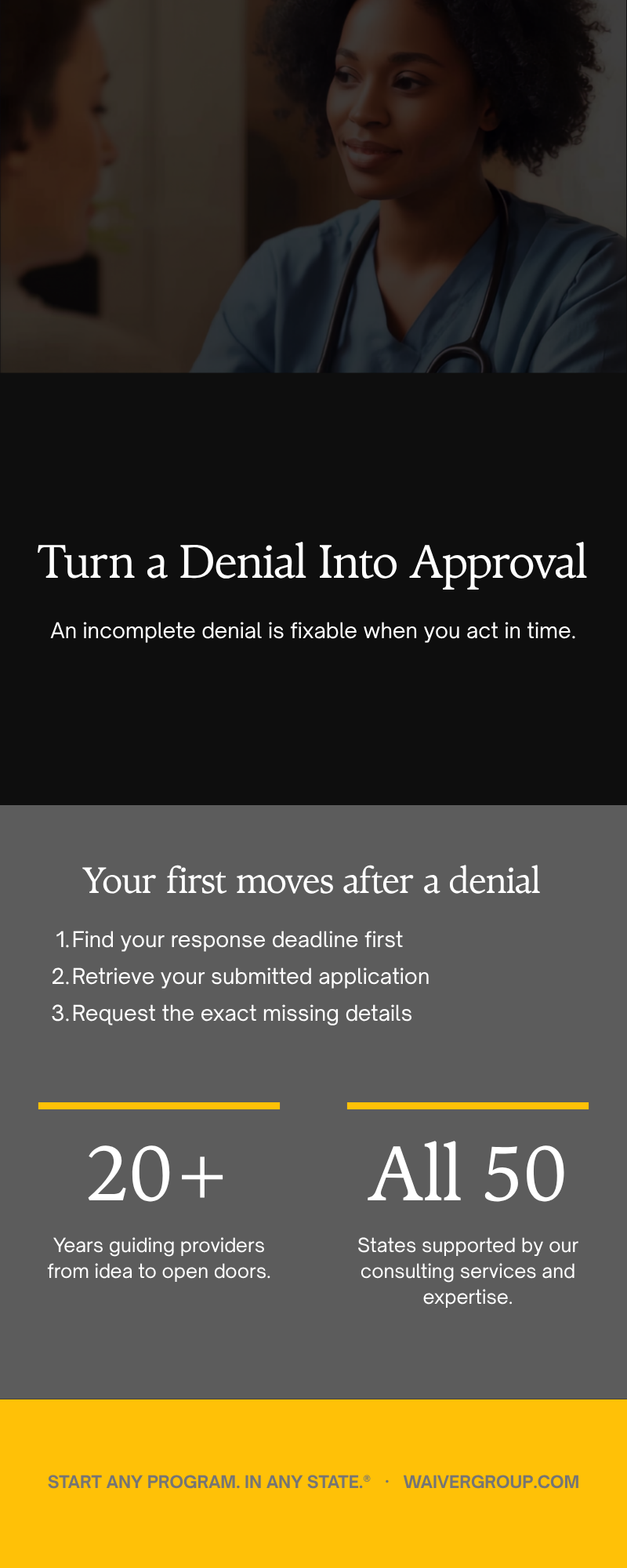
Key takeaway: Find your deadline, retrieve your filed application, ask exactly what was missing, and resubmit complete inside the window.
Start Any Program. In Any State.®
Ready to respond the right way? 20+ years clearing the path in all 50 states — we've done this before, and we'll do it for you. Book a video consultation at waivergroup.com/videoappointment, call 302.888.9172, or email [email protected].
Last verified: October 2023. This content is for informational purposes only and does not constitute legal or professional advice. Requirements for Medicaid waiver programs vary significantly by state and are subject to change. Always consult official state Medicaid agency guidelines or legal counsel regarding your specific provider application.