TRAUMATIC BRAIN INJURY (TBI) SERVICES PROVIDER IN MONTANA
By Fatumata Kaba · 2025-08-06 · 5 min read
Becoming a Traumatic Brain Injury (TBI) services provider in Montana is a critical step in addressing the specialized rehabilitation needs of individuals navigating the recovery process after a brain injury. By enrolling as a Medicaid Home and Community-Based Services (HCBS) provider, your agency facilitates essential life-improving services—ranging from cognitive therapy to behavioral support—that empower participants to regain independence and successfully integrate into their communities.
Understanding the Regulatory Landscape for TBI Services
The provision of TBI services in Montana is governed by a tripartite framework of oversight designed to ensure participant safety and the efficacy of rehabilitation efforts. The Montana Department of Public Health and Human Services (DPHHS) serves as the primary regulatory body, managing Medicaid waiver funding, overseeing provider enrollment, and conducting audits of service delivery. Their role is to ensure that all clinical and support services adhere strictly to state-defined Medicaid standards.
Complementary to the DPHHS, the Brain Injury Alliance of Montana (BIAMT) serves as a vital resource for providers, offering advocacy, training opportunities, and networking channels that enhance the quality of care within the state. At the federal level, the Centers for Medicare & Medicaid Services (CMS) provides the overarching regulatory structure, ensuring that Montana’s HCBS waivers align with federal mandates regarding person-centered planning, participant rights, and health protections. Compliance at these three levels is mandatory for any agency seeking to establish a sustainable TBI service operation.
Defining the Scope of TBI Rehabilitation and Support
TBI services are distinct from general disability services in their focus on neurological recovery and functional adaptation. Approved providers are responsible for delivering a spectrum of care that bridges the gap between clinical rehabilitation and everyday living. Services must be rendered in accordance with each participant's Individualized Service Plan (ISP), which dictates the frequency, intensity, and goals of the support provided.
The following services are integral to a comprehensive TBI care model:
- Rehabilitation Therapy: Direct physical, occupational, and speech therapy aimed at restoring mobility, motor skills, and communication.
- Cognitive Rehabilitation: Specialized interventions targeting memory loss, executive function deficits, and complex problem-solving challenges.
- Behavioral Support: Evidence-based strategies to assist participants in managing emotional shifts, impulse control, and adaptive coping mechanisms.
- Community Reintegration: Structured guidance to help individuals navigate social environments, secure vocational training, and maintain community participation.
- Personal Assistance: Providing the necessary daily care, health monitoring, and hygiene support to ensure the participant’s safety and well-being.
Navigating the Provider Enrollment and Readiness Review
The path to becoming a verified provider begins with formal registration and administrative readiness. Agencies must first secure their legal standing by registering the business with the Montana Secretary of State, obtaining an Employer Identification Number (EIN) from the IRS, and securing a Type 2 National Provider Identifier (NPI). This foundational documentation is essential for all subsequent Medicaid-related submissions.
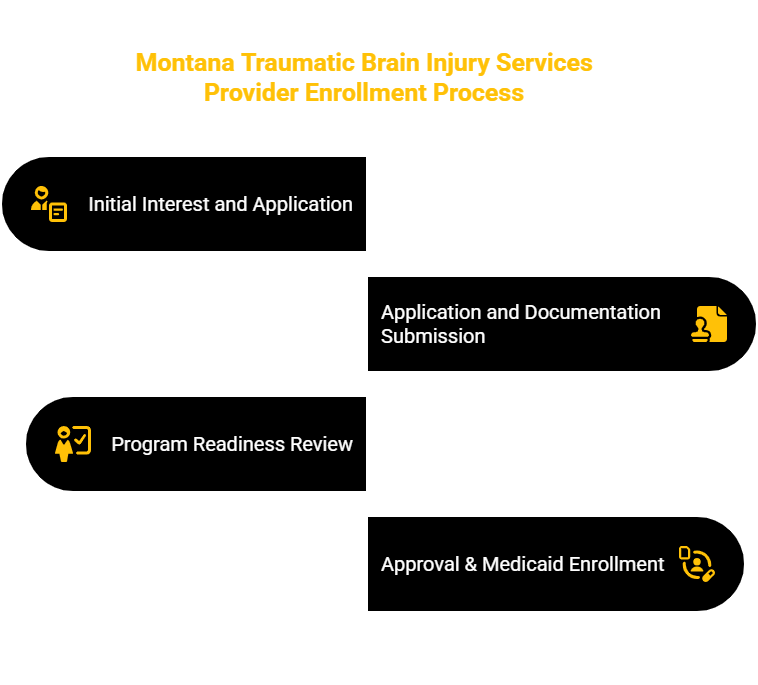
Once the business is legally established, the provider must navigate the Montana Medicaid Provider Enrollment Portal. This process involves a rigorous Program Readiness Review conducted by DPHHS. During this stage, regulators evaluate the provider’s infrastructure, including therapeutic methodologies, safety protocols, and the adequacy of staff qualifications. Approval is only granted once the agency demonstrates a clear ability to document services accurately, manage participant risks, and maintain compliance with Medicaid billing requirements.
Essential Policies and Documentation Standards
Maintaining a high standard of clinical and administrative documentation is a cornerstone of the Montana TBI program. Every provider is required to maintain a comprehensive Policy & Procedure Manual that serves as the operational blueprint for the organization. This document must be kept current and accessible for potential state audits at any time.
The manual must detail how the agency manages the following critical areas:
- Clinical Protocols: Specific guidelines for rehabilitation, cognitive support, and behavioral interventions.
- Risk Management: Clear procedures for emergency preparedness, crisis management, and safety protocols for home-based care.
- Compliance and Ethics: Established standards for HIPAA compliance, participant rights, grievance procedures, and incident reporting.
- Record Keeping: Documentation standards for tracking progress notes, billing accuracy, and verifying that all staff have completed mandatory credentialing and background checks.
Meeting Staffing and Credentialing Requirements
The efficacy of a TBI provider agency rests heavily on the qualifications of its clinical team. The Montana DPHHS requires that leadership and direct support staff meet specific educational and experiential benchmarks. For example, a TBI Program Director must possess at least a Master’s degree in rehabilitation, healthcare, or a related field, supplemented by documented supervisory experience and specialized training in brain injury care.
Clinical roles, such as Physical, Occupational, and Speech Therapists, require active state licensure and professional certifications. Behavioral Support Specialists must demonstrate expertise in behavioral health or psychology with a specific focus on brain injury rehabilitation. Furthermore, all personnel—regardless of their specific role—must undergo standardized training in TBI-specific care, crisis intervention, behavioral management, and HIPAA privacy regulations to ensure a uniform standard of care across the organization.
Projecting the Timeline for Service Launch
Launching a TBI service program is a multi-phased endeavor that requires significant lead time for compliance and infrastructure development. The initial phase—business formation and compliance preparation—typically spans one to two months. This is followed by a two- to three-month period dedicated to intensive staff hiring, credentialing, and finalization of internal program protocols.
The most critical phase involves the Medicaid Provider Enrollment and Readiness Review, which usually takes 60 to 90 days to complete, depending on the accuracy of the submitted documentation. Following formal approval, agencies should allocate another 30 to 45 days for the final setup of Medicaid billing systems and the formal launch of services. Diligent adherence to these timelines is necessary to avoid delays in eligibility and potential service interruptions.
Frequently Asked Questions
What Medicaid waiver programs cover TBI services in Montana?
TBI services are supported through several programs, including the dedicated Traumatic Brain Injury (TBI) Waiver, the Big Sky Waiver (Aged and Disabled), the Comprehensive Waiver for Individuals with Developmental Disabilities, the Community Supports Waiver for Adults with Physical Disabilities, and the Children's Autism Waiver, where applicable.
What is the primary role of the DPHHS during the enrollment process?
The DPHHS acts as the regulatory authority that manages Medicaid waiver funding. They are responsible for reviewing provider applications, verifying credentials, conducting readiness reviews, and monitoring billing and service delivery compliance to ensure participant safety.
Are there ongoing training requirements for staff after hiring?
Yes, all staff must complete annual competency evaluations and ongoing professional development. This includes regular updates in TBI-specific rehabilitation techniques, crisis intervention training, and mandatory updates to HIPAA and participant rights education.
Key Takeaway: Successfully launching a TBI service provider agency in Montana requires a rigorous focus on regulatory alignment with DPHHS and CMS standards, a commitment to specialized clinical staff training, and the development of robust, audit-ready operational manuals. By systematically navigating the enrollment portal and ensuring all personnel meet the stringent credentialing requirements, agencies can provide the essential, person-centered support necessary for effective brain injury recovery.
Last verified: May 2024. This information is intended for educational purposes only and does not constitute legal or professional advice. Requirements for Medicaid providers are subject to change based on state and federal updates; always consult directly with the Montana Department of Public Health and Human Services (DPHHS) for the most current regulations.