TRANSPORTATION SERVICES PROVIDER IN WYOMING
By Fatumata Kaba · 2026-04-14 · 5 min read
ENSURING ACCESS TO ESSENTIAL SERVICES THROUGH SAFE, RELIABLE, AND MEDICAID-COVERED TRANSPORTATION SUPPORT
Transportation services in Wyoming serve as a vital link for individuals with disabilities, chronic health conditions, or aging-related limitations, enabling them to reach medical appointments, community programs, employment sites, and essential destinations. These services are a covered benefit under Wyoming Medicaid and the state’s Home and Community-Based Services (HCBS) waivers—including the Comprehensive Waiver, Supports Waiver, and the Community Choices Waiver (CCW)—provided that all services are explicitly tied to a participant’s Individualized Plan of Care (IPC) and align with their documented functional needs.
How Do Governing Agencies Regulate Transportation Services?
The delivery of Medicaid-funded transportation in Wyoming is managed through a collaborative framework involving multiple state entities. The Wyoming Department of Health, specifically the Division of Healthcare Financing and the Developmental Disabilities Division (DDD), holds the primary responsibility for defining transportation coverage policies, overseeing waiver regulations, and ensuring ongoing provider compliance. These agencies ensure that all transportation services remain cost-effective and meet the specific needs of waiver participants.
Medicaid Provider Services acts as the operational hub for enrollment, claims submission, and reimbursement, ensuring that providers are properly credentialed and paid for their services. Simultaneously, Case Management Agencies and Public Health Nursing (PHN) teams are responsible for assessing the individual participant’s needs. They ensure that transport is formally documented within the participant’s IPC, which serves as the authorization for any billable service. Furthermore, the Wyoming Department of Transportation (WYDOT) coordinates broader public transit regulations and manages the intersection between public transit and Medicaid non-emergency medical transportation (NEMT) brokers.
What Types of Transportation Services Are Covered?
Medicaid waiver transportation is designed to promote independence and social integration by removing barriers to mobility. Coverage is generally categorized into two primary forms: Non-Medical Transportation (NMT) and Non-Emergency Medical Transportation (NEMT). These services must be provided in the safest, most reliable manner possible, ensuring that the health and well-being of the participant are prioritized during every trip.
Covered transportation services include:
- Non-Medical Transportation (NMT): Providing rides to waiver-related community-based services, job sites, recreational programs, and educational activities.
- Non-Emergency Medical Transportation (NEMT): Facilitating access to essential healthcare, including doctor’s appointments, hospital visits, clinics, and therapy providers.
- Escort services: Authorized support provided by staff during transit for participants who require physical or behavioral assistance.
- Mileage reimbursement: A mechanism available for self-directed participants or families when formal transportation services are not utilized or available, provided it is pre-authorized.
What Are the Prerequisites for Provider Enrollment?
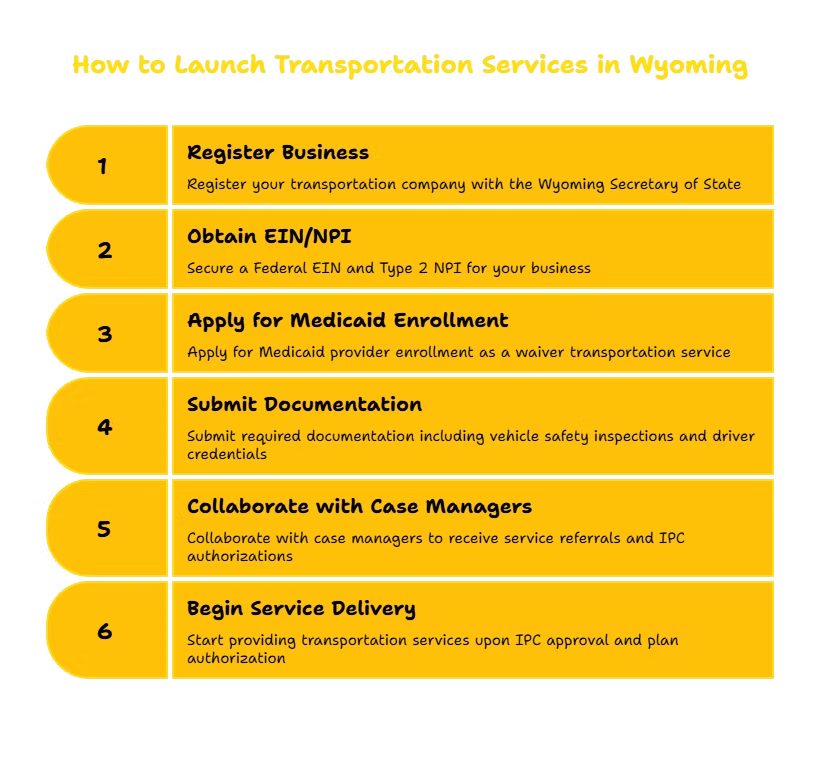
Becoming an approved Medicaid transportation provider in Wyoming requires a disciplined approach to business formation and operational compliance. Before applying for Medicaid enrollment, a provider must register their business entity with the Wyoming Secretary of State and secure both a Federal EIN and a Type 2 NPI. These foundational steps ensure the business is legally recognized and capable of billing the Medicaid system.
Providers must maintain a fleet of safe, well-maintained vehicles, or enter into formal contracts with accessible transportation providers. All vehicles used for transporting participants with mobility impairments—such as wheelchair users—must strictly adhere to ADA compliance standards. Additionally, the provider must establish a comprehensive Transportation Services Policy & Procedure Manual, carry adequate commercial auto, general liability, and workers’ compensation insurance, and implement rigorous background check protocols for all drivers.
How Is the Medicaid Provider Enrollment Process Executed?
The transition from a business startup to a billing Medicaid provider follows a structured sequence. Initially, the prospective provider must complete their corporate registration and obtain the necessary federal identifiers. Once the business structure is set, the provider applies for Medicaid enrollment specifically under the category of waiver transportation services. This process involves the submission of extensive documentation, including current vehicle safety inspections, staff credentials, and the previously drafted Policy & Procedure Manual.
Following the submission of these materials, the provider must demonstrate the ability to collaborate with Case Management Agencies. Service referrals are generated based on the participant's IPC, and billing can only commence once the service has been formally authorized. Maintaining clear communication with state administrators and adhering to the guidelines set forth by the Division of Healthcare Financing is essential during this phase to avoid delays in approval.
What Are the Essential Staffing and Operational Requirements?
Drivers and transportation assistants are the frontline of service quality and safety. Every staff member must possess a valid Wyoming driver’s license, a clean driving record, and must pass a comprehensive background check and abuse registry clearance. Furthermore, it is mandatory that drivers are trained in CPR and First Aid, as well as defensive driving and specialized passenger assistance techniques to support those with diverse physical or cognitive needs.
Operational documentation must be thorough to ensure compliance with HIPAA and passenger safety protocols. Each provider is expected to maintain a detailed policy manual that includes:
- Standardized trip logs and billing templates for accurate record-keeping.
- Sanitation, maintenance, and vehicle inspection schedules to ensure vehicle safety.
- Emergency and incident response plans that protect both the passenger and the driver.
- Documentation of staff training, including HIPAA confidentiality and participant-specific transport requirements.
Frequently Asked Questions
Are family members eligible for mileage reimbursement?
Yes, mileage reimbursement is a covered option for self-directed participants or families, provided that the expense is documented and pre-approved within the participant’s Individualized Plan of Care (IPC).
What is the difference between NMT and NEMT?
NMT (Non-Medical Transportation) focuses on community integration and waiver-related activities like employment or recreation, whereas NEMT (Non-Emergency Medical Transportation) is specifically for accessing medical services, including doctor visits and therapies.
How often must vehicles be inspected for Medicaid compliance?
Vehicles must meet state safety standards, and documentation of regular maintenance, sanitation, and safety inspections must be readily available for review as part of your agency's compliance documentation.
Key Takeaway
Operating a successful Medicaid transportation program in Wyoming requires strict adherence to state-defined regulations, consistent documentation of services within the participant’s IPC, and a robust commitment to safety and accessibility. By ensuring that all drivers are adequately trained and that administrative policies meet the standards set by the Department of Health, providers can reliably support the independence and health outcomes of waiver participants across the state.
WAIVER CONSULTING GROUP’S START-UP ASSISTANCE SERVICE — WYOMING TRANSPORTATION PROVIDER
WCG helps new transportation companies and home care agencies build compliant, reliable Medicaid-funded transportation programs that support safe access to healthcare and community life.
Scope of Work:
- Medicaid waiver and transportation enrollment
- Transportation Services P&P Manual
- Driver credentialing templates and inspection logs
- Trip documentation tools and billing forms
- Emergency and safety protocol development
- Audit prep and compliance documentation
Last verified: 2024. The information provided is for educational purposes only and does not constitute legal or professional advice. Always consult with the Wyoming Department of Health or a qualified consultant for the most current regulatory updates.