TRANSPORTATION SERVICES PROVIDER IN SOUTH CAROLINA
By Fatumata Kaba · 2025-10-13 · 6 min read
ENSURING ACCESS TO ESSENTIAL MEDICAL AND COMMUNITY SERVICES THROUGH SAFE, RELIABLE, AND MEDICAID-APPROVED NON-EMERGENCY TRANSPORTATION
Transportation services in South Carolina serve as a critical lifeline, enabling Medicaid recipients to access essential medical appointments, day programs, and community integration activities. By providing safe, reliable, and accessible transport, providers bridge the gap for individuals with disabilities or limited mobility who would otherwise face significant barriers to care and inclusion.
Medicaid reimburses these services through two primary channels: the State Plan and Home and Community-Based Services (HCBS) Waivers. To succeed as a provider in this sector, organizations must navigate a rigorous regulatory environment governed by state and federal entities to ensure compliance, safety, and operational excellence.
Understanding the Governance and Regulatory Landscape
The South Carolina Medicaid transportation ecosystem is managed by several key agencies, each with distinct oversight roles. Understanding these entities is the first step for any provider looking to operate within the state. The South Carolina Department of Health and Human Services (SCDHHS) serves as the primary authority, overseeing both Medicaid-funded Non-Emergency Medical Transportation (NEMT) and various waiver-authorized services.
Additionally, the South Carolina Department of Disabilities and Special Needs (DDSN) plays a specialized role in coordinating transport for individuals enrolled in specific waiver programs, particularly those attending day programs or participating in supported employment. At the federal level, the Centers for Medicare & Medicaid Services (CMS) sets the regulatory framework for funding and access requirements, ensuring that all HCBS programs meet national standards for quality and recipient safety.
- SCDHHS: Manages overall Medicaid NEMT and general waiver transportation policy.
- DDSN: Coordinates specific transport needs for waiver participants in day and employment settings.
- CMS: Provides federal oversight to ensure state adherence to HCBS guidelines.
Defining the Scope of Transportation Services
Approved transportation providers are tasked with more than just moving passengers from one point to another; they are expected to facilitate access to life-sustaining services. This includes coordinating rides to medical appointments, therapeutic sessions, community events, and vocational activities. Providers must be prepared to handle a range of needs, from standard transport to the requirements of individuals with physical or cognitive disabilities.
The operational scope for an approved provider often includes providing lift-equipped or accessible vehicles, offering escort support for those who require supervision during transit, and maintaining precise documentation for every trip. Whether operating on a routine, scheduled route or providing on-demand services, providers must ensure their service model aligns with the specific authorizations attached to each Medicaid recipient’s plan of care.
- Waiver Transportation: Dedicated trips for day programs, employment, and community engagement.
- Medicaid NEMT Services: Specifically for eligible medical appointments under the State Plan.
- Escort Support: Specialized assistance for passengers requiring continuous supervision.
- Documentation: Mandatory logging of mileage, trip start/end times, and passenger verify.
Navigating Licensing and Enrollment Prerequisites
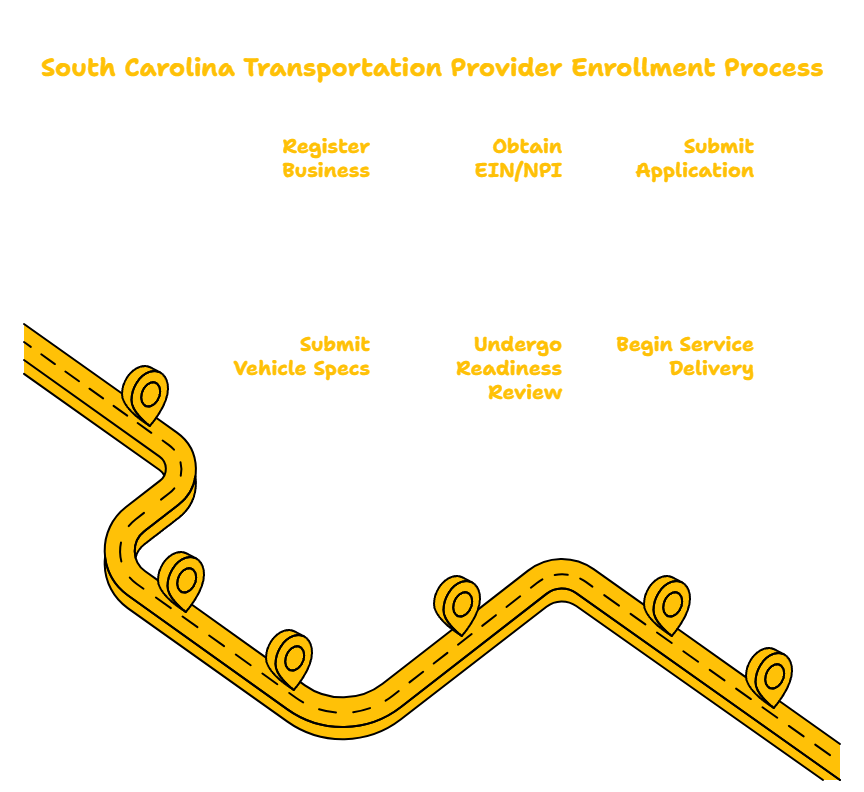
Entering the South Carolina Medicaid transportation market requires a systematic approach to business registration and credentialing. Before seeking approval to bill for services, an entity must establish a formal business structure, register with the South Carolina Secretary of State, and obtain an Employer Identification Number (EIN) and a Type 2 National Provider Identifier (NPI). This foundational step is essential for all entities seeking to interact with the Medicaid system.
Beyond basic business registration, prospective providers must satisfy state-specific requirements regarding vehicle safety and organizational policy. This involves submitting comprehensive vehicle inspection reports, maintaining high-level insurance coverage, and developing a robust Transportation Services Policy & Procedure Manual. Compliance with the Americans with Disabilities Act (ADA) is a non-negotiable requirement for providers operating accessible fleets, ensuring that all passengers receive equitable service regardless of physical mobility limitations.
The Provider Enrollment and Readiness Process
The journey from startup to service delivery involves a multi-phase enrollment process directed by SCDHHS or DDSN. The process typically begins with the submission of the Medicaid transportation provider application, accompanied by the required organizational documentation. Administrators should be prepared for a period of review where the state verifies that the agency meets all operational and safety standards.
Once the application is submitted, the agency must undergo a readiness review. This phase ensures that the provider's vehicle fleet, driver credentials, and internal safety protocols are fully aligned with state mandates. Only after successfully clearing this review and receiving a provider number can the agency begin accepting referrals or routing assignments from case managers. This structured timeline is designed to protect the integrity of the waiver programs and the well-being of the participants served.
Maintaining Operational Compliance and Documentation
Documentation serves as the backbone of Medicaid transportation services. A provider’s ability to remain in good standing with SCDHHS and DDSN relies heavily on the accuracy of their records. This includes not only vehicle maintenance and registration reports but also detailed logs of all trips, including billing forms and mileage verification. These documents are subject to audit and must be meticulously maintained to demonstrate compliance with program requirements.
Policies and procedures must be clearly documented to cover every facet of the operation. This manual should outline dispatch procedures, participant safety protocols, emergency response plans, and HIPAA compliance strategies. Because these services involve vulnerable populations, the inclusion of critical incident reporting procedures and backup plans in the case of vehicle breakdown or staff absence is a mandatory component of a compliant and professional operation.
Staffing, Training, and Participant Safety
The quality of a transportation provider is defined by the competency and preparedness of its staff. Drivers and transportation aides are the direct point of contact with participants, and as such, they must hold a valid South Carolina driver’s license and possess clear backgrounds confirmed by thorough screening processes. Specialized training is required, including CPR/First Aid certification, defensive driving, and passenger assistance techniques tailored for individuals with disabilities.
Beyond individual drivers, the role of a Transportation Coordinator is vital for the efficient management of scheduling, staff supervision, and vehicle maintenance compliance. All staff members, regardless of their role, must receive comprehensive training in HIPAA, participant rights, and emergency evacuation drills. Consistent annual refresher training is recommended to ensure that all team members remain current on safety standards and operational best practices.
Frequently Asked Questions
What waivers include transportation benefits in South Carolina?
Transportation is included in several HCBS waiver programs, specifically the ID/RD Waiver for day and community activities, the Community Supports Waiver for goal-related transport, and the HASCI Waiver for therapy and rehabilitation-related trips. The CLTC program also facilitates transportation under the NEMT umbrella.
Is a Commercial Driver’s License (CDL) mandatory for all drivers?
A CDL is not always required for Medicaid transportation providers, depending on the type and size of the vehicles in the fleet. However, all drivers must hold a valid South Carolina driver’s license, satisfy background check requirements, and complete specialized training in CPR, first aid, and passenger assistance.
How are NEMT medical trips managed in South Carolina?
Medicaid NEMT services for eligible medical appointments are often managed through a transportation broker, such as Modivcare (formerly LogistiCare), which coordinates the scheduling and assignment of rides to medical facilities under the State Plan.
WAIVER CONSULTING GROUP’S START-UP ASSISTANCE SERVICE — SC TRANSPORTATION PROVIDER
WCG helps transportation providers build safe, compliant, and Medicaid-credentialed fleets that meet participant mobility needs statewide. Our assistance includes Medicaid enrollment guidance, the development of comprehensive Policy & Procedure Manuals, route planning templates, and safety audit readiness support to ensure your agency is prepared for full compliance.
Key Takeaway: Success as a Medicaid transportation provider in South Carolina requires an unwavering commitment to administrative precision, rigorous vehicle maintenance, and comprehensive staff training. By strictly adhering to the regulatory standards set by SCDHHS and DDSN, providers can establish a sustainable and impactful operation that fulfills the essential mobility needs of the state's Medicaid population.
Last verified: 2024. This information is provided for educational purposes and should not be considered legal or professional business advice. Regulations and program requirements are subject to change by state and federal authorities; always refer to the official South Carolina Department of Health and Human Services (SCDHHS) provider manuals and current state statutes for the most accurate and up-to-date guidance.