TRANSPORTATION SERVICES PROVIDER IN NEW HAMPSHIRE
By Fatumata Kaba · 2025-07-27 · 5 min read
Understanding Transportation Services for New Hampshire Medicaid Participants
Transportation Services in New Hampshire serve as a critical bridge for individuals with disabilities, chronic health conditions, and significant mobility challenges, ensuring they can access essential medical care and engage in their communities. By providing non-emergency medical transportation (NEMT) and community-based travel assistance, these services foster independence and social inclusion for participants enrolled in various Home and Community-Based Services (HCBS) waiver programs. These services are vital for maintaining continuity of care, enabling access to employment, and supporting the overall quality of life for vulnerable populations throughout the state.
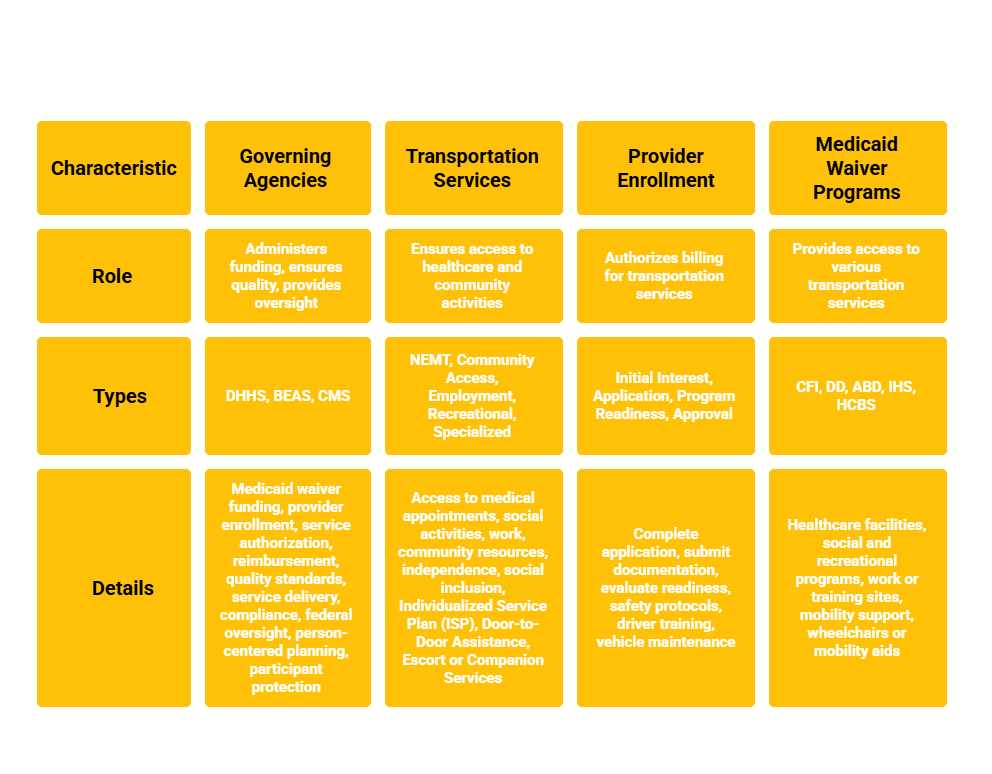
The regulatory framework governing these services is managed primarily by the New Hampshire Department of Health and Human Services (DHHS), with oversight from the Bureau of Elderly and Adult Services (BEAS) and the federal Centers for Medicare & Medicaid Services (CMS). Agencies aiming to become providers must demonstrate a robust commitment to safety, person-centered planning, and strict compliance with both state and federal mandates. Understanding the intersection of operational logistics and regulatory requirements is the first step for administrators looking to establish a sustainable transportation service within the Medicaid ecosystem.
What Are the Governing Bodies and Regulatory Requirements?
The provision of Medicaid-funded transportation in New Hampshire requires adherence to a multi-tiered regulatory structure. At the state level, the Department of Health and Human Services (DHHS) oversees the administration of waiver funding, service authorization, and provider enrollment. The Bureau of Elderly and Adult Services (BEAS) plays a central role in ensuring that service delivery meets quality standards and aligns with the specific requirements of the state’s HCBS waiver programs. Compliance with these agencies is mandatory for authorization and continued participation in the program.
At the federal level, the Centers for Medicare & Medicaid Services (CMS) provides the overarching guidelines for HCBS quality, person-centered service planning, and participant protections. Prospective providers must ensure their business operations align with the following oversight framework:
- New Hampshire DHHS: Manages overall Medicaid waiver funding and provider enrollment processes.
- Bureau of Elderly and Adult Services (BEAS): Monitors service delivery quality and ensures provider compliance with state statutes.
- Centers for Medicare & Medicaid Services (CMS): Sets federal standards for safety, civil rights, and program integrity.
How Do Providers Obtain Approval and Enroll in the Medicaid Program?
The enrollment process is a structured sequence that begins with foundational business formation. Providers must first register their business entity with the New Hampshire Secretary of State and secure a federal Employer Identification Number (EIN) and a Type 2 National Provider Identifier (NPI). Once these foundational steps are complete, the agency must apply for Medicaid enrollment through the New Hampshire Medicaid Provider Enrollment Portal. This portal serves as the centralized hub for submitting necessary documentation and tracking the status of the application.
During the enrollment phase, the DHHS and BEAS conduct a program readiness review. This evaluation assesses the provider’s operational readiness, including the adequacy of safety protocols, the thoroughness of driver training programs, and the maintenance standards for the vehicle fleet. Only after successfully clearing this review and fulfilling all licensure requirements from the New Hampshire Department of Safety will a provider be authorized to bill Medicaid for transportation services using designated billing codes.
What Are the Operational and Staffing Requirements?
Effective transportation agencies must maintain a professional administrative structure capable of managing logistics, client records, and safety compliance. The Transportation Program Director oversees the entire operation and typically requires a background in business or transportation management. Supporting the director are dispatch coordinators who manage the day-to-day scheduling and ensure that transportation requests are fulfilled according to the participant's Individualized Service Plan (ISP). This ensures that services remain consistent with the specific medical and community needs of the client.
Front-line staff, including drivers and transportation aides, must meet stringent qualification standards to ensure client safety. These requirements typically include a valid New Hampshire driver’s license, a clean driving record, and successful completion of defensive driving and passenger assistance training. All staff are also required to maintain active CPR/First Aid certification and must pass rigorous background checks before interacting with participants.
- Safety & Compliance Training: All staff must be educated on HIPAA compliance, client rights, and emergency preparedness.
- Vehicle Standards: Agencies must implement annual vehicle safety inspections and maintain a rigorous fleet cleanliness and maintenance schedule.
- Specialized Assistance: Staff must be trained in the operation of mobility aid equipment and the provision of door-to-door assistance for individuals with physical disabilities.
Which Medicaid Waivers Cover Transportation Services?
Transportation services are integrated into several key New Hampshire Medicaid waiver programs designed to support individuals in their homes and communities rather than in institutional settings. These programs utilize transportation to reduce isolation and ensure that participants can attend essential appointments and social engagements. The following programs authorize these services:
- Choices for Independence (CFI) Waiver: Focused on seniors and adults with chronic illnesses.
- Developmental Disabilities (DD) Waiver: Provides support for individuals with developmental needs to access community resources.
- Acquired Brain Disorder (ABD) Waiver: Tailored for individuals requiring specialized support following an injury.
- In-Home Support (IHS) Waiver for Children: Facilitates access to services for children with significant needs.
- Home and Community-Based Services (HCBS) Waiver: A broad program framework supporting community integration.
Frequently Asked Questions
What specific types of transportation are covered?
Approved services include Non-Emergency Medical Transportation (NEMT), community access transportation for social activities, employment-related travel to work or training, and specialized transport for individuals who require wheelchairs or other mobility aids.
How long does the launch process take?
The timeline varies but generally involves 1–2 months for business formation, 2–3 months for hiring and program development, 60–90 days for Medicaid enrollment and readiness review, and 30–45 days for billing system finalization.
What documentation is required for the Medicaid Readiness Review?
Providers must submit business licenses, proof of insurance (general liability, professional liability, and vehicle), a comprehensive Policy & Procedure Manual, vehicle inspection records, and documentation of staff credentials and training records.
Key Takeaway
Launching a Medicaid-compliant transportation service in New Hampshire requires meticulous preparation in business administration, staff credentialing, and strict adherence to DHHS and BEAS standards. By aligning operational processes with federal and state HCBS guidelines, providers can build reliable, high-quality programs that significantly improve the health and community outcomes of Medicaid participants throughout the state.
Last verified: 2024. The information provided herein is for general educational purposes only and does not constitute legal, medical, or official regulatory advice. All potential providers must consult directly with the New Hampshire Department of Health and Human Services (DHHS) and review current state statutes and federal guidelines to ensure full compliance with Medicaid requirements at the time of their application.