TRANSPORTATION SERVICES PROVIDER IN NEVADA
By Fatumata Kaba · 2025-09-04 · 5 min read
Transportation Services in Nevada serve as a vital link for individuals enrolled in Home and Community-Based Services (HCBS) waiver programs, providing essential non-emergency medical and community access transportation. By facilitating reliable travel to medical appointments, vocational training, and community social events, these providers play a critical role in promoting independence and preventing the institutionalization of participants with disabilities or chronic health conditions.
Operating as an HCBS transportation provider requires a high level of regulatory diligence, involving oversight from the Nevada Department of Health and Human Services (DHHS), the Aging and Disability Services Division (ADSD), and the Nevada Transportation Authority (NTA). For agency founders, success depends on aligning business operations with strict state safety, credentialing, and billing requirements to ensure participant well-being and long-term reimbursement eligibility.
Navigating the Regulatory Landscape for Transportation Providers
The regulatory framework for Nevada’s HCBS transportation services is designed to ensure participant safety and the consistent delivery of quality support. Providers must navigate multiple layers of governance, starting with the Nevada Department of Health and Human Services (DHHS), which manages the waiver funding and handles the overarching provider enrollment process. Concurrently, the Aging and Disability Services Division (ADSD) is tasked with monitoring service delivery to ensure compliance with the specific quality standards outlined in the individual’s Service Plan.
Furthermore, providers must operate under the guidelines set forth by the Centers for Medicare & Medicaid Services (CMS). CMS mandates that all HCBS-funded services prioritize person-centered planning and protect the rights of participants. Because transportation often serves as a gateway to other community services, providers must ensure their operations remain transparent, accessible, and integrated into the broader Medicaid service network. Failure to maintain these standards can result in disenrollment or the loss of billing privileges.
Establishing Essential Transportation Service Categories
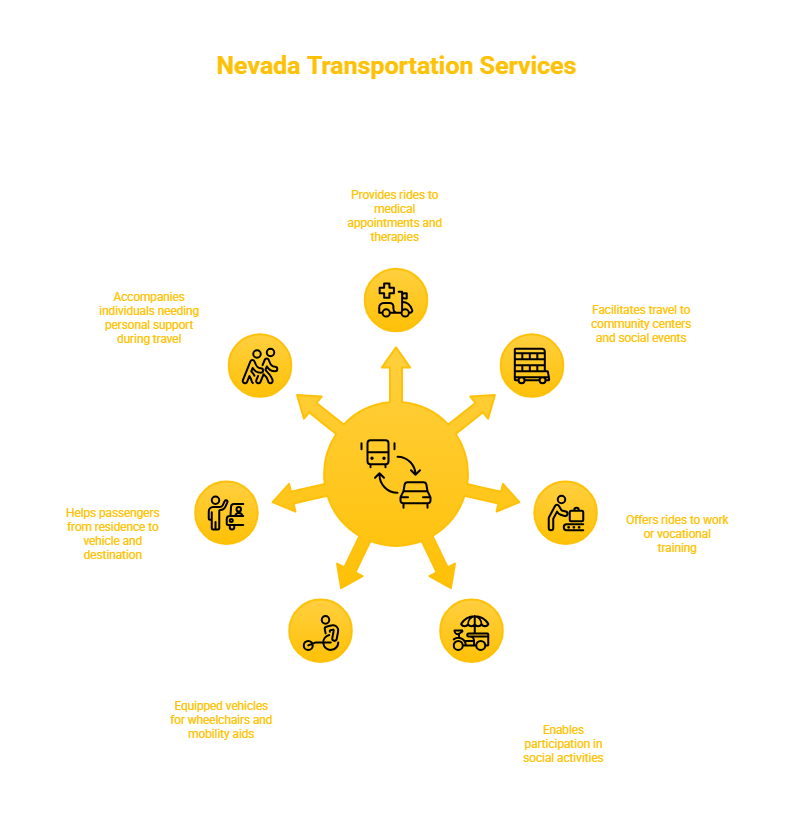
To provide comprehensive support to the HCBS population, agencies should structure their service offerings to address the diverse needs of participants. Non-Emergency Medical Transportation (NEMT) is the most frequent request, ensuring individuals reach healthcare facilities and therapy sessions without interruption. Beyond medical necessity, agencies may also offer community access, which encompasses trips to support groups, civic programs, and social outings designed to prevent isolation.
Operational flexibility is a hallmark of an effective transportation provider. Depending on the individual’s needs as documented in their Individualized Service Plan (ISP), the following service components are often utilized:
- Employment Transportation: Dedicated support for commuting to and from work or vocational training sites.
- Social and Recreational Transportation: Enabling participation in meaningful community activities.
- Specialized Transport: Utilization of vehicles equipped with lifts or ramps for wheelchairs and other mobility aids.
- Door-to-Door Assistance: Providing physical support or guidance from the passenger’s home to the vehicle and final destination.
- Companion or Escort Services: Arranging for staff to remain with the individual during transit when medical or behavioral needs require personal support.
Licensing and Provider Enrollment Requirements
The path to becoming an approved Nevada Medicaid waiver transportation provider involves a rigorous sequence of legal and operational steps. Before submitting an application to the Nevada Medicaid Provider Enrollment Portal, an agency must be fully registered with the Nevada Secretary of State and possess a valid Federal Employer Identification Number (EIN) and a Type 2 National Provider Identifier (NPI).
Licensing is a central requirement for any entity operating transport vehicles. Providers must secure the appropriate permits from the Nevada Transportation Authority (NTA). This process is distinct from Medicaid enrollment and requires proof of robust insurance coverage, including general liability, professional liability, and specialized vehicle insurance. Once these foundational documents are in place, the provider must develop a comprehensive Policy & Procedure Manual that addresses everything from passenger safety and driver training to emergency preparedness and incident management.
Staffing, Training, and Quality Assurance Standards
Staffing a transportation agency requires a commitment to professionalism and safety. The Transportation Program Director is responsible for the overall administrative integrity of the program, requiring a background in transportation management or a related business field. The front-line staff, including drivers and dispatch coordinators, must undergo thorough background clearances before hire, ensuring that they are equipped to handle the sensitive nature of working with vulnerable populations.
All staff members must complete specialized training to maintain compliance and deliver high-quality service. This includes, but is not limited to, the following requirements:
- Comprehensive training in safe driving practices and defensive driving techniques.
- Mandatory HIPAA compliance education and training on protecting client rights.
- Passenger assistance training, focusing on the safe loading and unloading of individuals with mobility aids.
- Ongoing professional development, including CPR/First Aid certification and annual vehicle maintenance safety briefings.
- Customer service training designed to foster a positive, supportive experience for all passengers.
The Roadmap for Launching and Managing Operations
The timeline for launching a compliant transportation agency in Nevada typically spans several months, requiring careful synchronization of administrative and operational milestones. The first 1–2 months are generally dedicated to business formation and gathering necessary compliance documentation. The subsequent 2–3 months involve the recruitment of qualified staff and the finalization of internal training and policy manuals.
The Medicaid enrollment process itself is a significant administrative undertaking. Providers should anticipate a 60–90 day period for the Program Readiness Review, during which DHHS and ADSD assess whether the agency’s safety protocols and maintenance logs meet state standards. Once approval is granted, the final 30–45 days are used to configure billing systems and coordinate with managed care organizations or waiver coordinators. Maintaining meticulous documentation of trip logs, billing, and vehicle maintenance remains a constant requirement for sustained operation.
Frequently Asked Questions
What documentation is required for the Program Readiness Review?
Providers must submit their Articles of Incorporation, proof of NPI and EIN, NTA permits, and a comprehensive Policy and Procedure Manual. This manual must explicitly cover trip scheduling, driver credentialing records, vehicle maintenance logs, HIPAA compliance, and accident reporting protocols.
Can an agency provide transportation services under multiple Medicaid waivers?
Yes, approved transportation providers can serve participants enrolled in various Nevada Medicaid waivers, including the Intellectual and Developmental Disabilities (HCBS-IDD) waiver, the Frail Elderly (FE) waiver, the Physical Disabilities waiver, the Traumatic Brain Injury (TBI) waiver, and the Aged and Disabled (AD) waiver.
What are the primary responsibilities of a Dispatch Coordinator?
A Dispatch Coordinator manages the logistics of scheduling and route planning. Their role is critical in ensuring that participants arrive at medical or vocational appointments on time, facilitating door-to-door communication, and ensuring that vehicles are assigned appropriately based on the specific mobility needs of the passenger.
Key Takeaway: Successfully operating as a Nevada HCBS transportation provider requires balancing high-level administrative compliance—such as NTA licensing and Medicaid provider enrollment—with the daily delivery of safe, person-centered services. By investing in thorough staff training, robust safety protocols, and diligent documentation practices, agency administrators can ensure they meet the critical transportation needs of Nevada’s vulnerable populations while maintaining long-term program sustainability.
Last verified: 05/22/2024. This information is for educational purposes only and does not constitute legal or professional advice. Requirements for Medicaid waiver programs are subject to change; always consult the official Nevada Department of Health and Human Services (DHHS) and Nevada Medicaid provider manuals for the most current regulations and policy updates.