TRANSPORTATION SERVICES PROVIDER IN MONTANA
By Fatumata Kaba · 2025-08-06 · 6 min read
PROVIDING RELIABLE, SAFE, AND ACCESSIBLE TRANSPORTATION FOR INDIVIDUALS WITH DISABILITIES OR MOBILITY CHALLENGES
Transportation Services in Montana serve as a vital link for individuals with disabilities, chronic health conditions, or mobility challenges, ensuring they have consistent access to essential medical appointments, community events, and social participation. By operating under Montana’s Home and Community-Based Services (HCBS) waivers, these providers facilitate greater independence and improved quality of life for vulnerable populations across the state.
What Are the Governing Agencies and Regulatory Frameworks?
The oversight of transportation services in Montana involves a collaborative effort between state and federal entities to ensure safety, fiscal accountability, and program compliance. The Montana Department of Public Health and Human Services (DPHHS) holds primary responsibility for administering Medicaid and the various HCBS waiver programs that authorize and fund transportation services. DPHHS sets the standards for provider enrollment, service definitions, and billing protocols.
In addition to health-related oversight, the Montana Department of Transportation (MDT) serves as the primary regulatory body for passenger transportation. They oversee the licensing of providers and ensure that all commercial passenger vehicles adhere to rigorous safety standards. On the federal level, the Centers for Medicare & Medicaid Services (CMS) provides overarching guidance, ensuring that Montana’s waiver programs remain in compliance with federal Medicaid requirements for service delivery and provider integrity.
- Montana Department of Public Health and Human Services (DPHHS): Manages Medicaid and HCBS waiver administration and program compliance.
- Montana Department of Transportation (MDT): Regulates passenger transportation licensure and establishes state-level vehicle safety standards.
- Centers for Medicare & Medicaid Services (CMS): Sets federal policies and monitors state-level waiver program implementation.
What Does the Transportation Service Overview Entail?
Transportation services provided through HCBS waivers are not one-size-fits-all; they are specifically tailored to the unique needs of each participant as outlined in their Individual Service Plan (ISP) or Person-Centered Plan (PCP). These services provide a lifeline to individuals who cannot rely on traditional public transit due to physical, cognitive, or geographical barriers. The goal is to provide a seamless transition from a participant’s home to their destination while maintaining a high standard of care.
Services typically encompass more than just driving; they include specialized assistance required to navigate a vehicle safely, such as wheelchair transfers or escorts into a medical facility. Providers must be capable of offering ADA-compliant solutions to ensure that individuals with mobility aids have reliable access to the community. Coordination and scheduling are also central components, requiring providers to manage complex route planning and time-sensitive appointments for their clients.
- Non-emergency medical transportation (NEMT) for healthcare access.
- Community-based transportation for social, educational, and recreational engagement.
- Wheelchair-accessible and ADA-compliant vehicle operations.
- Driver assistance, escort services, and door-to-door support.
- Integrated trip scheduling, route optimization, and service coordination.
How Do Providers Navigate Licensing and Medicaid Enrollment?
Launching a transportation agency requires a systematic approach to business formation and regulatory compliance. Before engaging with the Medicaid enrollment process, an organization must first be legally recognized by the Montana Secretary of State. Once registered, the business must secure an Employer Identification Number (EIN) from the IRS and a National Provider Identifier (NPI), specifically a Type 2 NPI, which is required for organizations providing healthcare-related services.
Following business registration, the agency must obtain a Passenger Transportation License from the MDT. This step is critical, as it confirms that the business meets state safety and operational standards. After these foundational requirements are met, the provider must enroll with DPHHS as a Medicaid provider. This involves a rigorous verification process where documentation—including liability insurance, vehicle safety logs, and service descriptions—is audited to ensure the provider is prepared to deliver high-quality, safe services to waiver participants.
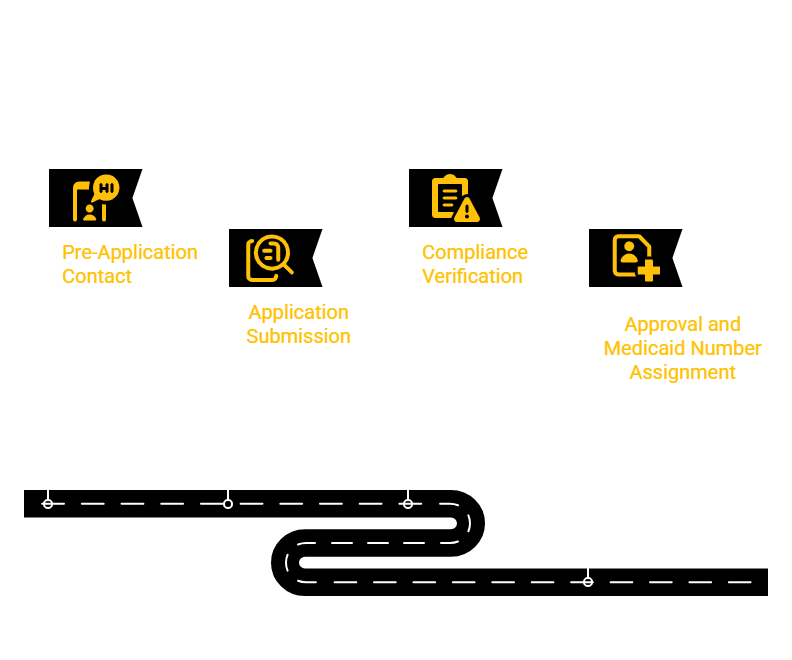
- Pre-Application: Consult DPHHS regarding specific transportation service provider requirements.
- Submission: Provide proof of business formation, MDT licensure, and liability insurance.
- Compliance: Undergo review to ensure vehicle safety standards and operational protocols align with state mandates.
- Approval: Receive a Medicaid provider number, officially authorizing the delivery of reimbursable services.
What Documentation and Staffing Standards Must Be Maintained?
Documentation is the backbone of compliance for any Medicaid transportation provider. Agencies are required to maintain comprehensive files that include Articles of Incorporation, proof of NPI and EIN registration, and current Passenger Transportation Licenses. Furthermore, providers must maintain a robust policy and procedure manual. This manual serves as a roadmap for daily operations, detailing everything from driver hiring criteria to emergency response protocols and rigorous vehicle maintenance logs.
Staffing requirements are equally stringent. The Transportation Program Manager must demonstrate proficiency in logistics and mobility planning to ensure efficient service delivery. Drivers and transportation aides must hold valid driver’s licenses with the appropriate passenger endorsements, maintain a clean driving record, and pass thorough background checks. Furthermore, all staff must be certified in CPR and First Aid and undergo recurring training in defensive driving, ADA compliance, and sensitive client interaction protocols.
- Required Documents: Business formation papers, EIN/NPI confirmation, insurance certificates, and MDT licensing documentation.
- Operating Manuals: Must include vehicle maintenance, incident reporting, client intake assessments, and trip coordination policies.
- Staff Credentials: Documented proof of licensure, CPR/First Aid certification, and completed background screenings.
- Training Logs: Evidence of recurring staff education on safety and mobility assistance.
How Are Transportation Services Accessed Through HCBS Waivers?
In Montana, transportation services are integrated into several key Medicaid initiatives designed to keep individuals in their homes rather than in institutional settings. The Big Sky Waiver (BSW) is one of the primary vehicles through which these services are funded, supporting individuals who require specialized care. Additionally, Community First Choice (CFC) and Personal Assistance Services (PAS) provide further opportunities for transportation support, as do various Medicaid Home Health service provisions.
For a provider, understanding these specific waiver programs is essential for billing and service authorization. Each program may have slightly different definitions for what qualifies as an "essential" trip, but all are centered on the participant's ISP. Providers must ensure that their service delivery is documented to match the authorization level approved in the participant’s care plan, ensuring that all claims submitted to Medicaid are accurate and reimbursable.
Frequently Asked Questions
How long does the provider enrollment process typically take?
While timelines vary based on the completeness of the initial application and current state capacity, Medicaid provider enrollment generally takes between 60 to 90 days. Other phases, such as business formation and vehicle safety inspections, typically add several weeks to the overall launch timeline.
What specific vehicle safety documents are required for audit?
Providers must maintain consistent vehicle maintenance and inspection logs. These should reflect regular preventative maintenance, daily safety checklists performed by drivers, and records of any repairs or adjustments made to ensure the vehicle remains ADA-compliant and safe for passenger transport.
Can transportation providers assist with social and recreational trips?
Yes, under many HCBS waivers, transportation is not restricted solely to medical appointments. Providers may facilitate community mobility for social, educational, and recreational activities if those activities are included as part of the individual’s authorized Person-Centered Plan (PCP).
Key Takeaway
Establishing a successful transportation service in Montana requires a disciplined approach to regulatory compliance, encompassing both healthcare-specific Medicaid requirements and transportation-specific safety licensing. By prioritizing high-quality vehicle maintenance, rigorous staff training, and meticulous documentation, providers can effectively serve the needs of Montana’s HCBS waiver population while maintaining long-term program sustainability.
WAIVER CONSULTING GROUP'S START-UP ASSISTANCE SERVICE — MONTANA TRANSPORTATION SERVICES PROVIDER: We support agencies and entrepreneurs in launching compliant Transportation Services across Montana under the HCBS Waiver models. Scope of Work: Business registration and licensing assistance; Medicaid provider enrollment; Policy & procedure manual for transportation operations; Templates for trip logs, vehicle maintenance records, and safety protocols; Website, domain, and email setup; Staff credentialing and driver training documentation; Client intake packet and transportation assessment forms; Vehicle safety tracking and compliance logs; Referral networking with healthcare providers and community organizations.
Last verified: August 2024. This information is for educational purposes only and does not constitute legal or professional advice. Requirements for Medicaid waivers are subject to change. Please consult the Montana Department of Public Health and Human Services (DPHHS) for the most current program guidelines and application requirements.