TRANSPORTATION SERVICES PROVIDER IN FLORIDA
By Fatumata Kaba · 2025-07-09 · 6 min read
Establishing a transportation services agency in Florida is a strategic move for providers looking to support individuals enrolled in Home and Community-Based Services (HCBS) waiver programs. This service line ensures that participants maintain access to critical medical care, employment, education, and community integration activities, directly facilitating the person-centered goals essential to Florida’s Medicaid long-term care landscape.
Transportation providers in this sector serve a vital function by bridging the gap for individuals who cannot independently navigate their communities due to disabilities or complex health needs. Success in this field requires rigorous adherence to the regulatory standards set by the Florida Agency for Health Care Administration (AHCA) and the Florida Commission for the Transportation Disadvantaged (CTD), ensuring that safety, reliability, and accessibility are embedded into every trip.
What Are the Governing Agencies and Regulatory Requirements?
The regulatory framework for transportation services in Florida is multi-layered, involving both state-level health oversight and specialized transportation coordination. The Florida Agency for Health Care Administration (AHCA) acts as the primary regulatory body for Medicaid provider enrollment, overseeing the authorization of services and ensuring that reimbursement processes align with state standards. Providers must remain in constant compliance with AHCA policies to maintain active status.
Beyond AHCA, the Florida Commission for the Transportation Disadvantaged (CTD) plays a specialized role by coordinating and regulating services for those with disabilities or special needs, often acting as a bridge between transit providers and the state’s healthcare infrastructure. Federal oversight is provided by the Centers for Medicare & Medicaid Services (CMS), which sets the overarching requirements for all Medicaid-funded HCBS to ensure that local programs meet national standards for safety and quality of life.
- Florida Agency for Health Care Administration (AHCA): Manages enrollment, service authorization, and payment processing.
- Florida Commission for the Transportation Disadvantaged (CTD): Regulates and coordinates transportation for the transportation-disadvantaged population.
- Centers for Medicare & Medicaid Services (CMS): Defines federal compliance standards for HCBS transportation waivers.
How Do You Structure Transportation Services for Medicaid Participants?
Transportation service providers must deliver more than just a ride; they must provide a secure, ADA-compliant experience tailored to the needs of individuals with disabilities. Approved providers are expected to facilitate Non-Emergency Medical Transportation (NEMT) to health appointments, as well as transit to employment, adult day programs, and habilitation services. Depending on the specific waiver plan, this may also extend to essential errands such as grocery shopping or pharmacy visits.
Operational success relies on pre-authorization, as all services must be clearly outlined in the participant’s service plan. Providers must be prepared to offer escort or attendant services when a participant’s condition requires additional supervision during transit. Maintaining high standards for vehicle accessibility—such as wheelchair lifts and securement systems—is not just an operational requirement but a fundamental component of the provider’s legal obligation to the community.
What Are the Prerequisites for Provider Enrollment?
The path to becoming a recognized Medicaid transportation provider begins with formal business entity establishment and regulatory alignment. Founders must first register their business with the Florida Division of Corporations (Sunbiz) and obtain a federal Employer Identification Number (EIN). Furthermore, a Type 2 National Provider Identifier (NPI) is essential for billing and identification purposes within the Medicaid system.
Beyond basic business registration, providers must secure appropriate insurance, including comprehensive commercial vehicle policies and general liability coverage. Because NEMT services involve vulnerable populations, providers must demonstrate a high level of operational readiness, including clear protocols for driver background screening and strict adherence to the Americans with Disabilities Act (ADA) regarding accessibility. County or local transportation permits may also be required depending on the specific region of operation.
- Register with the Florida Division of Corporations (Sunbiz).
- Secure an EIN from the IRS and a Type 2 NPI.
- Obtain Medicaid NEMT provider enrollment status.
- Verify all local and county transportation permits.
- Procure comprehensive commercial vehicle and general liability insurance.
What Does the AHCA Provider Enrollment Process Involve?
The enrollment process is a structured sequence that ensures only capable, compliant providers are authorized to bill Medicaid. Initially, applicants should request the appropriate materials from AHCA and, whenever possible, participate in Medicaid transportation services orientation. This foundation helps prospective providers understand the specific documentation required, such as trip scheduling procedures, incident response protocols, and standardized participant intake forms.
Once the application is submitted, AHCA conducts a program readiness review. This phase is critical; regulators will evaluate your safety plans, vehicle standards, and driver qualification procedures. In some cases, this includes site inspections or full vehicle audits. Once the agency determines that the provider meets all safety and documentation standards, the applicant completes final enrollment through the Florida Medicaid Provider Enrollment Portal and configures their systems for billing and trip authorization tracking.
Which Staffing and Documentation Protocols Are Necessary?
Effective management of a transportation agency requires a robust administrative backbone and highly trained staff. At a minimum, every agency needs a Transportation Program Manager or Dispatcher responsible for logistics, as well as qualified drivers who hold valid Florida driver’s licenses and have cleared necessary background checks. It is highly recommended that all drivers maintain CPR/First Aid certification and complete defensive driving training to ensure the highest level of passenger safety.
Documentation is the primary proof of compliance during audits. Providers must maintain a comprehensive Policy & Procedure Manual that covers everything from HIPAA-compliant data handling to wheelchair securement and emergency evacuation. This manual should serve as the "living document" for the agency, housing incident reports, maintenance logs, and annual staff training records. This ensures that every ride is documented according to Medicaid’s requirements for service verification.
- Passenger Assistance: Mandatory training on ADA compliance and securement.
- Safety Protocols: Regular emergency evacuation and breakdown response drills.
- Compliance: Ongoing HIPAA training and elder/disabled abuse prevention education.
- Documentation: Rigorous trip logs, service verification, and maintenance record-keeping.
Frequently Asked Questions
Which Florida Medicaid waivers support transportation services?
Transportation services are primarily authorized under the Statewide Medicaid Managed Care (SMMC) Long-Term Care (LTC) Program, the iBudget Florida Waiver for individuals with intellectual and developmental disabilities, and the Traumatic Brain Injury/Spinal Cord Injury (TBI/SCI) Waiver. Additionally, state-funded programs like Community Care for the Elderly (CCE) and the Alzheimer's Disease Initiative (ADI) may offer transportation support.
What is the typical timeline to launch a transportation agency?
The launch process generally spans 4 to 7 months. Business formation and initial setup typically take 1–2 weeks, followed by a 60–90 day period for the AHCA application and readiness review. Staffing and vehicle preparation take 30–45 days, and final Medicaid enrollment and billing configuration take approximately 45–60 days.
Do transportation providers need specific accessibility equipment?
Yes, because HCBS waiver programs serve individuals with varying levels of mobility, providers must comply with ADA standards. This often necessitates vehicles equipped with wheelchair lifts or ramps, specialized tie-downs and securement systems, and adequate interior space to accommodate mobility devices, ensuring that transportation is safe and dignified for all participants.
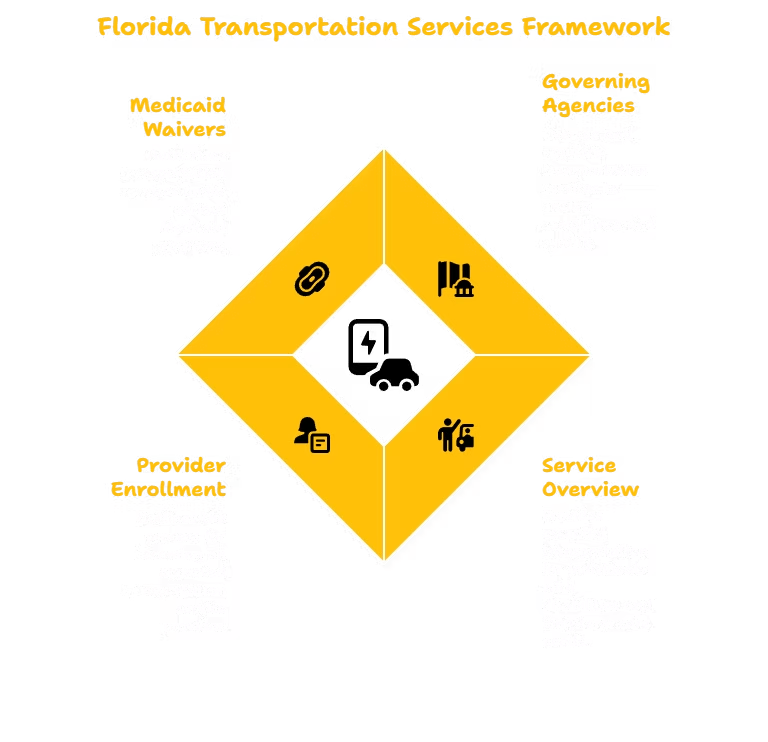
WAIVER CONSULTING GROUP’S START-UP ASSISTANCE SERVICE — FLORIDA TRANSPORTATION SERVICES PROVIDER
WCG supports transportation agencies and entrepreneurs in launching Medicaid-compliant Transportation Services under Florida’s HCBS and Medicaid programs. We assist with business registration, AHCA provider enrollment, the development of Policy & Procedure Manuals, staff credentialing, and the setup of trip tracking and billing systems to ensure a streamlined entry into the market.
Key Takeaway: Successful operation of a Florida transportation services provider requires a meticulous approach to regulatory compliance, prioritizing the safety and accessibility of waiver participants while maintaining the rigorous documentation standards mandated by AHCA and Medicaid.
Last verified August 2024. This information is intended for educational purposes only and does not constitute legal or professional advice. Please consult directly with the Florida Agency for Health Care Administration (AHCA) for the most current regulatory updates and requirements.