TRANSPORTATION SERVICES PROVIDER IN CONNECTICUT
By Fatumata Kaba · 2025-07-07 · 5 min read
Becoming a transportation services provider in Connecticut involves navigating a multi-layered regulatory environment overseen by the Department of Social Services (DSS) and the Department of Developmental Services (DDS). To successfully launch and maintain operations, agencies must secure formal state enrollment, ensure full vehicle compliance with Department of Transportation (DOT) standards, and maintain rigorous documentation to meet Medicaid and Home and Community-Based Services (HCBS) waiver requirements.
Understanding the Role of Medicaid and HCBS Transportation
Transportation services serve as a critical bridge for individuals with disabilities, chronic medical conditions, or aging needs who cannot utilize traditional public transit. In Connecticut, these services ensure that participants can access essential life activities, including medical appointments, day programs, employment sites, and community-based social services. Because these trips are often funded through federal and state Medicaid dollars, providers function as essential partners in the healthcare delivery system.
Programs such as the Non-Emergency Medical Transportation (NEMT) program and various HCBS waivers—including the Connecticut Home Care Program for Elders (CHCPE), the Personal Care Assistance (PCA) Waiver, Acquired Brain Injury (ABI) Waivers, and DDS Waivers—have distinct operational requirements. Providers must understand that they are not merely driving vehicles; they are acting as an extension of the participant's care plan, requiring a high level of accountability, safety, and professional coordination.
Governing Agencies and Regulatory Framework
Compliance begins with acknowledging the primary stakeholders involved in program oversight. The Connecticut Department of Social Services (DSS) acts as the lead agency, managing the overarching Medicaid-funded transportation programs and overseeing provider reimbursements. Simultaneously, the Department of Developmental Services (DDS) serves as the authority for individuals receiving specific developmental support, coordinating transportation for those engaged in DDS-funded programs.
On a federal level, the Centers for Medicare & Medicaid Services (CMS) sets the standards for all HCBS-funded services. These standards mandate that transportation must be accessible, safe, and integrated into the participant’s community life. Providers are responsible for adhering to these federal guidelines while strictly following state-specific procurement and billing procedures established by the DSS and DDS.
Prerequisites for Provider Enrollment and Business Setup
Before offering services, an agency must establish a formal business structure that meets state and federal administrative requirements. This includes registering the business with the Connecticut Secretary of the State, obtaining an Employer Identification Number (EIN) from the IRS, and securing a Type 2 National Provider Identifier (NPI) for organizational billing. Failure to maintain these foundational elements will preclude an entity from the provider enrollment process.
Beyond administrative setup, the physical aspects of the business are subject to intense scrutiny. Potential providers must fulfill the following prerequisites:
- Secure DOT registration and maintain commercial vehicle insurance that meets state-mandated liability thresholds.
- Ensure that all vehicles, whether ambulatory or wheelchair-accessible, are equipped with required GPS, seatbelts, and emergency equipment.
- Implement a mandatory screening process for all drivers, encompassing comprehensive background checks, DMV record screenings, and pre-employment drug testing.
Navigating the Provider Enrollment Process
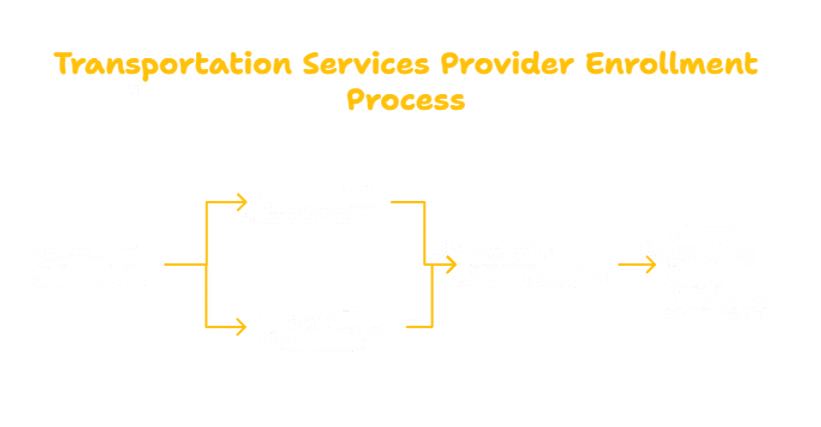
The enrollment path is divided into two primary tracks: medical transportation via the DSS Medicaid portal and community or day program transportation via DDS or specific waiver care manager teams. For medical trips, providers must navigate the Connecticut Medicaid Provider Enrollment Portal, where they submit detailed business documentation, DOT certifications, and comprehensive driver rosters for state review.
For providers looking to serve the DDS or HCBS waiver populations, the process involves direct coordination with case managers and regional program directors. This often requires demonstrating that the agency possesses the capacity to handle specific population needs, such as those with cognitive impairments or complex mobility requirements. Successfully securing these contracts requires a clear, audit-ready operational plan that outlines trip scheduling, rider safety, and billing accuracy.
Developing Mandatory Policies and Documentation
Operational integrity is measured through the provider's documentation and internal policies. A compliant agency must produce a comprehensive policy and procedure manual that acts as the backbone of its service delivery. This manual serves as proof of compliance during state audits and quality reviews, covering everything from daily vehicle safety checks to HIPAA-compliant data handling.
Providers are required to maintain a detailed record-keeping system that includes the following documentation:
- Formal trip logs including start/end times, mileage, and participant signatures.
- Wheelchair securement protocols and lift operation training records.
- Emergency and incident response plans, including notification procedures for caregivers and state agencies.
- Staff credentialing trackers that verify annual license renewals, clean driving records, and continuous training updates.
- Maintenance logs and official vehicle inspection reports showing strict adherence to safety schedules.
Staffing, Training, and Professional Development
The quality of a transportation provider is defined by its staff. Drivers and transportation aides represent the agency during every interaction with vulnerable populations. Consequently, they must hold a valid Connecticut driver’s license, such as a Class F license or the appropriate credential for the vehicle type, and possess a clean motor vehicle report. Experience in caregiving or working with individuals with disabilities is highly preferred, as it ensures a higher standard of passenger empathy and assistance.
Training for all personnel is a non-negotiable requirement. Before providing services, staff must undergo documented training in:
- Passenger assistance, including safe boarding and exiting techniques for those with mobility challenges.
- Mandatory abuse reporting requirements and incident escalation protocols.
- HIPAA-compliant confidentiality practices to protect sensitive medical information.
- Defensive driving techniques and emergency evacuation drills tailored to the fleet’s specific vehicle types.
Frequently Asked Questions
What is the timeline for becoming an approved transportation provider in Connecticut?
The total duration is typically split into phases. Business formation takes roughly 1–2 weeks, followed by 2–4 weeks for vehicle acquisition and DOT compliance. The most time-intensive phase is the Medicaid or DDS provider enrollment, which can take 30–60 days depending on the completeness of your initial application.
Are all transportation services reimbursed under the same Medicaid program?
No. While many services fall under the general Non-Emergency Medical Transportation (NEMT) umbrella, specific waiver programs like the CHCPE, ABI, and DDS waivers have distinct authorization processes. You must clarify with the case manager or the relevant department which specific waiver or program is covering the transportation costs for the individual.
What specific vehicle equipment is required to serve wheelchair users?
Providers must ensure vehicles are equipped with properly functioning hydraulic or electric lifts, verified wheelchair securement systems (such as four-point tie-downs and occupant restraint systems), and appropriate emergency kits as dictated by the Connecticut Department of Transportation.
Key Takeaways for Prospective Providers
Launching a transportation services provider agency in Connecticut requires a disciplined approach to administrative, safety, and regulatory compliance. Success relies on the meticulous maintenance of trip logs, staff credentialing, and vehicle safety records. By aligning business operations with the specific requirements of the Department of Social Services and the Department of Developmental Services, providers can ensure they meet the critical needs of the state’s aging and disability communities while maintaining eligibility for Medicaid reimbursement.
Last verified: May 2024. This information is intended for educational purposes only and does not constitute legal or professional advice. Requirements for Medicaid and HCBS waiver providers are subject to change by the Connecticut Department of Social Services and other governing bodies. Always consult the official state provider manuals and regulatory statutes for the most current information before finalizing business decisions.