TRANSPORTATION SERVICES PROVIDER IN CALIFORNIA
By Fatumata Kaba · 2025-07-06 · 5 min read
Connecting individuals with disabilities to their communities requires a robust, person-centered approach to transportation services. In California, transportation providers serve as a critical bridge, ensuring that individuals supported by Regional Centers and the broader Medi-Cal system can access essential day programs, employment sites, and medical appointments safely and reliably.
Operating a transportation service within California’s complex health and human services landscape requires strict adherence to regulatory oversight and quality standards. By integrating with California’s Regional Center programs, the Self-Determination Program (SDP), and HCBS Waivers, providers play a vital role in fostering independence and community inclusion for individuals with developmental disabilities.
Navigating the Governance of California Transportation Services
The provision of transportation for individuals with disabilities in California is governed by a multi-tiered regulatory framework. At the state level, the California Department of Developmental Services (DDS) serves as the primary authority, overseeing the service authorization processes managed by the 21 individual Regional Centers across the state. These centers are responsible for approving transportation vendors and aligning services with an individual’s specific Individual Program Plan (IPP).
Beyond the developmental disability system, the California Department of Health Care Services (DHCS) administers broader Medi-Cal transportation benefits, including Non-Emergency Medical Transportation (NEMT) and Non-Emergency Transportation (NMT). Compliance with these regulations is further monitored by the Centers for Medicare & Medicaid Services (CMS), which sets the standards for HCBS waiver-funded support to ensure that transportation remains a safe and accessible component of community-based care.
- California Department of Developmental Services (DDS): Oversees service authorization through Regional Centers and the Self-Determination Program.
- Regional Centers (21 statewide): Approve transportation vendors and authorize service codes based on the Individual Program Plan (IPP).
- California Department of Health Care Services (DHCS): Administers Medi-Cal transportation benefits, including NEMT and NMT.
- Centers for Medicare & Medicaid Services (CMS): Ensures compliance with HCBS transportation support standards.
Defining the Scope and Delivery of Transportation Services
Transportation services are designed to ensure that individuals can live, work, and engage in their communities with consistent, reliable support. Depending on the unique needs outlined in the participant's plan and the specific funding source, services can range from scheduled group routes to on-demand individual pickups or mileage reimbursement programs for families and caregivers.
Providers are expected to maintain professional operational standards that prioritize rider safety and clear documentation. This includes the implementation of rigorous vehicle maintenance schedules, consistent route planning, and comprehensive driver training. Whether providing curb-to-curb or door-to-door service, vendors must document every interaction, including service dates, mileage logs, and specific rider arrival/departure times, to ensure compliance with funding and safety mandates.
Establishing Your Business and Achieving Vendorization
Becoming an approved provider requires a systematic approach to business licensing and service authorization. Prospective providers must first register their business entity with the California Secretary of State, obtain a federal Employer Identification Number (EIN), and secure a Type 2 National Provider Identifier (NPI). Depending on the nature of the transportation services provided, commercial auto insurance and a Transportation Charter Party (TCP) permit from the California Public Utilities Commission (PUC) may also be required.
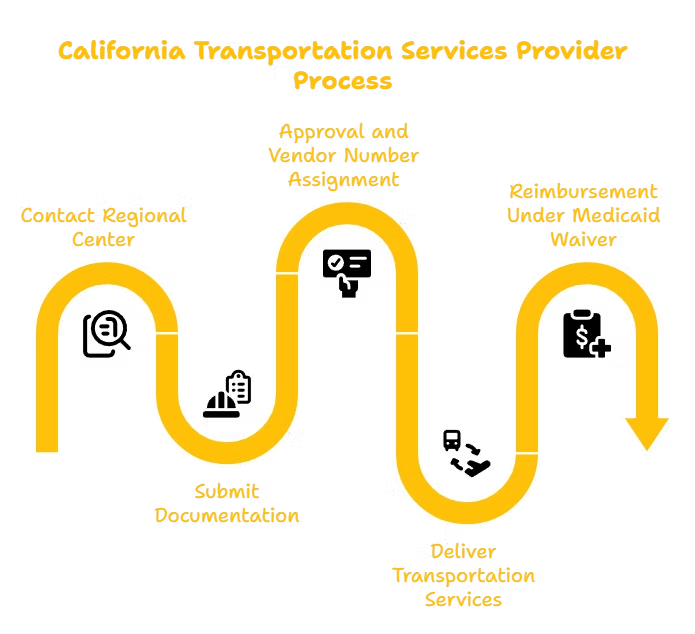
Once the business is legally established, the vendorization process begins by contacting the local Regional Center to request an application for Service Code 880 (Transportation). Alternatively, for those operating under the Self-Determination Program, the provider must enroll through a designated Financial Management Service (FMS). This phase requires the submission of a detailed service description, safety protocols, and a comprehensive fleet management plan.
Managing Staffing Requirements and Safety Protocols
The success of a transportation program relies heavily on the qualifications and reliability of its workforce. Transportation coordinators and dispatchers are required to possess experience in logistics, fleet management, or community-based program administration to ensure routes are planned efficiently and securely. Drivers and transportation aides must hold a valid California driver’s license, maintain a clean driving record, and undergo thorough background checks before they are permitted to transport individuals.
All staff must receive ongoing training to maintain the highest standards of safety and professional conduct. This training should encompass passenger safety, proper vehicle operation, abuse prevention, and emergency response procedures. Furthermore, staff should be trained in disability awareness, HIPAA compliance, and the legal requirements surrounding incident reporting and client confidentiality.
- Valid California driver’s license: Mandatory for all individuals operating company vehicles.
- Background checks: Required for all drivers and staff to ensure client safety.
- Safety and emergency training: Must include CPR/First Aid certification and emergency evacuation protocols.
- Reporting and documentation: Ongoing education regarding incident reporting, ethics, and professional boundaries.
Organizing Essential Documentation and Compliance
Maintaining a comprehensive documentation system is non-negotiable for transportation providers in California. This requires the creation and maintenance of a formal policy and procedure manual that covers everything from rider intake and consent to daily ride logs and emergency incident protocols. Because transportation providers handle sensitive personal data, strict adherence to confidentiality and HIPAA guidelines is required.
Administrative records must be kept up to date and readily accessible for potential audits by Regional Centers or other regulatory agencies. Essential records include articles of incorporation, vehicle registration and insurance documentation, staff background screening results, and detailed maintenance checklists. Accurate mileage tracking and billing documentation remain the cornerstone of proving service delivery and ensuring proper reimbursement.
Frequently Asked Questions
What is the typical timeline to launch a transportation agency?
The launch process generally spans several months. Business formation takes 1–2 weeks, while Regional Center vendorization or FMS enrollment typically requires 30–90 days. Hiring drivers, setting up the fleet, and activating routes usually add another 30–45 days, with full referral activation following within 2–4 weeks thereafter.
What is Service Code 880?
Service Code 880 is the specific classification used by California Regional Centers to authorize and pay for transportation services for individuals with developmental disabilities. Becoming a vendor under this code is a standard path for transportation agencies seeking to provide services funded through the Lanterman Act and IPP-aligned programs.
Do I need a TCP permit for all transportation services?
Whether you need a Transportation Charter Party (TCP) permit from the California Public Utilities Commission depends on your specific business structure and the type of vehicles you operate. You should review current PUC regulations and consult with your local Regional Center to determine if your service model requires this permit for your specific operations.
The journey toward launching a transportation service in California involves navigating distinct regulatory milestones, from initial entity formation to achieving vendorization with Regional Centers. By focusing on compliant documentation, rigorous staff training, and reliable fleet management, providers can build a sustainable organization that successfully facilitates community access for individuals with disabilities.
Last verified: 2024. This content is for informational purposes only and does not constitute legal or professional advice. Always consult with the California Department of Developmental Services (DDS) or your local Regional Center for the most current regulatory updates and specific requirements.