TRANSPORTATION ASSISTANCE SERVICES PROVIDER IN MISSISSIPPI
By Fatumata Kaba · 2025-08-06 · 5 min read
Transportation Assistance Services in Mississippi serve as a vital lifeline for individuals with disabilities, chronic health conditions, or mobility limitations, ensuring they have reliable access to essential medical and community-based services. By operating within the framework of Mississippi’s Home and Community-Based Services (HCBS) Waivers and the broader non-emergency medical transportation (NEMT) infrastructure, providers play a critical role in facilitating the health, independence, and social integration of Mississippi residents.
What Are the Governing Frameworks for Transportation Assistance in Mississippi?
The delivery of transportation assistance in Mississippi is governed by a multi-layered regulatory environment designed to prioritize patient safety and fiscal accountability. At the federal level, the Centers for Medicare & Medicaid Services (CMS) provides oversight, ensuring that state-level programs adhere to federal waiver requirements and quality standards. This federal guidance establishes the foundational expectations for service delivery and provider conduct.
At the state level, the Mississippi Division of Medicaid (DOM) serves as the primary administrator for HCBS Waiver programs and funding for NEMT. Complementing this, the Mississippi Department of Transportation (MDOT) oversees the operational aspects of public and specialized transportation. Together, these agencies ensure that transportation providers maintain necessary vehicle safety standards, licensing requirements, and service quality metrics, providing a comprehensive regulatory roadmap for agency administrators.
- Centers for Medicare & Medicaid Services (CMS): Federal oversight and compliance monitoring.
- Mississippi Division of Medicaid (DOM): Administrator for Medicaid and HCBS Waiver funding.
- Mississippi Department of Transportation (MDOT): Regulatory oversight for specialized and non-emergency transportation programs.
How Are Transportation Assistance Services Defined and Delivered?
Transportation Assistance Services are not one-size-fits-all; they are specifically tailored to meet the unique needs of the individual as outlined in their Individual Transportation Plan (ITP) or Person-Centered Plan (PCP). These services bridge the gap between home-based care and the broader community, ensuring that participants can attend essential medical appointments, therapy sessions, and employment activities without the burden of unreliable transit.
The scope of these services often encompasses more than simple vehicle operation. Depending on the waiver, a provider might supply accessible vehicles equipped for wheelchair users, provide door-to-door escort assistance for those needing physical support, or offer route planning support. By adhering to the person-centered planning process, providers ensure that the transport solution aligns with both the clinical necessities and the social goals of the Medicaid participant.
- Non-emergency medical transportation (NEMT) to and from healthcare facilities.
- Community mobility services for social, recreational, or employment engagement.
- Provision of accessible vehicles for individuals with mobility challenges.
- Driver and escort assistance to support safe transitions during transit.
What Are the Necessary Steps for Provider Licensing and Medicaid Enrollment?
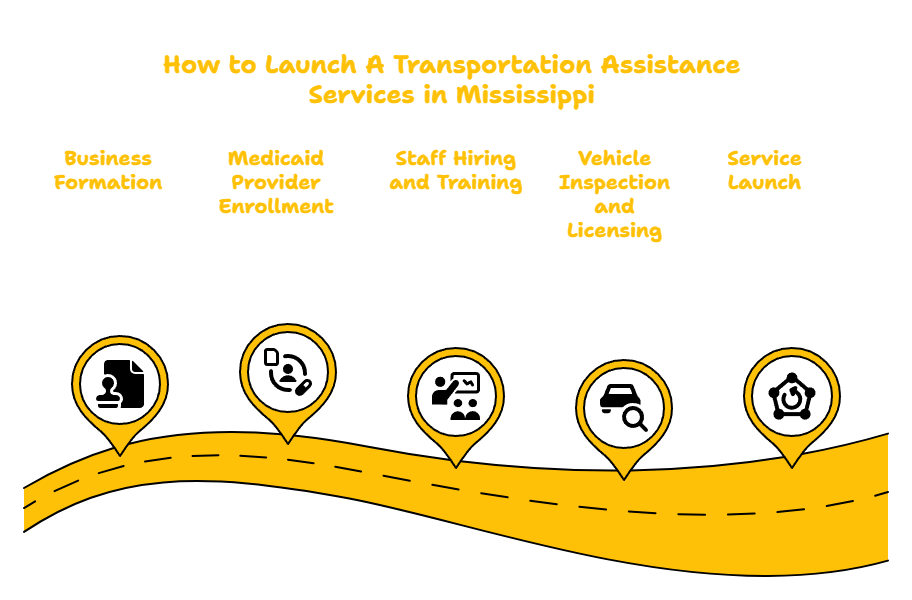
Launching a transportation agency requires a rigorous commitment to regulatory compliance. Before a provider can bill Medicaid for services, they must establish their business entity with the Mississippi Secretary of State and secure all federal tax identifiers, including an EIN and a Type 2 NPI. These foundational steps ensure that the agency is recognized as a legitimate business entity capable of contracting with the state.
Following business formation, the provider must obtain a Passenger Transportation License from the Mississippi Department of Transportation. This license acts as a prerequisite for Medicaid enrollment. Once licensed, the provider enters the formal enrollment process with the Mississippi Division of Medicaid. This involves demonstrating compliance with service requirements, maintaining adequate liability insurance, and submitting comprehensive documentation that satisfies state eligibility standards for reimbursement.
- Register the business with the Mississippi Secretary of State.
- Obtain an IRS EIN and an NPI (Type 2).
- Secure a Passenger Transportation License from MDOT.
- Submit all documentation to the Mississippi Division of Medicaid for provider enrollment.
What Documentation and Staffing Standards Are Required?
A successful transportation agency must maintain a high standard of documentation and staff qualification to meet audit requirements. At the organizational level, this includes retaining proof of business registration, NPI confirmation, and valid vehicle insurance. Furthermore, every agency must develop a detailed Policy and Procedure Manual that addresses driver training, vehicle safety protocols, and clear incident-reporting procedures. These documents serve as the backbone for both daily operations and regulatory inspections.
Staffing requirements are equally stringent to ensure the safety of vulnerable populations. A Transportation Program Manager must typically demonstrate experience in logistics or transportation management. Drivers must hold valid licenses with passenger endorsements and maintain active CPR and First Aid certifications. Additionally, all staff must undergo thorough background checks and TB screenings. Ongoing training in ADA compliance, defensive driving, and passenger assistance is essential for maintaining the quality of care expected in waiver-funded programs.
Which Medicaid Waiver Programs Support Transportation Services?
Transportation assistance is integrated into several Mississippi Medicaid initiatives. The 1915(c) HCBS Waiver for the Elderly and Disabled, as well as the Independent Living Waiver, are primary vehicles for delivering these services. By utilizing these waivers, the Mississippi Division of Medicaid can cover the costs associated with transporting participants to essential community and medical settings, thereby preventing isolation and ensuring continued access to necessary health services.
In addition to these waiver-specific services, the broader NEMT program provides a foundational layer of transportation support for Medicaid beneficiaries. Whether a participant is accessing therapy via a waiver program or general non-emergency medical transportation, the provider must remain diligent in ensuring every trip is documented accurately against the individual's authorized service plan. This linkage between the service provided and the funding source is the key to sustainable agency operations.
Frequently Asked Questions
What is the typical timeline for launching a transportation assistance agency in Mississippi?
The total timeline varies based on administrative readiness, but generally, business formation takes 1–2 weeks, followed by a 60–90 day window for Medicaid provider enrollment. Staff hiring and vehicle inspections typically occur in tandem, spanning 2–6 weeks.
Is a specific license required for vehicles used in these programs?
Yes, providers must obtain a Passenger Transportation License from the Mississippi Department of Transportation (MDOT) to operate legally within these programs, in addition to standard vehicle registration and insurance requirements.
What are the primary reasons for audit failures in transportation programs?
Common issues include missing trip logs, inconsistent driver credentialing, lack of proper vehicle maintenance documentation, and failure to align transportation services with the participant’s Individual Transportation Plan (ITP) or Person-Centered Plan (PCP).
Key Takeaways for Prospective Providers
Establishing a transportation assistance agency in Mississippi requires a strategic focus on regulatory alignment, thorough staff vetting, and meticulous administrative documentation. By strictly following the guidelines set by the Mississippi Division of Medicaid and the Mississippi Department of Transportation, and by maintaining current policy manuals and safety protocols, providers can ensure high-quality service delivery. Successful agencies prioritize both the safety of the individual participant and the administrative rigors required to remain in good standing with state and federal oversight agencies.
Last verified: October 2023. This information is provided for educational purposes only and does not constitute legal or professional advice. Requirements for Medicaid waivers and state-licensed programs are subject to change; always verify current regulations directly with the Mississippi Division of Medicaid and relevant state agencies before making business decisions.