TRANSPORTATION ASSISTANCE SERVICES PROVIDER IN MINNESOTA
By Fatumata Kaba · 2025-08-13 · 5 min read
Transportation Assistance Services in Minnesota provide essential, accessible mobility solutions for individuals enrolled in Home and Community-Based Services (HCBS) waivers who require support to access medical care, social engagements, and community activities. As a specialized provider, your agency acts as a critical link in the continuum of care, ensuring that individuals with disabilities, chronic health conditions, or mobility impairments can maintain independence and community integration through reliable, person-centered transportation.
What Regulatory Frameworks Govern Minnesota Transportation Assistance?
Operating a transportation assistance agency in Minnesota requires navigating a multi-layered regulatory environment. Oversight is primarily managed by the Minnesota Department of Human Services (DHS), which administers the Medicaid-funded waiver programs that reimburse these services. Providers must align their operations with DHS policies to ensure that trip logs, billing, and service delivery meet the rigorous standards required for federal and state compliance.
Furthermore, the Minnesota Department of Transportation (MnDOT) holds jurisdiction over the operational aspects of vehicle safety and public transportation standards. Because these services involve transporting vulnerable populations, providers must adhere to both public carrier regulations and specific disability-access mandates. Simultaneously, the Centers for Medicare & Medicaid Services (CMS) provides federal oversight, ensuring that every service delivered under a 1915(c) waiver remains consistent with the participant's person-centered plan.
- Minnesota Department of Human Services (DHS): Administers Medicaid programs, including non-emergency medical transportation (NEMT) and community mobility services.
- Minnesota Department of Transportation (MnDOT): Regulates public and specialized transportation services to ensure passenger safety.
- Centers for Medicare & Medicaid Services (CMS): Provides federal oversight and ensures waiver compliance for all Medicaid-funded services.
How are Transportation Services Customized via HCBS Waivers?
Transportation Assistance is not a "one-size-fits-all" service. Under Minnesota’s HCBS waivers, services must be explicitly linked to the Individual Service Plan (ISP) or Person-Centered Plan (PCP). This ensures that the transportation provided is medically necessary or essential for the participant to achieve their specific community-living goals. The service is designed to be flexible, supporting everything from routine medical check-ups to vocational training and social integration.
Providers must be prepared to offer a spectrum of support, ranging from standard transport to higher levels of physical assistance. This often includes wheelchair-accessible vehicle options, door-to-door or door-through-door support, and driver assistance for individuals who may require extra care during the transition from their home to the vehicle. Effective coordination—including advanced scheduling and precise route planning—is essential to maintaining the high reliability required by waiver participants.
What are the Mandatory Steps for Medicaid Provider Enrollment?
Becoming an approved Medicaid transportation provider is a structured process that begins with formal business organization and ends with official enrollment with the Minnesota Department of Human Services. Before submitting any paperwork, agencies must ensure their business structure is legally established with the Minnesota Secretary of State and that they have secured a federal Employer Identification Number (EIN) and a Type 2 National Provider Identifier (NPI) for organizational billing.
The enrollment timeline typically spans 60 to 90 days. During this period, the agency must provide proof of licensure, comprehensive liability insurance, and detailed service descriptions. Because the DHS must verify that the provider is capable of meeting state standards for safety and service delivery, any discrepancies in the application can result in significant delays. It is critical that agencies verify their MnDOT Passenger Transportation License is active and in good standing throughout this phase, as this is a prerequisite for final Medicaid approval.
- Phase 1: Pre-application research and business entity formation (1–2 weeks).
- Phase 2: Securing the Passenger Transportation License through MnDOT (2–4 weeks).
- Phase 3: Medicaid provider enrollment application submission to DHS (60–90 days).
- Phase 4: Staffing and operational compliance training (30–45 days).
What Documentation and Operational Policies are Required?
A compliant transportation agency must maintain an extensive internal documentation system. This system acts as the backbone of the organization, providing proof of compliance during state audits. Beyond basic business documents like Articles of Incorporation and the EIN letter, providers must maintain a comprehensive Policy & Procedure Manual. This manual serves as the operational guide for all staff, detailing how the agency handles the complexities of transporting vulnerable populations.
Specific policies should clearly outline driver training requirements, vehicle maintenance cycles, and incident reporting protocols. A robust system for intake and assessment is also required, ensuring that the agency understands the specific physical or medical needs of a participant before their first trip. By maintaining organized logs of vehicle inspections, driver credentials, and service utilization, providers protect themselves from liability and ensure consistent service quality.
- Driver Protocols: Mandatory background checks, TB clearance, and ongoing defensive driving training.
- Vehicle Maintenance: Strict schedules for safety inspections and ADA-compliant equipment testing.
- Emergency Procedures: Clear workflows for incident reporting and medical emergencies during transit.
- Service Documentation: Standardized trip logs and client need assessments for every service interaction.
How Do You Manage Staffing and Training Compliance?
Staffing for transportation assistance requires a focus on both professional competency and compassionate client interaction. The Transportation Program Manager must be well-versed in logistics and community mobility planning to oversee routes and ensure efficiency. On the front line, drivers and aides are the primary representatives of your agency and must possess both a valid driver’s license with the appropriate passenger endorsements and current CPR/First Aid certification.
Ongoing training is a non-negotiable requirement for compliant agencies. Training should cover ADA compliance, vehicle safety, and the nuances of working with individuals with diverse disabilities. Regular documentation of this training—including sign-in sheets and competency assessments—is necessary to satisfy DHS standards. Investing in your workforce not only improves safety outcomes but also reduces turnover, which is critical for maintaining consistent service availability for waiver participants.
Frequently Asked Questions
Which Minnesota HCBS waivers support Transportation Assistance Services?
Transportation Assistance is primarily provided under the 1915(c) waivers, including the Elderly and Disabled Waiver, the Community Access for Disability Inclusion (CADI) Waiver, and the Brain Injury (BI) Waiver. These programs aim to prevent institutionalization by providing the mobility necessary for community living.
Is a specialized license required beyond a standard driver's license?
Yes. Because you are providing specialized transportation to vulnerable populations, you must obtain a Passenger Transportation License through the Minnesota Department of Transportation (MnDOT). This ensures your vehicles and operational practices meet state safety and accessibility standards.
How long does the entire startup process take?
While timelines vary based on individual agency readiness, the total time from business formation to active Medicaid enrollment typically takes between 4 and 6 months. This includes time for business registration, licensing, staff training, and the 60-90 day Medicaid provider enrollment window.
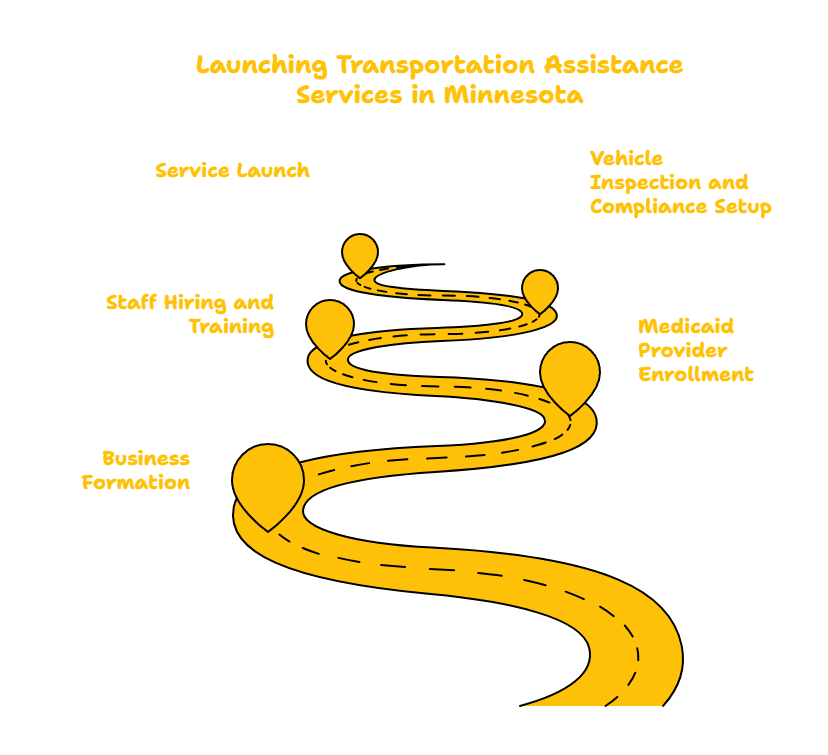
Launching a transportation assistance agency in Minnesota requires strict adherence to both DHS and MnDOT regulations. By focusing on compliant documentation, specialized staff training, and efficient trip coordination, agencies can successfully deliver essential services to participants in the HCBS waiver system. The ability to bridge the gap between home and community is a vital service that supports long-term independence and quality of life for Minnesota’s most vulnerable residents.
Last verified August 2024. The information provided is for educational purposes only and does not constitute legal or professional advice. Requirements for Medicaid waiver programs are subject to change; always consult the official Minnesota Department of Human Services (DHS) website or the current provider manual for the most up-to-date guidance and regulatory information.