TRANSPORTATION ASSISTANCE SERVICES PROVIDER IN GEORGIA
By Fatumata Kaba · 2025-07-14 · 5 min read
Connecting individuals to health care, employment, and community activities through safe, reliable transportation support.
Transportation Assistance Services in Georgia serve as a critical bridge for individuals with disabilities, chronic health conditions, or aging-related needs, ensuring they can access essential destinations such as medical appointments, vocational sites, and community programs. These services are authorized under Georgia’s Medicaid Home and Community-Based Services (HCBS) waiver programs to foster greater independence, community integration, and an improved quality of life for program participants.
As a provider, operating within this sector requires a deep understanding of the regulatory landscape defined by the Georgia Department of Community Health (DCH), the Department of Human Services (DHS), and the Centers for Medicare & Medicaid Services (CMS). By adhering to strict safety, accessibility, and documentation standards, provider agencies ensure the continuity of care for vulnerable populations while meeting state and federal Medicaid requirements.
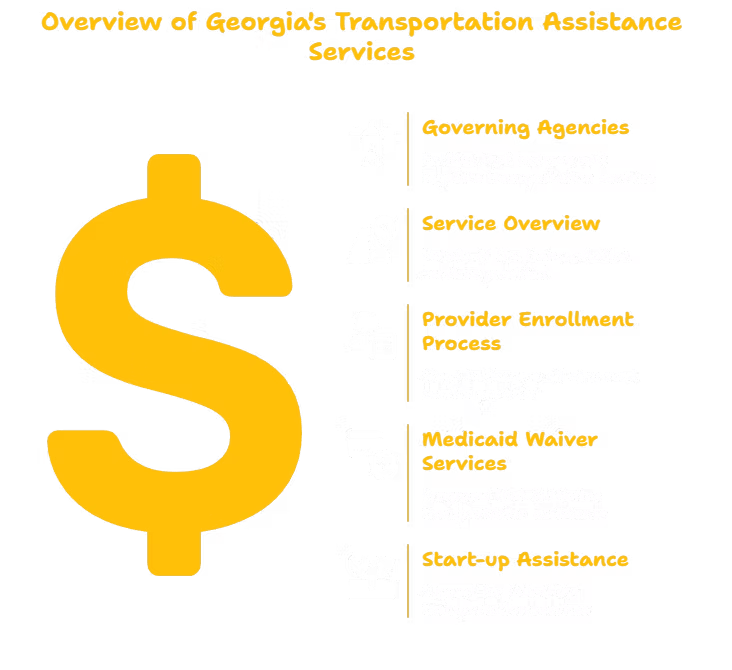
1. What Are the Governing Agencies and Regulatory Requirements?
The provision of Transportation Assistance Services is governed by a multi-tiered regulatory framework. The Georgia Department of Community Health (DCH) holds primary responsibility for overseeing Medicaid enrollment, service authorization, and the reimbursement processes that sustain these provider agencies. Providers must align their operational protocols with DCH mandates to remain in good standing and ensure consistent Medicaid payment cycles.
Beyond the DCH, the Georgia Department of Human Services (DHS) manages the Coordinated Transportation Program, which oversees state-funded and specialized transport services for eligible populations. Furthermore, at the federal level, the Centers for Medicare & Medicaid Services (CMS) provides overarching guidance to ensure that state-run HCBS programs, including transportation components, remain compliant with federal quality and safety standards. Navigating these agencies requires careful attention to the specific procedural requirements of each entity.
2. How Do I Define the Scope of My Transportation Assistance Services?
Transportation Assistance Services provide non-emergency transport to and from approved locations that are essential for an individual’s health, employment, and community participation. A robust service model includes not just the physical movement of the participant, but also the support necessary for a safe and dignified experience. This includes assistance with boarding, securing wheelchairs or other mobility devices, and safely exiting the vehicle upon arrival.
Approved providers often deliver services that include trip planning, scheduling, and coordination to ensure that participants with complex needs reach their destinations on time. Because all transportation must be pre-authorized in the participant’s Individual Service Plan (ISP), providers must implement rigorous intake and verification protocols. This ensures that every trip is accounted for and meets the specific health or community access requirements mandated by the participant's waiver program.
- Transportation to Medicaid-covered medical appointments.
- Transportation to employment sites, day programs, and educational institutions.
- Transportation to authorized community activities.
- Assistance with wheelchair securement and mobility device support.
- Escort services for individuals requiring supervision during transit.
- Trip planning, scheduling, and coordination.
3. What Steps Are Involved in the Provider Enrollment and Licensing Process?
Launching a transportation agency begins with formal business formation, including registration with the Georgia Secretary of State and obtaining an Employer Identification Number (EIN) from the IRS. Providers must also obtain a National Provider Identifier (NPI) Type 2 to facilitate billing within the Medicaid system. These foundational steps serve as the bedrock for all subsequent licensing and enrollment activities.
Once registered, the prospective provider must enroll through the Georgia Medicaid Management Information System (GAMMIS). During this phase, you must secure adequate commercial vehicle insurance and general liability insurance. If the agency plans to provide Non-Emergency Medical Transportation (NEMT), it must explicitly comply with both DHS and DCH requirements. Maintaining Department of Transportation (DOT) compliance for larger vehicles and ensuring that all assets are fully ADA-compliant are non-negotiable requirements for successful enrollment.
4. How Is the DCH Provider Enrollment Process Structured?
The enrollment process is a sequential journey that begins with submitting an application to the DCH. Agencies should be prepared to present a comprehensive set of documents, including Articles of Incorporation, proof of business insurance, and evidence of driver credentialing. Documentation regarding your internal operations—such as trip scheduling software, participant intake forms, and emergency response protocols—is also necessary for review.
Once your application and supporting documentation are submitted, the DCH will initiate a program readiness review. This review evaluates your agency’s capacity to deliver services safely and accurately. Assessors will verify your trip-tracking systems, vehicle safety maintenance records, and participant protection policies. Upon receiving approval, you will finalize your enrollment in GAMMIS and configure the appropriate billing codes. This final step is essential for ensuring that service delivery is linked accurately to the Medicaid reimbursement system.
5. What Are the Critical Staffing and Training Mandates?
Staffing a transportation agency requires a focus on both logistical coordination and direct participant care. A Transportation Program Manager or Dispatcher is essential for managing daily routes, tracking scheduling, and ensuring efficient operations. This individual should have experience in transportation logistics or healthcare service environments and must clear required background screenings.
Drivers and Transportation Assistants serve as the face of your agency and must possess a valid Georgia driver’s license, along with defensive driving certifications. Mandatory training programs for all staff include passenger assistance techniques, wheelchair securement, ADA compliance, HIPAA confidentiality, and incident reporting. Ongoing, annual refresher training is required to ensure that all staff remain updated on safety protocols and Medicaid documentation standards.
6. Frequently Asked Questions
Which Medicaid waivers authorize Transportation Assistance Services?
In Georgia, these services are primarily authorized under the Comprehensive Supports Waiver Program (COMP), the New Options Waiver Program (NOW), and the Independent Care Waiver Program (ICWP).
How long does the provider enrollment process typically take?
While timelines vary based on application accuracy and review volumes, the DCH provider application and readiness review phase generally takes 60–90 days, with Medicaid enrollment and billing configuration adding an additional 45–60 days.
What type of insurance is required for transportation providers?
Providers must maintain comprehensive commercial auto insurance and general liability insurance. Specific limits and coverage mandates should be verified against current DCH and state-level policy requirements for the specific class of vehicle being operated.
Key Takeaway
Building a successful Transportation Assistance Services agency in Georgia requires careful adherence to DCH, DHS, and CMS regulatory standards. Success is predicated on thorough preparation—spanning business formation, vehicle safety compliance, staff training, and rigorous Medicaid billing documentation—to ensure that individuals relying on these services receive consistent, safe, and authorized transportation support.
Last verified: October 2023. Disclaimer: This article is for informational purposes only and does not constitute legal, medical, or financial advice. Regulations regarding Medicaid HCBS and transportation providers are subject to change. Always consult directly with the Georgia Department of Community Health and the Georgia Medicaid Management Information System (GAMMIS) for the most current program requirements, fee schedules, and policy updates.