TRANSPORTATION ASSISTANCE SERVICES PROVIDER IN COLORADO
By Fatumata Kaba · 2025-07-06 · 5 min read
Ensuring Access to Healthcare, Employment, and Community Life for Individuals with Disabilities and Chronic Conditions
Transportation Assistance Services in Colorado provide vital non-medical, non-emergency transportation for individuals enrolled in Home and Community-Based Services (HCBS) waivers. By facilitating access to medical appointments, employment, day programs, and essential community activities, these providers serve as a foundational support system that fosters participant independence, health equity, and meaningful community integration.
What Are the Governing Bodies Overseeing Colorado Transportation Services?
The delivery of Medicaid-funded transportation is governed by a multi-layered regulatory framework designed to ensure participant safety and fiscal accountability. The Colorado Department of Health Care Policy and Financing (HCPF) serves as the primary authority, overseeing Medicaid HCBS waivers and establishing the rigorous standards for provider enrollment and compliance. Every transportation agency must align its operations with HCPF guidelines to maintain billing eligibility.
Beyond state-level health oversight, additional agencies provide critical regulatory layers. The Colorado Department of Transportation (CDOT) coordinates with regional programs to set safety and accessibility standards, particularly regarding vehicle equipment and transit operations. At the federal level, the Centers for Medicare & Medicaid Services (CMS) provides federal oversight, ensuring that Colorado’s waiver programs adhere to national requirements regarding participant access and service quality.
How Do Providers Define and Deliver Transportation Services?
Transportation Assistance Services are strictly limited to non-emergency, non-medical needs as outlined in a participant’s person-centered service plan. Approved activities include travel to non-emergency medical appointments, vocational programs, day habilitation, pharmacies, grocery stores, and various social or recreational community activities. Because these services are essential to the individual's ability to live independently, reliability and accessibility are paramount.
Providers may offer a variety of service delivery models, including scheduled trips and demand-response options. Service modalities generally fall into door-to-door or curb-to-curb categories, depending on the participant's specific needs. Additionally, providers must be equipped to support individuals with mobility devices, such as wheelchairs, and provide escort assistance for those who require direct supervision during transit.
- Non-emergency medical appointments
- Employment and vocational programs
- Day habilitation and day programs
- Grocery shopping, pharmacies, and other essential errands
- Recreational and social community activities
What Are the Prerequisites for Licensing and Provider Approval?
Launching a transportation agency requires a methodical approach to business formation and regulatory compliance. Initially, a founder must register the business with the Colorado Secretary of State and obtain an EIN from the IRS. A Type 2 National Provider Identifier (NPI) is mandatory for institutional billing, followed by formal enrollment as a Medicaid transportation provider through the Gainwell Technologies portal.
Operational prerequisites are equally stringent. Providers must maintain comprehensive commercial vehicle insurance and general liability insurance. Depending on the size and scope of the operation, Colorado Motor Carrier permits may be required. Furthermore, agencies must develop robust internal policies covering trip scheduling, driver safety training, preventive vehicle maintenance, and emergency response. If a provider intends to serve individuals with mobility impairments, the entire fleet must be verified to meet strict ADA accessibility requirements.
What Is the HCPF Enrollment Process and Timeline?
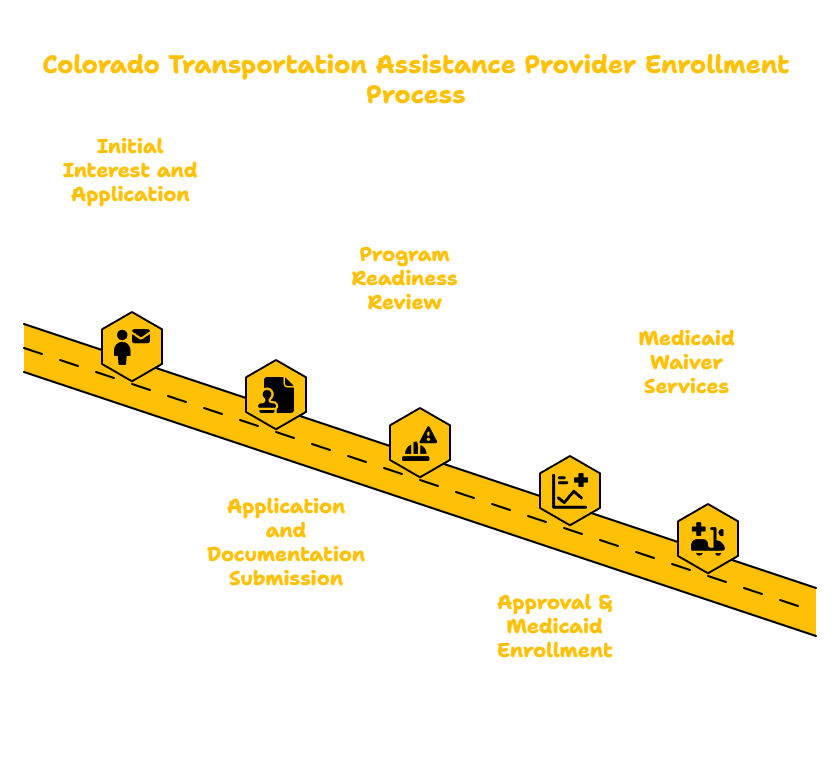
The enrollment process is a structured sequence that begins with requesting an application packet from HCPF. Prospective providers are strongly encouraged to attend official Medicaid HCBS orientation sessions, which clarify the nuances of the waiver program. Once the application is submitted, it must include comprehensive business documentation, proof of insurance, and evidence of vehicle compliance, such as inspection reports and accessibility certifications.
Following the submission of documents, HCPF conducts a program readiness review. This phase evaluates the provider’s operational capacity, including their trip verification processes, participant intake protocols, and incident management systems. In some instances, HCPF may perform site inspections or vehicle audits. Once the application is approved, the provider completes their formal enrollment through Gainwell Technologies and configures the appropriate billing codes for the HCBS waivers they are authorized to serve.
What Are the Essential Staffing and Documentation Standards?
Operational success relies on meeting specific staff requirements. A Transportation Services Manager must oversee daily logistics and ensure compliance, requiring a solid background in transportation logistics or human services. Drivers and transportation assistants must hold a valid Colorado driver’s license, pass comprehensive background checks, and ideally maintain CPR/First Aid and defensive driving certifications.
Documenting these efforts is a continuous requirement. Providers must maintain detailed logs of staff training, which should cover passenger assistance, wheelchair securement, HIPAA confidentiality, and emergency protocols. Furthermore, accurate records for every trip—including authorization tracking and verification—are essential to remain compliant during potential state audits.
- Participant intake and trip scheduling procedures
- Driver safety standards and emergency protocols
- ADA compliance and accessible transportation procedures
- Incident response, vehicle maintenance schedules, and inspections
- Confidentiality, HIPAA compliance, and participant rights policies
- Staff credentialing, driver background check records, and training logs
- Medicaid billing, trip verification, and authorization tracking systems
Frequently Asked Questions
Which Medicaid waivers authorize transportation services?
Transportation Assistance Services are authorized under several waivers, including the Elderly, Blind, and Disabled (EBD) Waiver, Supported Living Services (SLS) Waiver, Developmental Disabilities (DD) Waiver, Brain Injury (BI) Waiver, Community Mental Health Supports (CMHS) Waiver, and the Children’s Extensive Support (CES) Waiver.
What is the typical timeline for launching a provider agency?
Business formation and insurance setup typically take 1–2 weeks, followed by the HCPF application and readiness review (60–90 days), staffing and vehicle preparation (30–45 days), and final Medicaid enrollment/billing configuration (45–60 days).
Are providers required to be ADA compliant?
Yes, all vehicles used to transport individuals with mobility impairments must meet ADA accessibility requirements, and staff must be trained on proper wheelchair securement and assistance techniques to ensure a safe and inclusive transit experience.
Key Takeaway
Operating a Transportation Assistance Services agency in Colorado requires meticulous adherence to HCPF regulations, a commitment to ADA-compliant infrastructure, and a robust administrative system for billing and driver management. By focusing on rigorous staff training and clear operational protocols, agencies can successfully provide the essential mobility support that empowers HCBS participants to engage fully with their communities.
Last verified August 2024. This information is intended for educational purposes only and does not constitute legal or professional advice. Always verify current state requirements with the Colorado Department of Health Care Policy and Financing before initiating business operations.