TRANSPORTATION ASSISTANCE SERVICES PROVIDER IN ARIZONA
By Fatumata Kaba · 2025-07-01 · 6 min read
Transportation Assistance Services in Arizona provide critical mobility solutions for individuals receiving long-term care through the Arizona Long Term Care System (ALTCS) and the Division of Developmental Disabilities (DDD). By facilitating non-emergency medical transportation (NEMT) and community access, these providers ensure that vulnerable members can safely reach essential healthcare appointments, day programs, and vital community resources. This service model is fundamental to maintaining continuity of care and fostering independence for individuals navigating the state’s complex Home and Community-Based Services (HCBS) landscape.
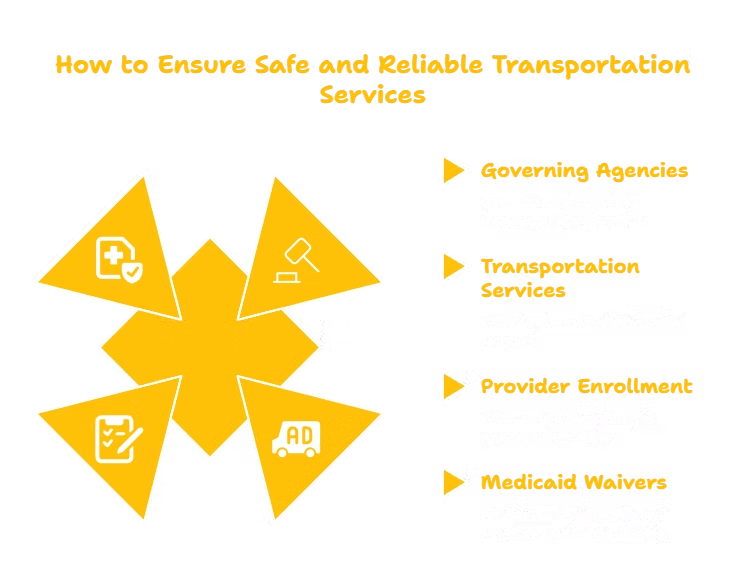
Understanding the Governing Agencies and Regulatory Framework
Navigating the Arizona Medicaid transportation landscape requires a clear understanding of the hierarchy of oversight. The primary authority is the Arizona Health Care Cost Containment System (AHCCCS), which manages the state’s Medicaid program and establishes the policies governing Non-Emergency Medical Transportation (NEMT) benefits. Providers must ensure their operational standards align with these state-level mandates to remain in good standing.
Additionally, for providers working with the developmental disabilities population, the Arizona Department of Economic Security (DES) Division of Developmental Disabilities (DDD) serves as the primary gateway. The DDD authorizes and oversees qualified vendors, ensuring that transportation services meet specific safety and quality benchmarks. On a federal level, the Centers for Medicare & Medicaid Services (CMS) provides the overarching regulatory framework for HCBS, which the state translates into localized requirements for providers.
- Arizona Health Care Cost Containment System (AHCCCS): Sets the global policy for Medicaid transportation benefits.
- Division of Developmental Disabilities (DDD): Authorizes vendors for the transportation of members with developmental disabilities.
- Centers for Medicare & Medicaid Services (CMS): Defines federal compliance standards for Medicaid-funded HCBS services.
Defining the Scope of Transportation Assistance Services
Transportation assistance is defined as a non-emergency, door-to-door support service designed to bridge the gap between a member's residence and their approved service locations. These services are not merely about driving; they are about facilitating community integration and ensuring that a member’s healthcare plan is not disrupted by a lack of reliable mobility. Whether an individual requires ambulatory transport or specialized wheelchair-accessible vehicles, the provider’s primary obligation is the safe and punctual delivery of the passenger.
Operational success in this sector requires meticulous record-keeping. Approved providers are responsible for more than just the transit itself; they must manage a robust administrative backend. This includes conducting rigorous vehicle safety inspections, maintaining detailed trip logs that verify pick-up and drop-off times, and ensuring consistent communication with case managers to coordinate complex scheduling needs.
- One-way or roundtrip transportation to and from Medicaid-approved services.
- Provision of ambulatory or wheelchair-accessible transportation options.
- Strict adherence to vehicle safety inspection schedules and documentation requirements.
- Real-time coordination with MCO scheduling teams and DDD support coordinators.
Navigating Licensing and Provider Approval Prerequisites
Launching a transportation agency in Arizona requires a structured approach to business registration and credentialing. Before seeking authorization to provide services, the entity must be properly formed under the Arizona Corporation Commission. An employer identification number (EIN) and a Type 2 National Provider Identifier (NPI) are mandatory requirements for billing and identification within the Medicaid system. Once these foundational elements are secured, the provider must demonstrate financial and operational responsibility through commercial vehicle insurance and comprehensive auto liability coverage.
The application process varies depending on the intended member population. For those wishing to serve DDD members, the Qualified Vendor Application and Directory System (QVADS) is the mandatory portal for submission. Conversely, those targeting the broader ALTCS population must pursue credentialing directly with specific Managed Care Organizations (MCOs) such as Mercy Care, Banner, or UnitedHealthcare. Each path requires distinct documentation, including proof of fleet accessibility and verified driver credentialing.
Executing the Provider Enrollment Process
The enrollment journey is segmented by the type of member the provider intends to serve. For providers focusing on DDD members, the first step is attending the mandatory Qualified Vendor orientation. This session provides vital insights into the contractual expectations of the department. Following orientation, the applicant submits a detailed proposal through QVADS, which must include comprehensive vehicle logs, established driver policies, and defined service routes. Upon approval, the provider becomes eligible to receive referrals from DDD support coordinators.
For providers looking to serve ALTCS members via MCOs, the process shifts toward corporate credentialing. This involves contacting the provider relations department of the relevant MCO to secure specific application packages. The provider must submit business licenses, detailed vehicle rosters, and evidence of insurance compliance. Once the MCO completes the credentialing phase, the provider is officially integrated into the network and begins receiving authorizations for covered trips.
Staffing, Training, and Operational Compliance
The quality of transportation services is entirely dependent on the competence and reliability of the staff. Beyond the obvious requirement of a valid Arizona driver’s license, all drivers must maintain clean motor vehicle records (MVR) and pass thorough background checks. Because these services are often provided to vulnerable populations, specialized training is non-negotiable. This includes mandatory CPR and First Aid certification, as well as Article 9 training for those transporting members through the DDD system.
Operational compliance also extends to the administrative team. A transportation coordinator must be able to handle complex logistics, manage scheduling software, and maintain strict HIPAA compliance when handling client data. Ongoing training for all personnel should include defensive driving, ADA-compliant passenger assistance, and clear protocols for emergency incident reporting to ensure the physical and emotional safety of every passenger.
- Article 9 Training: Required for all staff interacting with DDD members.
- Passenger Assistance Training: Focuses on safety protocols for mobility devices.
- Documentation Mastery: Ongoing training on mileage tracking and HIPAA-compliant record management.
Frequently Asked Questions
What is the difference between NEMT and standard HCBS transportation?
Non-Emergency Medical Transportation (NEMT) generally focuses specifically on trips to and from healthcare providers or medical facilities, while HCBS transportation may encompass a broader range of services, including transit to day programs, employment support, or community integration activities authorized under a member’s waiver.
Are all transportation providers required to have wheelchair-accessible vehicles?
While not every single vehicle in a fleet may need to be accessible, providers must demonstrate the capacity to meet the needs of the members they serve. If a provider accepts a contract to support members with mobility impairments, they must possess, maintain, and provide documentation for ADA-compliant vehicles.
How long does the credentialing process typically take for new vendors?
The timeline varies significantly by program. Business formation and initial setup generally take 1–2 weeks, but the formal credentialing and application process via QVADS or MCOs can span between 45 and 90 days. Additional time should be allocated if the provider requires specific AHCCCS billing enrollment.
Key Takeaways for Prospective Providers
Establishing a transportation assistance service in Arizona is a rigorous process that demands strict adherence to AHCCCS policies, DDD vendor requirements, and MCO credentialing standards. Success depends on the provider’s ability to maintain high levels of operational readiness, including comprehensive vehicle safety, robust staff training, and precise documentation of every trip. By focusing on compliance, logistical efficiency, and safety, providers can successfully build a sustainable agency that fulfills a critical need within the Arizona Medicaid HCBS landscape.
Last verified: October 2023. This content is provided for informational purposes only and does not constitute legal or professional advice. Always consult directly with the Arizona Health Care Cost Containment System (AHCCCS) or the Division of Developmental Disabilities (DDD) for the most current regulatory requirements and policy updates.