TRANSITIONAL LIVING SERVICES PROVIDER IN MISSOURI
By Fatumata Kaba · 2025-08-07 · 5 min read
Supporting Independence Through Structured Living Programs in Missouri
Transitional Living Services in Missouri provide essential, structured housing and support systems for individuals navigating the complex move from institutional care, homelessness, or restrictive settings into independent community living. By prioritizing person-centered planning, these services aim to bolster self-sufficiency, foster critical life skills, and ensure successful long-term community integration for Missouri’s most vulnerable populations.
Operating under the umbrella of Missouri’s Home and Community-Based Services (HCBS) Waivers, these programs are designed to bridge the gap between high-acuity care and total autonomy. Providers play a critical role in facilitating this transition, acting as the primary support system for participants as they acquire the daily living competencies necessary to thrive in less restrictive environments.
How Do Governing Agencies Regulate Transitional Living Programs?
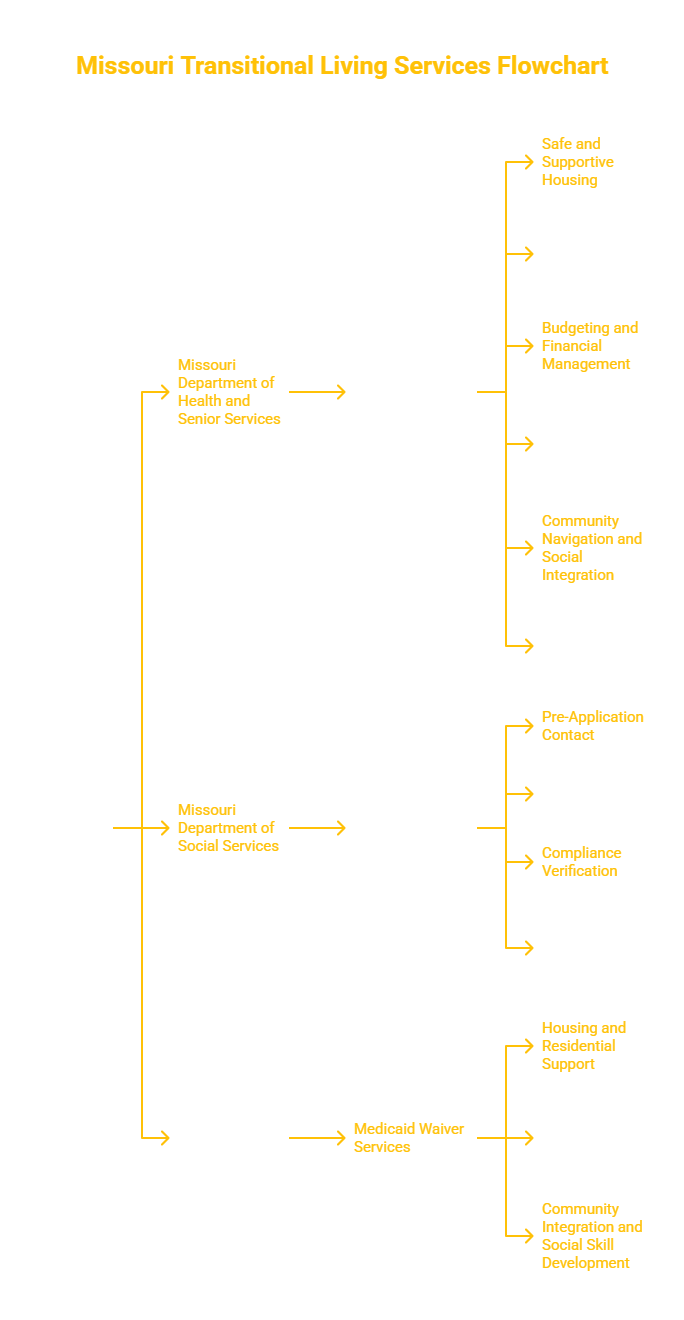
The regulatory landscape for Transitional Living Services in Missouri is defined by a multi-tiered oversight structure involving state and federal entities. The Missouri Department of Health and Senior Services (DHSS) serves as the primary administrative authority, managing the Home and Community-Based Services (HCBS) Waiver programs that fund these vital initiatives. Their role encompasses the establishment of service standards, oversight of care quality, and the enforcement of person-centered planning requirements.
Complementing the work of DHSS, the Missouri Department of Social Services (DSS) is responsible for the granular aspects of program administration, including the enrollment of providers and the authorization of services. Finally, the Centers for Medicare & Medicaid Services (CMS) provide the overarching federal framework, ensuring that Missouri’s waiver programs remain in full compliance with federal statutes, which is a prerequisite for continued Medicaid funding.
- Missouri Department of Health and Senior Services (DHSS): Administers Medicaid and HCBS Waiver programs.
- Missouri Department of Social Services (DSS): Oversees Medicaid provider enrollment and service authorization.
- Centers for Medicare & Medicaid Services (CMS): Provides federal oversight and ensures waiver compliance.
What Are the Core Components of Transitional Living Services?
Transitional Living Services are highly individualized, with every service delivery model mapped directly to the participant's Individual Service Plan (ISP) or Person-Centered Plan (PCP). The overarching objective is to provide a "scaffolded" environment where residents can practice independence while having immediate access to professional support. Services typically include the provision of safe and supportive housing, which serves as the foundation for all other therapeutic interventions.
Beyond physical housing, programs focus on the acquisition of life skills, such as financial management, meal preparation, and hygiene maintenance. Employment readiness and vocational support are frequently integrated to help participants gain the confidence and skills needed to enter or re-enter the workforce. Additionally, staff facilitate community navigation, helping residents build social networks and utilize public resources, which is essential for preventing social isolation during the transition period.
- Safe and supportive housing arrangements.
- Personal care and life skills training.
- Budgeting and financial management guidance.
- Employment readiness and vocational support.
- Community navigation and social integration assistance.
- Monitoring and support from trained staff.
What Is the Required Path for Licensure and Provider Enrollment?
Entering the market as a Transitional Living Services provider requires rigorous adherence to state-mandated licensing and enrollment milestones. Organizations must first establish their legal entity with the Missouri Secretary of State and secure necessary federal identifiers, including an Employer Identification Number (EIN) and a Type 2 National Provider Identifier (NPI). These foundational steps allow the business to operate legally and facilitate billing through the Medicaid system.
Following business formation, the provider must obtain a Residential Care Facility License from the DHSS, which verifies that the proposed environment meets rigorous health and safety standards. Once the facility is licensed, the agency must initiate the Medicaid provider enrollment process through the Missouri Department of Social Services. This involves submitting comprehensive documentation, including policy and procedure manuals, proof of insurance, and detailed service descriptions that demonstrate the agency’s capacity to serve the target population.
- Pre-Application: Consult with the Missouri Department of Social Services to confirm specific program requirements.
- Documentation Submission: Provide business registration, licensure, and liability insurance documentation.
- Compliance Verification: Undergo site reviews to ensure housing safety and operational care standards are met.
- Medicaid Enrollment: Receive an authorized Medicaid provider number to commence service delivery.
How Are Staffing and Operational Standards Maintained?
The quality of a Transitional Living program rests on the competence and training of its personnel. A Transitional Living Program Manager should possess significant experience in social services, residential care, or community integration to effectively oversee the implementation of ISPs. They are responsible for ensuring that all staff follow strict documentation protocols and that the facility remains in constant compliance with state and federal regulations.
Direct Support Professionals (DSPs) are the cornerstone of the resident experience. Candidates must meet baseline requirements, including a high school diploma or equivalent, current CPR/First Aid certification, and successful completion of background checks and TB clearance. Ongoing training is mandatory, focusing on crisis intervention, de-escalation, personal care techniques, and the nuances of client interaction. These operational standards are non-negotiable and must be clearly outlined in the provider’s policy and procedure manual.
Frequently Asked Questions
Which Medicaid waivers are most commonly associated with these services?
Transitional Living Services are primarily accessed through the Aged and Disabled Waiver (ADW), the Independent Living Waiver, and the Medically Fragile Adult Waiver, depending on the specific demographic being served.
What is the typical timeline for launching a new program?
The total timeline varies, but generally, business formation takes 1–2 weeks, facility licensing and safety compliance take 30–45 days, staff hiring and training take 30–45 days, and the Medicaid provider enrollment process can take between 60–90 days.
What documentation is critical for the initial enrollment phase?
Providers must compile Articles of Incorporation, an IRS EIN letter, NPI confirmation, a Residential Care Facility License, and a certificate of liability insurance. Additionally, a comprehensive policy and procedure manual covering safety, intake, and crisis management is mandatory.
Key Takeaway
Launching a successful Transitional Living Services agency in Missouri requires a meticulous approach to regulatory compliance, robust operational planning, and a deep commitment to the person-centered care model. By carefully navigating the licensure and enrollment milestones set forth by the DHSS and DSS, providers can build sustainable, high-impact programs that successfully transition participants into independent, fulfilling community lives.
Last verified: October 2024. This information is intended for educational purposes for healthcare entrepreneurs and is not legal or professional advice. Always consult with the Missouri Department of Health and Senior Services or the Missouri Department of Social Services directly regarding specific regulatory changes and individual application requirements.