TRANSITION SERVICES PROVIDER IN MISSISSIPPI
By Fatumata Kaba · 2025-08-06 · 5 min read
Understanding Transition Services in Mississippi
Transition Services in Mississippi represent a vital bridge for individuals with disabilities, facilitating their move from restrictive institutional settings, such as nursing homes and long-term care facilities, back into the autonomy of community-based living. These services are systematically structured to promote independence, ensure social integration, and significantly enhance the quality of life for participants through rigorous planning, resource coordination, and long-term follow-up support.
Operating under the framework of Mississippi’s Home and Community-Based Services (HCBS) Waivers, these services require a specialized approach to care management. By aligning with the Mississippi Department of Mental Health (DMH) and the Mississippi Division of Medicaid (DOM), providers ensure that the transition process is not only person-centered but also fully compliant with the oversight standards established by the Centers for Medicare & Medicaid Services (CMS).
Governing Agencies and Regulatory Oversight
The successful operation of a transition services agency in Mississippi relies on a clear understanding of the roles played by three primary governing bodies. The Mississippi Division of Medicaid (DOM) serves as the administrative lead, managing the fiscal aspects of the HCBS Waiver programs and overseeing the formal enrollment of qualified providers. Without approval and funding authorization from the DOM, service delivery cannot proceed.
Complementing this, the Mississippi Department of Mental Health (DMH) acts as the operational lead, responsible for coordinating the specific support services that enable community integration. Finally, the Centers for Medicare & Medicaid Services (CMS) provides federal oversight, setting the standards for waiver compliance that ensure accountability and quality across all Medicaid-funded transitions. Providers must maintain constant alignment with the directives issued by these three entities to ensure continuous program eligibility.
- Mississippi Department of Mental Health (DMH): Coordinates transition services and supports through HCBS Waiver programs.
- Mississippi Division of Medicaid (DOM): Administers Medicaid and HCBS Waiver programs, including funding for transition services.
- Centers for Medicare & Medicaid Services (CMS): Provides federal oversight and ensures waiver compliance.
Core Components of Transition Services
At the heart of the transition process is the Individual Transition Plan (ITP) or Person-Centered Plan (PCP). These documents serve as the blueprint for an individual’s move, ensuring that their specific needs and goals are documented and addressed. A provider’s primary responsibility is to translate these plans into actionable steps that transform an institutional resident into a successful, independent community member.
Effective transition services encompass a broad spectrum of support, ranging from the initial identification of suitable housing to the physical logistics of moving personal belongings. This involves identifying community resources, providing skills training for independent living, and managing the delicate process of setting up utilities and household arrangements. Once the individual has moved, providers are responsible for delivering post-transition follow-up, ensuring that the individual remains stable and connected to the necessary local support networks.
Licensing and Medicaid Provider Enrollment
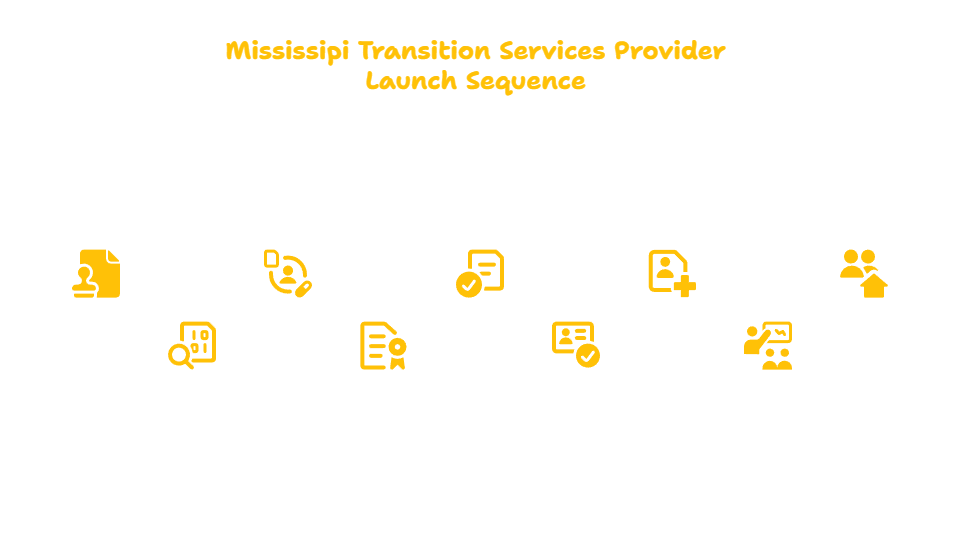
Launching a transition services agency requires a multi-step registration and credentialing process. First, the entity must be formally established through the Mississippi Secretary of State, followed by obtaining an Employer Identification Number (EIN) from the IRS and a Type 2 National Provider Identifier (NPI). These are foundational business requirements that precede any specific healthcare licensing.
Following business formation, the provider must obtain a Community Transition Services License from the Mississippi Department of Health. Once the license is secured, the agency must initiate the Medicaid provider enrollment process with the Mississippi Division of Medicaid. This involves a comprehensive review of the agency's liability insurance, service descriptions, and operational capacity. Providers should anticipate a formal assessment of their readiness to perform transition work before a Medicaid provider number is issued and service authorization is granted.
- Register business with the Mississippi Secretary of State.
- Obtain EIN from the IRS and NPI (Type 2).
- Obtain a Community Transition Services License from the Mississippi Department of Health.
- Enroll as a Medicaid provider with the Mississippi Division of Medicaid.
Staffing, Training, and Operational Documentation
Quality of care is inextricably linked to the qualifications and training of the staff. Transition Coordinators or Program Managers must demonstrate significant experience in case management, social work, or community integration to successfully manage the complexity of moving individuals out of institutions. Transition Support Specialists, who provide direct assistance, are required to have a background in human services or rehabilitation, coupled with mandatory certifications in CPR and First Aid.
Operational success also demands a robust policy and procedure manual. This document must contain detailed protocols for safety and risk assessment, client intake, and housing coordination. Because transition services involve high-stakes changes in an individual's life, the documentation must include clear plans for post-transition monitoring, ensuring that logs are maintained to track the individual's progress and identify any potential barriers to community stability early on.
Frequently Asked Questions
What waivers support transition services in Mississippi?
Transition services are primarily supported through the 1915(c) HCBS Waiver for the Elderly and Disabled, the Independent Living Waiver, and the Money Follows the Person (MFP) Demonstration program.
How long does the provider enrollment process typically take?
The Medicaid provider enrollment process generally takes between 60 to 90 days, though this timeline can be influenced by the completeness of the application and the efficiency of the license verification process.
What are the primary responsibilities of a Transition Coordinator?
A Transition Coordinator is responsible for overseeing the implementation of the Individual Transition Plan, coordinating with housing authorities, managing the logistics of the move, and conducting post-transition follow-up to ensure long-term community integration.
Key Takeaways for Prospective Providers
Establishing a transition services agency in Mississippi is a rigorous process that demands strict adherence to state licensing, Medicaid enrollment standards, and person-centered planning protocols. Prospective providers should focus on building a strong foundation through comprehensive staff training, meticulous documentation, and active partnership with the Mississippi Division of Medicaid and the Department of Mental Health. Success in this field requires not only administrative efficiency but a deep commitment to the successful, long-term community integration of individuals transitioning out of institutional care.
Last verified: October 2023. This content is for informational purposes only and does not constitute legal or professional advice. Requirements for Medicaid providers in Mississippi are subject to change; always consult with the Mississippi Division of Medicaid (https://medicaid.ms.gov) or the Mississippi Department of Mental Health (https://www.dmh.ms.gov) for the most current regulations and policy updates.