TRANSITION SERVICES PROVIDER IN FLORIDA
By Fatumata Kaba · 2025-07-09 · 5 min read
Understanding Transition Services in Florida: Empowering Community Integration
Transition Services in Florida are essential Medicaid-funded supports designed to facilitate the safe and successful movement of individuals with disabilities or chronic illnesses from institutional settings—such as nursing homes, hospitals, or intermediate care facilities—to independent living. By providing the structural, financial, and logistical support necessary to establish a private household, these services promote dignity, autonomy, and person-centered living for vulnerable populations.
Navigating the Regulatory Landscape and Oversight Agencies
Successful operation of a Transition Services agency requires strict adherence to the standards established by both state and federal oversight bodies. The Florida Agency for Health Care Administration (AHCA) serves as the primary authority, overseeing Medicaid enrollment, the distribution of transition funding, and ensuring total compliance with all Home and Community-Based Services (HCBS) rules. For providers serving individuals with developmental disabilities, the Florida Agency for Persons with Disabilities (APD) acts as the coordinating entity for transition planning and service delivery.
Furthermore, the Centers for Medicare & Medicaid Services (CMS) provides the overarching federal framework for these programs. CMS requires that all transition services strictly follow person-centered planning standards, ensuring that the movement from an institution to the community is not only successful but aligns with the long-term preferences and needs of the participant. Providers must maintain a deep understanding of these regulatory relationships to ensure continuous compliance.
Core Components of Transition Services
Transition Services are categorized by their ability to remove barriers to community integration. Approved providers deliver a suite of supports that turn a transition plan into a reality, focusing on one-time, non-recurring expenses that are critical to establishing a basic household. By addressing both the physical needs of the home and the skill-based needs of the resident, providers ensure a sustainable path to independence.
- Assessment and Planning: Conducting comprehensive transition planning and individualized needs assessments.
- Logistical Coordination: Assisting in securing housing leases, coordinating moving expenses, and setting up essential utilities.
- Household Establishment: Purchasing necessary household items, including furniture, cookware, and bedding.
- Financial Navigation: Managing one-time security deposits and service connection fees for water, electricity, and telecommunications.
- Skill Development: Providing education on independent living skills and facilitating access to community-based resources.
Licensing and Provider Enrollment Requirements
The path to becoming a recognized provider involves rigorous administrative preparation. Before seeking approval, agencies must ensure their business infrastructure is sound, including registration with the Florida Division of Corporations (Sunbiz), obtaining an IRS EIN, and securing a Type 2 NPI. Because these services involve direct financial and physical support for participants, the operational standards are high, requiring evidence of professional liability insurance and robust financial tracking systems.
The enrollment process requires the submission of a detailed provider application packet to the APD or AHCA. This process includes a program readiness review, where the governing agencies audit the provider's internal policies, such as transition planning templates, staff background screening results, and participant intake procedures. Once approved, the provider must configure their billing codes within the Florida Medicaid Provider Enrollment Portal to ensure they are prepared for service authorization and claims reimbursement.
Staffing, Training, and Compliance Protocols
The success of a transition plan relies heavily on the competency of the staff involved. Transition Coordinators and Case Managers are expected to possess a background in social work, human services, or a related field, supplemented by professional experience in housing transitions or case management. These roles are critical, as they serve as the primary liaison between the participant and the institutional facility during the delicate move-out process.
Beyond baseline education, all staff members must undergo specialized training to ensure the integrity of the program. This mandatory training curriculum covers:
- Person-Centered Planning: Techniques for aligning services with individual goals.
- Financial Accountability: Strict protocols for purchasing, receipt tracking, and budget adherence.
- Confidentiality and Safety: Comprehensive training on HIPAA requirements, abuse prevention, and emergency preparedness.
- Service Documentation: Accurate record-keeping for Medicaid billing and auditing purposes.
Overview of Waiver Programs and Service Authorization
Transition services are authorized under specific Florida Medicaid waivers, each targeting distinct populations. Understanding which waiver governs a participant's care is essential for proper billing and service authorization. The Statewide Medicaid Managed Care (SMMC) Long-Term Care (LTC) Program, the iBudget Florida Waiver, and the Traumatic Brain Injury/Spinal Cord Injury (TBI/SCI) Waiver are the primary vehicles through which these services are delivered.
Providers must maintain the capacity to support participants across these different programs. Whether working with the iBudget program to move an individual with developmental disabilities into an independent living situation or facilitating a move under the TBI/SCI waiver, the focus remains on short-term, intensive support to stabilize the participant in their new environment.
Frequently Asked Questions
What is the typical timeline to launch a Transition Services agency?
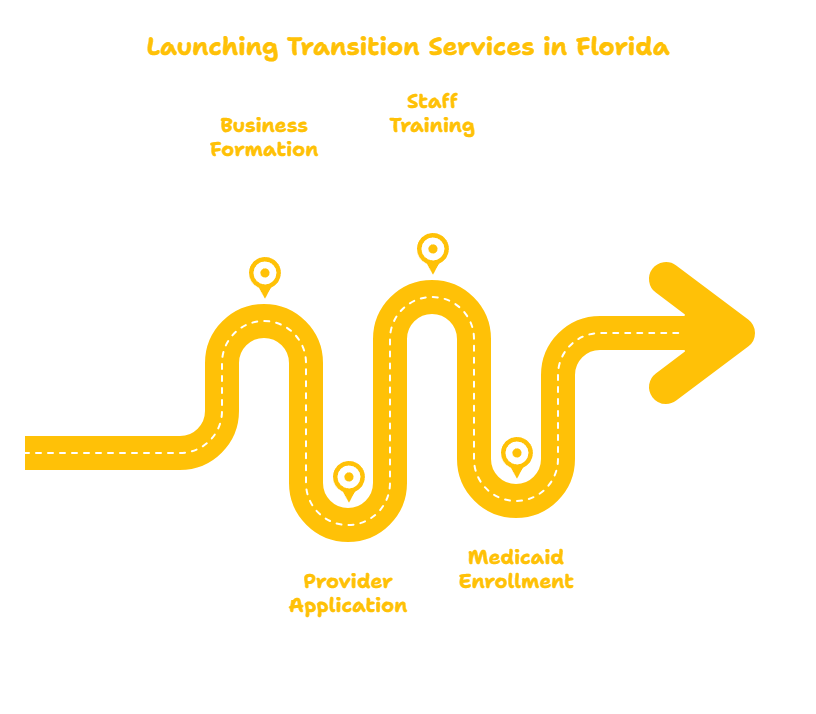
The launch process generally spans several months, including 1–2 weeks for initial business formation, 60–90 days for the APD/AHCA readiness review, 30–45 days for staff training, and 45–60 days for Medicaid enrollment and billing system finalization.
Are Transition Services considered ongoing support?
No, Transition Services are designed as one-time, non-recurring expenses necessary to establish a household. Once the transition is successful and the household is stabilized, the service concludes, though other ongoing waiver services may continue to support the individual.
What documentation is essential for an AHCA audit?
Providers must maintain organized records, including participant intake forms, detailed purchase tracking receipts, staff credentialing files, background screening clearances, and documented evidence of compliance with person-centered service plans.
Key Takeaway
Establishing a Transition Services provider agency in Florida is a commitment to regulatory excellence and operational precision. By strictly adhering to AHCA, APD, and CMS requirements—from the initial business registration to the final implementation of billing and clinical documentation—agencies can successfully navigate the complexities of the Medicaid HCBS framework to provide life-changing support for those moving toward independence.
Last verified: October 2023. Disclaimer: This information is for educational purposes and does not constitute legal or financial advice. Readers should consult directly with the Florida Agency for Health Care Administration (AHCA) or the Agency for Persons with Disabilities (APD) for the most current rules, specific waiver requirements, and regulatory updates.