TRANSITION ASSISTANCE SERVICES PROVIDER IN MASSACHUSETTS
By Fatumata Kaba · 2025-08-07 · 6 min read
Transition Assistance Services (TAS) in Massachusetts provide a critical bridge for individuals with disabilities or chronic health conditions as they move from restrictive institutional settings, such as nursing facilities or hospitals, into independent community living. These services are vital components of the Money Follows the Person (MFP) initiative and various 1915(c) Home and Community-Based Services (HCBS) waiver programs, offering the logistical and financial support necessary to ensure a stable, person-centered transition.
By providing time-limited assistance with non-recurring expenses—such as security deposits, essential furnishings, and initial household setup—these providers facilitate the successful reintegration of participants into their own homes. For service agency administrators and prospective providers, understanding the regulatory landscape and operational requirements is the first step toward delivering these essential community-based supports.
What is the Regulatory Framework for Massachusetts Transition Assistance?
The provision of Transition Assistance Services is governed by a multi-layered oversight structure involving both state and federal agencies. The Executive Office of Health and Human Services (EOHHS) serves as the primary entity responsible for the state’s broader strategy regarding MFP programs and Medicaid-funded transition initiatives. MassHealth, acting as the state’s Medicaid agency, is the authoritative body for authorizing and reimbursing these services, ensuring that all claims adhere to program-specific guidelines.
Operational oversight and the management of Transition Coordinators often fall under the purview of the Massachusetts Rehabilitation Commission (MRC), which plays a direct role in implementing the MFP program. At the federal level, the Centers for Medicare & Medicaid Services (CMS) maintains ultimate oversight, providing the funding and regulatory framework that allows these demonstration programs to function. Providers must navigate these hierarchies, ensuring that their policies align with the specific requirements of the waivers they intend to serve.
What Scope of Services Should a TAS Provider Deliver?
Transition Assistance Services are designed to address the immediate, one-time needs that arise when a participant leaves an institution. Because these services are meant to be non-recurring and directly related to the move, providers must demonstrate that each expense is essential for the individual to establish a safe and functional home environment. All purchases must be documented within the participant’s approved Transition Plan to ensure compliance with Medicaid audit standards.
Eligible services under this category typically include the following items:
- Payment of security deposits required to secure a lease.
- Purchase of essential household furnishings, including beds, linens, and basic cookware.
- Coverage of utility setup fees, such as activation costs for gas, electricity, and water.
- Provision of initial groceries and basic cleaning supplies for the transition day.
- Contracting professional moving services or arranging for the transportation of personal belongings.
- Home setup assistance, which encompasses the assembly of furniture and minor organization of living spaces.
- Ongoing coordination with housing authorities, social service benefits, and waiver service providers to ensure a seamless transition.
What are the Licensing and Provider Approval Prerequisites?
Becoming an approved provider for Transition Assistance Services requires a structured approach to administrative compliance and business infrastructure. While the state does not mandate specific clinical licensure for TAS providers, agencies must be capable of demonstrating robust case management capabilities and a thorough understanding of social service delivery. Success in this field relies heavily on the ability to partner effectively with housing coordinators, medical staff, and support teams.
Before applying for enrollment, agencies should ensure they meet the following operational prerequisites:
- Formal registration with the Massachusetts Secretary of the Commonwealth.
- Obtainment of a valid IRS Employer Identification Number (EIN) and a Type 2 National Provider Identifier (NPI).
- Procurement of adequate general liability and professional insurance coverage.
- Development of formal policies and procedures for procurement, financial documentation, and rigorous HIPAA compliance.
- Establishment of a reliable communication network with housing agencies and state-funded support teams.
How is the Provider Enrollment Process Structured?
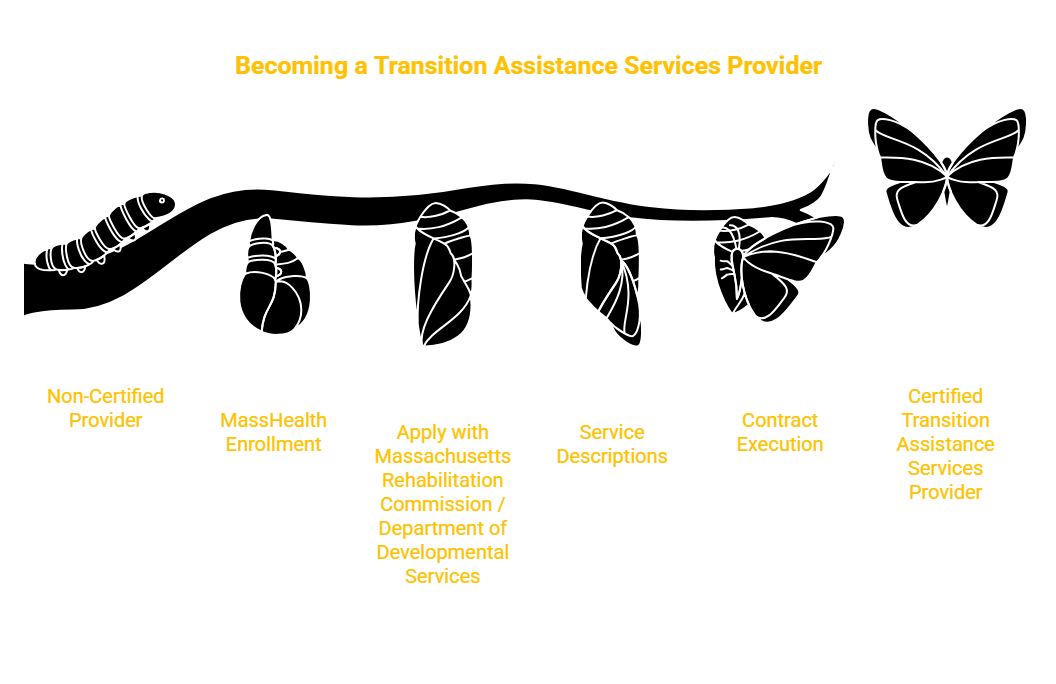
The enrollment process is a sequential journey that begins with the state’s centralized provider systems and ends with network integration. First, agencies must register via the MassHealth Provider Online Service Center (POSC). This creates the necessary legal and financial pathway for reimbursement. Once registered as a MassHealth provider, the agency must apply for specific authorization to provide transition services, which often involves working directly with the MRC or the Department of Developmental Services (DDS), depending on the target population the agency intends to serve.
The final stages of enrollment involve demonstrating operational readiness. Agencies must submit detailed service descriptions, protocols for safeguarding client funds, and evidence of procurement tracking mechanisms. Once these protocols are approved and the necessary provider agreements are executed, the agency is formally integrated into the network. At this point, the agency can begin accepting referrals from MFP Transition Coordinators, case managers, and other authorized discharge planners who identify individuals ready to move into the community.
What Documentation and Staffing Standards are Mandatory?
Maintaining audit-ready documentation is the cornerstone of a successful TAS operation. Providers must maintain a comprehensive Policy & Procedure Manual that covers every aspect of the transition process, from initial budgeting to final inventory verification. This manual should include templates for receipt submission, audit logs for all purchases, and clear protocols for staff training to ensure that all team members understand their role in protecting the participant’s benefits and maintaining confidentiality.
Staffing requirements generally prioritize experience in social work, housing navigation, or case management. At a minimum, staff members involved in direct support should possess a high school diploma and demonstrate proficiency in person-centered planning. Key roles and training areas include:
- Transition Services Coordinator: Responsible for direct support, housing logistics, and navigating community resources.
- Program Manager: Responsible for fiscal oversight, inventory management, and ensuring that all Medicaid documentation meets regulatory standards.
- Mandatory Training: All staff must be trained in person-centered planning, housing safety, tenant rights, HIPAA privacy regulations, budget management, and the prevention of abuse and neglect.
Frequently Asked Questions
What is the typical timeline for becoming a TAS provider?
The timeline varies by agency readiness, but typically ranges from 4 to 8 months. Business registration and insurance setup usually take 2–4 weeks, followed by 1–2 months for MassHealth and MFP vendor enrollment. Finalizing policy manuals and staff training usually requires an additional 4–6 weeks before the agency is prepared for full network integration.
Are there spending caps for Transition Assistance Services?
Yes, services are typically capped per transition—often set at $5,000—depending on the specific waiver or MFP program requirements. Providers must ensure that all services are non-duplicative, meaning they cannot be used to cover items already provided by other public benefits such as SNAP, Section 8, or Personal Care Attendant (PCA) services.
Which waivers authorize these services in Massachusetts?
TAS is authorized under several programs, including the MFP-Community Living Waiver, the MFP-Residential Supports Waiver, the Acquired Brain Injury (ABI) Waivers, and various DDS waivers for individuals with developmental disabilities, as well as the Community Living Waiver for older adults or those with physical disabilities.
WAIVER CONSULTING GROUP’S START-UP ASSISTANCE SERVICE — MASSACHUSETTS TRANSITION SERVICES PROVIDER: WCG helps housing nonprofits, peer support teams, and small service agencies become certified Transition Assistance Service providers under MFP and waiver programs. Scope of Work includes business setup, Medicaid/MFP enrollment, policy manual creation, procurement tracking systems, and compliance tools.
Key takeaway: Establishing a TAS provider agency in Massachusetts requires a disciplined focus on regulatory compliance, financial transparency, and inter-agency coordination. By systematically addressing the requirements of MassHealth and the MRC, providers can effectively support the critical transition of vulnerable individuals into independent, community-based living.
Last verified: October 2023. Disclaimer: This article is for informational purposes only and does not constitute legal or professional medical advice. Always refer to the most recent MassHealth provider bulletins and state regulatory manuals for current requirements.