THERAPY SERVICES PROVIDER IN VERMONT
By Fatumata Kaba · 2026-04-09 · 5 min read
Delivering rehabilitative and developmental therapies in Vermont requires a strategic alignment with Medicaid State Plan guidelines and Home and Community-Based Services (HCBS) waiver requirements. Providers must navigate a complex regulatory landscape overseen by the Department of Disabilities, Aging and Independent Living (DAIL) and the Department of Vermont Health Access (DVHA) to ensure that clinical interventions are medically necessary, properly authorized, and compliant with state licensing standards.
Navigating the Vermont Regulatory and Oversight Framework
Success as a therapy services provider in Vermont begins with a clear understanding of the roles played by state agencies. The Department of Disabilities, Aging and Independent Living (DAIL) acts as the primary coordinator for HCBS waiver populations, monitoring the Individual Support Plan (ISP) compliance and overall provider performance. Because therapy services are often integrated into broader care packages for individuals with developmental or physical disabilities, DAIL ensures that services remain person-centered and outcomes-focused.
Complementing DAIL, the Department of Vermont Health Access (DVHA) manages the fiscal and enrollment side of the equation. As the state’s Medicaid authority, DVHA handles the enrollment of providers and the reimbursement protocols for covered services. Furthermore, all clinical staff must remain in good standing with the Vermont Office of Professional Regulation (OPR), which mandates specific licensure requirements for Physical Therapists, Occupational Therapists, and Speech-Language Pathologists. For those operating within the HCBS ecosystem, collaboration with Designated Agencies (DAs) and Specialized Service Agencies (SSAs) is often necessary, as these entities frequently manage the local authorization of therapy services under individual ISPs.
Understanding Covered Therapy Services and Clinical Necessity
Therapy services are designed to bridge the gap between disability and independence by restoring functional skills or fostering developmental milestones. Whether providing services in a clinical setting, a client’s home, or a community space, providers must ensure every intervention is rooted in medical necessity and aligns with the goals outlined in the participant’s ISP or physician-ordered treatment plan.
Covered services generally fall under the following clinical categories:
- Physical Therapy (PT): Focused on gait training, muscle strengthening, enhancing mobility, and effective pain management strategies.
- Occupational Therapy (OT): Focused on fine motor skill development, sensory integration, and training for the use of adaptive equipment.
- Speech-Language Pathology (SLP): Focused on improving communication, fostering language development, and providing swallowing therapy.
- Specialized Support: This includes Augmentative & Alternative Communication (AAC) support, such as device evaluation and training, as well as feeding therapy when clinically indicated and formally approved.
Establishing Your Therapy Practice: Enrollment and Operational Prerequisites
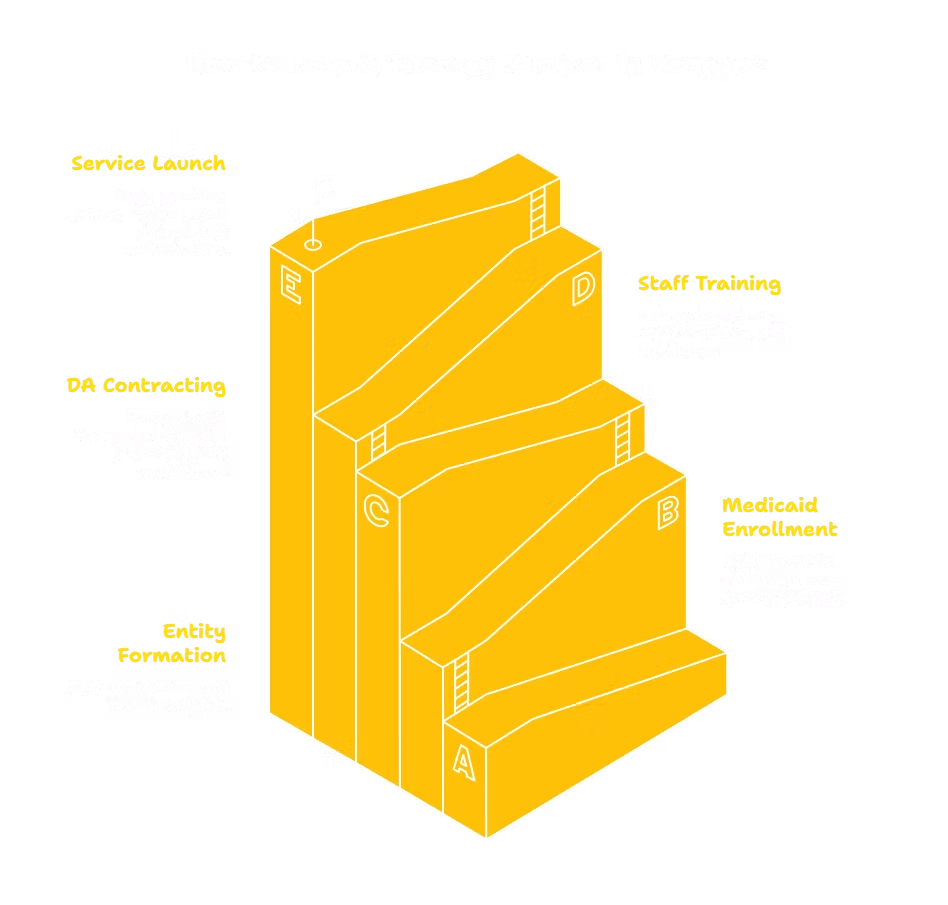
The path to becoming an active Medicaid therapy provider involves a series of structured administrative steps. Before delivering a single service, an organization must formalize its business entity, obtain a federal Employer Identification Number (EIN), and secure a Type 2 National Provider Identifier (NPI). This foundational step is followed by the formal application for Medicaid enrollment through the DVHA.
Once registered, a provider must develop a comprehensive Therapy Services Policy & Procedure Manual. This document is a critical asset, serving as the agency’s internal roadmap for compliance and quality control. It must detail how the agency handles intake, assessment, documentation, and coordination with case managers. Additionally, providers must secure professional liability insurance and establish formal contracts with relevant Designated Agencies if they intend to serve participants under specific HCBS waivers.
Staffing, Credentialing, and Professional Supervision
The quality of care provided by an agency is contingent upon its staffing model. All primary therapists—PTs, OTs, and SLPs—must hold active, verified licenses from the Vermont Office of Professional Regulation. For agencies utilizing therapy assistants (PTAs, OTAs, or SLPAs), rigorous supervision protocols must be in place. These assistants must perform their duties under the direct oversight of a licensed therapist, and this relationship must be clearly documented within the agency’s internal workflows.
Beyond licensure, every staff member must undergo a thorough onboarding process that includes background checks and mandatory training. Essential training topics include HIPAA compliance, Medicaid documentation standards, incident reporting, and emergency response. Maintaining an up-to-date credentialing file for every therapist is not only a regulatory requirement but also a vital component of audit readiness during state inspections or Medicaid reviews.
Integrating Services with Medicaid Waiver Programs
Therapy services in Vermont are frequently delivered via specialized Medicaid waivers, each tailored to specific populations. The Developmental Disabilities Services Waiver (DDSW) serves children and adults with ID/DD, while the Choices for Care (CFC) Waiver focuses on older adults and individuals with physical disabilities. Additionally, the Brain Injury Program and the Children with High-Tech Needs program provide pathways for more intensive, rehabilitative therapy interventions.
For providers, the key to billing these waivers successfully is strict adherence to the ISP. A service that is not explicitly linked to an approved ISP or supported by a current physician’s order is generally ineligible for reimbursement. Consequently, administrative teams must maintain open lines of communication with case managers to ensure that changes in a client’s clinical needs are reflected in the ISP promptly.
Frequently Asked Questions
What is the typical timeline to launch a therapy services agency in Vermont?
The launch process generally spans several months. Entity formation and credentialing usually take 2–4 weeks, followed by 1–2 months for DVHA Medicaid enrollment and policy approval. Finalizing staff training and DA contracting usually requires an additional 2–3 weeks before the agency can begin accepting referrals.
Do I need to be affiliated with a Designated Agency?
If you intend to provide therapy services to individuals enrolled in specific HCBS waiver programs, contracting with a Designated Agency (DA) or Specialized Service Agency (SSA) is often required. These agencies oversee the authorization of services within their service regions and ensure alignment with the participant's ISP.
What must be included in a Policy & Procedure Manual?
Your manual must serve as a comprehensive compliance guide, including sections on intake procedures, documentation and progress note templates, coordination with case managers, HIPAA and confidentiality policies, emergency/infection control protocols, billing workflows, and supervision requirements for therapy assistants.
Key Takeaway
Launching a therapy services agency in Vermont is a rewarding but demanding undertaking that requires rigorous attention to clinical standards, administrative documentation, and state-specific waiver regulations. By meticulously following the established procedures for provider enrollment, maintaining up-to-date staff credentials, and ensuring every service is aligned with a client’s Individual Support Plan, providers can successfully deliver essential care to the most vulnerable members of the community.
Waiver Consulting Group provides professional start-up assistance, including DVHA provider enrollment support, the development of therapy-specific Policy & Procedure Manuals, and the creation of clinical documentation and supervision templates to help your organization meet Vermont’s regulatory expectations.
Last verified: 2024. This information is for educational purposes only and does not constitute legal or clinical advice. Consult with Vermont state agencies for the most current regulatory updates.