THERAPY SERVICES PROVIDER IN TENNESSEE
By Fatumata Kaba · 2025-10-22 · 5 min read
Empowering individuals through occupational, physical, and speech therapies is a cornerstone of rehabilitative and habilitative care in Tennessee. These essential services support individuals with developmental disabilities, chronic health conditions, and functional limitations by promoting communication, mobility, and independent living under the state’s various Medicaid programs.
What Are the Governing Agencies Overseeing Therapy Services in Tennessee?
The delivery of therapy services in Tennessee is regulated by a complex network of state and federal entities, each playing a specific role in ensuring quality of care, fiscal accountability, and compliance. TennCare, the state's Medicaid program, is the primary entity responsible for managing coverage, service authorization, and provider reimbursement. They ensure that therapy services align with federal standards established by the Centers for Medicare & Medicaid Services (CMS).
Beyond fiscal oversight, professional integrity is maintained through the Tennessee Department of Health (DOH). This agency is responsible for the licensing of Physical Therapists (PT), Occupational Therapists (OT), and Speech-Language Pathologists (SLP) through its specialized health licensure boards. Furthermore, the Department of Intellectual and Developmental Disabilities (DIDD) acts as a critical coordinator for providers serving participants under 1915(c) and Employment and Community First (ECF) CHOICES waivers, ensuring that therapy delivery directly supports the individual's Person-Centered Support Plan or Individual Support Plan (ISP).
- TennCare: Manages overall Medicaid coverage, authorization, and reimbursement structures.
- Tennessee Department of Health (DOH): Grants and monitors professional licenses for PT, OT, and SLP practitioners.
- Department of Intellectual and Developmental Disabilities (DIDD): Coordinates provider certification and ensures ISP implementation for waiver participants.
- Centers for Medicare & Medicaid Services (CMS): Sets the overarching federal Medicaid coverage standards that state programs must follow.
How Are Therapy Services Categorized Under Tennessee Medicaid Programs?
Therapy services are designed to meet diverse clinical needs, ranging from acute rehabilitation to long-term habilitation. Providers may deliver these services in various settings, including the participant's home, specialized clinics, or community-based environments, depending on the specific requirements outlined in the participant's plan of care. Each therapy modality carries distinct objectives aimed at improving the individual’s functional independence.
Occupational Therapy (OT) focuses on daily living skills such as dressing, grooming, and toileting, while also addressing fine motor development and sensory processing. Physical Therapy (PT) concentrates on mobility, balance, muscle strength, and gait training to improve physical stability. Speech-Language Pathology (SLP) encompasses verbal communication, articulation development, and social pragmatics, with many practitioners also providing specialized feeding and swallowing therapy to support safety and nutritional health.
- Occupational Therapy (OT): Enhances daily living, fine motor control, and adaptive equipment utilization.
- Physical Therapy (PT): Improves mobility, postural control, and adaptive movement.
- Speech-Language Pathology (SLP): Facilitates verbal communication, feeding/swallowing safety, and the use of AAC devices.
What Are the Requirements for Provider Enrollment and Business Licensing?
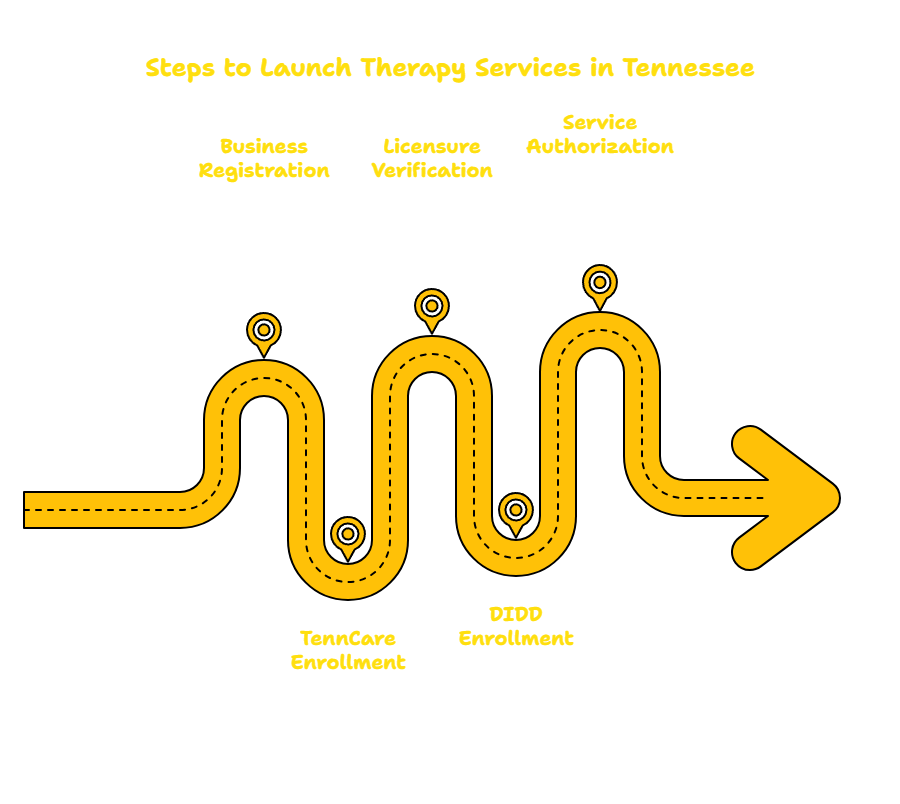
Becoming an approved Medicaid therapy provider in Tennessee requires a rigorous administrative process. Agencies must first establish themselves as a legal business entity with the Tennessee Secretary of State and obtain an Employer Identification Number (EIN) and a Type 2 National Provider Identifier (NPI). Every individual therapist employed or contracted by the agency must maintain an active, valid license through the Tennessee Board of Health Licensure.
In addition to these foundational requirements, providers must develop a robust Therapy Services Policy & Procedure Manual. This document serves as the backbone of organizational compliance, detailing everything from documentation standards and session logs to infection control and discharge protocols. Once internal policies are established, the agency must apply to TennCare or the relevant Managed Care Organizations (MCOs) and secure DIDD certification if they intend to serve individuals enrolled in waiver programs.
What Is the Required Documentation for Clinical and Administrative Compliance?
Success in the Tennessee Medicaid ecosystem relies on meticulous record-keeping. Providers are expected to maintain comprehensive documentation that satisfies both clinical and audit requirements. This includes, but is not limited to, proof of business registration, NPI documentation, current licensure for all clinical staff, and active proof of professional liability and malpractice insurance. These records must be readily available for review by TennCare or state surveyors.
Operational documentation is equally vital. Providers must demonstrate that they have a structured process for treatment plan development, which involves coordination with the participant’s ISP team. Every session must be supported by detailed progress notes, session tracking logs, and clear Medicaid billing records that accurately reflect the services rendered. Maintaining participant confidentiality, ensuring rigorous infection control, and adhering to emergency safety procedures are non-negotiable elements of a compliant service delivery model.
Which Medicaid Waiver Programs Support Therapy Service Delivery?
Therapy services are accessible through several distinct pathways within Tennessee’s Medicaid landscape. The TennCare State Plan serves as a primary vehicle, providing medically necessary rehabilitation or habilitation services based on physician orders. For individuals with intellectual or developmental disabilities, the 1915(c) Waivers provide essential habilitative support, while the ECF CHOICES program integrates therapy directly into an individual’s ISP to promote independence in the home and community.
Furthermore, the Katie Beckett Program offers a critical lifeline for medically complex children, ensuring they receive the specialized care they require. For those under the age of 21, the Early and Periodic Screening, Diagnostic, and Treatment (EPSDT) benefit ensures that children and adolescents receive necessary therapies that are deemed medically necessary, reinforcing the state's commitment to developmental health from an early age.
Frequently Asked Questions
How long does the enrollment process usually take?
The timeline varies based on organizational readiness. Business registration typically takes 1–2 months, followed by 2–3 months for TennCare credentialing and enrollment. DIDD enrollment and staff orientation generally require an additional 30–60 days, depending on the complexity of the staff onboarding process.
Are there specific staffing requirements for therapists?
All therapists must hold a valid Tennessee license in their respective field (OT, PT, or SLP). Beyond licensure, therapists must be current on CPR and First Aid certifications, complete mandatory HIPAA and abuse prevention training, and receive specific instruction on ISP implementation, goal tracking, and emergency safety protocols.
What does the Waiver Consulting Group assist with?
Consultancy services focus on the logistical and administrative requirements for entering the Tennessee Medicaid market. This includes assisting with TennCare and DIDD enrollment, drafting comprehensive Policy & Procedure Manuals, creating clinical documentation templates, training on ISP compliance, and setting up systems for Medicaid billing and staff tracking.
Key Takeaway: Successfully operating as a therapy services provider in Tennessee requires a balanced focus on professional clinical licensing, rigid adherence to Medicaid administrative policy, and proactive coordination with the DIDD and TennCare systems to ensure service authorization and ongoing billing compliance.
Last verified: May 2024. This information is provided for educational purposes and should not be considered legal or medical advice. Please consult directly with TennCare and the Department of Intellectual and Developmental Disabilities for the most current program requirements and provider guidelines.