The 3-Phase Path to Becoming a Medicaid Waiver Provider
By Fatumata Kaba · 2026-06-18 · 5 min read
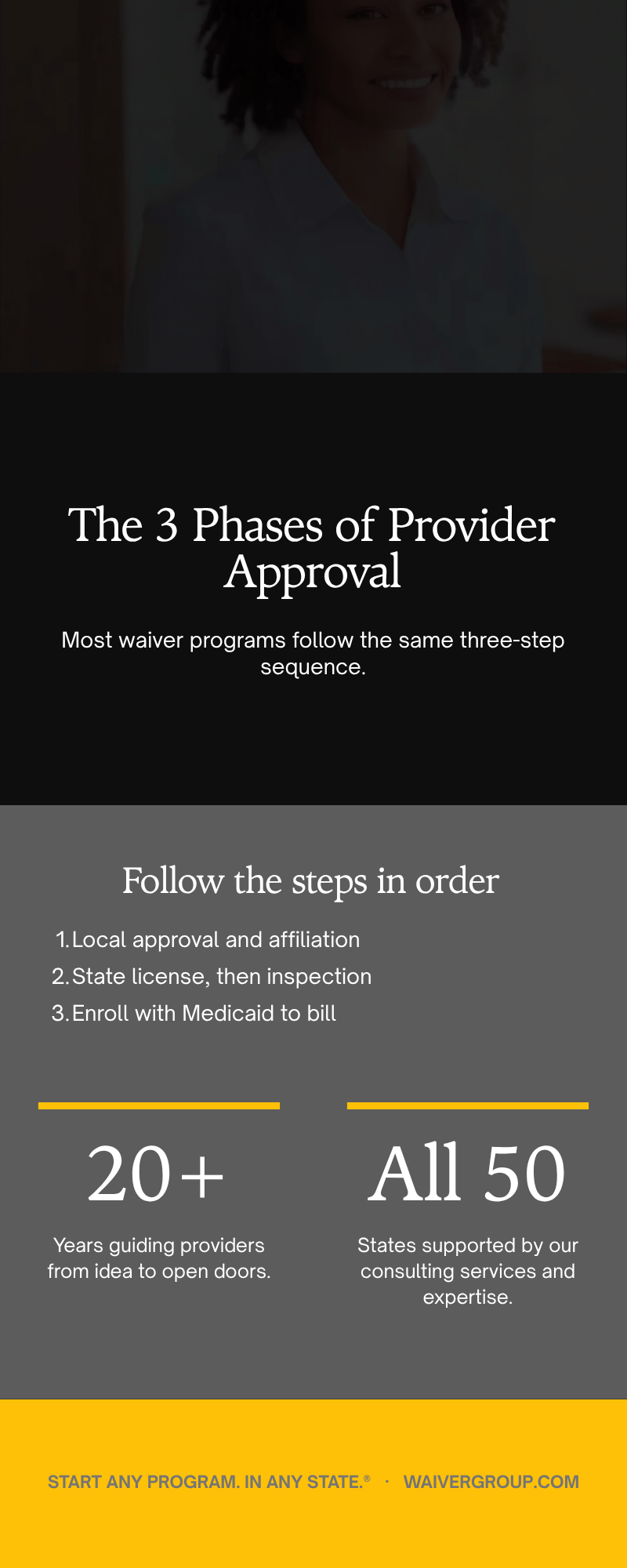
Becoming a Medicaid Home and Community-Based Services (HCBS) waiver provider is a structured regulatory journey that demands rigorous adherence to state-specific protocols. While the process is highly complex and varies significantly by jurisdiction, it consistently follows a logical, three-phase sequence: local affiliation, state licensure, and Medicaid billing enrollment.
For agency founders and administrators, the most common pitfall is attempting to bypass these stages or execute them out of order. Understanding this framework is essential for minimizing administrative delays, ensuring compliance with state mandates, and successfully establishing a sustainable service delivery model.
Understanding the Sequential Nature of Provider Enrollment
The Medicaid waiver provider landscape is governed by a "gatekeeper" logic. Regulatory agencies utilize a tiered approval process where each milestone serves as a prerequisite for the next. Attempting to initiate Medicaid billing enrollment before securing a valid state license is a common error that leads to automatic application rejection and lost time.
This sequential path is designed to ensure that only agencies capable of meeting the stringent health, safety, and operational standards of the state are authorized to handle public funds. Prospective providers must approach this process with a documentation-first mindset, ensuring that the evidence generated in Phase 1 is robust enough to satisfy the inquiries of the agencies involved in Phase 2 and Phase 3.
Phase 1: Securing Local Approval and Affiliation
In many jurisdictions, the path to becoming an approved provider begins not at the state level, but with regional or local authorities. These entities, which often operate as regional centers, local boards of developmental disabilities, or county-level human service departments, act as the first point of contact for service authorization. They are tasked with determining if there is a demonstrated need for the services an agency intends to provide in a specific geographic catchment area.
During this phase, an agency must demonstrate administrative maturity and clinical readiness. The requirements often involve:
- Submission of a comprehensive, multi-year business plan outlining fiscal solvency.
- Evidence of key personnel qualifications and professional experience.
- Verification of organizational background checks and policy compliance.
- Demonstration of community integration and service delivery methodology.
Without the formal endorsement or affiliation letter from these local authorities, the state-level licensing board rarely considers an application for a Medicaid provider designation. Securing this local "buy-in" is the foundational step that validates the provider's existence within the local waiver ecosystem.
Phase 2: Earning Your State License and Passing Inspection
Once local affiliation is secured, the provider moves to the state licensure phase. This is the stage where the agency’s physical or virtual infrastructure, clinical protocols, and internal policies are subjected to formal state scrutiny. Licensure is the legal mechanism that grants an agency the authority to provide specific, regulated services, such as residential habilitation, respite, or personal care.
The licensing process almost universally culminates in a rigorous inspection. State surveyors will visit the provider site—or audit digital documentation—to ensure compliance with the specific service definitions outlined in the waiver program. Key focus areas during this inspection include:
- Safety protocols and incident management systems.
- Staff training curricula, including competency testing and orientation.
- Record-keeping and documentation standards for participant care.
- Compliance with state-mandated staff-to-participant ratios.
Every service the agency intends to offer may carry its own set of administrative requirements. Consequently, agencies must be precise in their scoping. Adding a new service after the initial license is issued often requires a supplemental application and a follow-up inspection, underscoring the importance of strategic planning during this phase.
Phase 3: Enrolling with Medicaid to Bill for Services
The final phase is the fiscal integration of the agency into the state's Medicaid Management Information System (MMIS) or the state's designated provider enrollment portal. This is purely a billing-authorization step. Once the state has verified the license and approvals obtained in the previous phases, the agency is formally recognized as a Medicaid provider authorized to submit claims for reimbursement.
This phase focuses on technical and financial requirements rather than clinical or operational ones. The agency must provide banking details, verify ownership information (including the disclosure of any history of exclusion from federal health programs), and establish the electronic data interchange (EDI) protocols necessary for submitting claims. Once finalized, the agency receives a unique Provider Identification Number (PIN) or NPI-linked enrollment, enabling the billing of services delivered under the waiver.
Frequently Asked Questions
Can I apply for Medicaid enrollment while waiting for my state license?
Generally, no. State Medicaid programs require proof of licensure as a mandatory prerequisite for enrollment. Submitting an enrollment application without a valid license will typically result in the application being returned or denied, as the state cannot authorize billing for an unlicensed entity.
Do all services under a waiver require the same type of license?
No, service types are highly granular. A license to provide "Residential Habilitation" may be governed by different regulations and inspection criteria than a license to provide "Community Access" or "Personal Care." It is essential to map the specific service codes you intend to bill against the licensing requirements for each, as they are not interchangeable.
How long does the entire 3-phase process typically take?
The timeline varies by state, agency, and the specific program involved. Factors including the volume of applications, the responsiveness of local authorities, and the readiness of the agency’s internal documentation can extend or compress the duration. Proactive preparation and ensuring that documentation is "audit-ready" at every stage are the most effective ways to prevent unnecessary delays.
Key Takeaway
The path to becoming a Medicaid waiver provider is strictly sequential: local affiliation leads to state licensure, and state licensure leads to Medicaid billing enrollment. Each stage serves as a gatekeeper, requiring distinct evidence of organizational capacity. Agencies that invest in rigorous documentation and adhere to this specific order of operations significantly increase their probability of a successful, timely approval.
Last verified August 2024. This information is for educational purposes only and does not constitute legal or financial advice. Regulatory requirements are subject to change and vary by state. Always consult the specific Medicaid agency or state department in your jurisdiction for the most current rules and regulations.