TEFRA PROGRAM (TAX EQUITY AND FISCAL RESPONSIBILITY ACT) — RHODE ISLAND
By Fatumata Kaba · 2025-10-09 · 6 min read
Understanding the TEFRA/Katie Beckett Eligibility Pathway in Rhode Island
The Tax Equity and Fiscal Responsibility Act (TEFRA), commonly referred to in the pediatric community as the Katie Beckett eligibility pathway, serves as a vital Medicaid option for children with significant disabilities in Rhode Island. By decoupling parental income and assets from a child's Medicaid eligibility determination, this program allows children with complex medical needs to receive essential care while residing in their own homes rather than in institutional settings. This framework, administered by the Rhode Island Executive Office of Health and Human Services (EOHHS), ensures that families can access robust support services without facing the financial barriers typically associated with traditional Medicaid enrollment.
How Does the TEFRA Program Function for Families and Providers?
The TEFRA program is specifically designed for children under age 19 who meet clinical criteria for institutional-level care but do not meet standard financial requirements due to parental income. Because eligibility is based solely on the child’s personal income and assets, it creates a sustainable path for families to secure Medicaid coverage for their children. Once a child is approved, they gain full access to a comprehensive suite of Medicaid-funded benefits, ranging from skilled nursing and durable medical equipment to intensive behavioral health services.
For providers, understanding the administrative structure is essential for service delivery. While the EOHHS holds the primary authority for eligibility and policy, the Rhode Island Department of Human Services (DHS) plays a critical role in the enrollment and coordination process. Providers must ensure that their service delivery models align with these agencies' standards to maintain billing compliance and ensure continuity of care for the families they support. By operating within these established parameters, providers can effectively bridge the gap between complex medical requirements and community-based living.
- Target Population: Children under 19 with severe disabilities or complex medical conditions.
- Clinical Necessity: Must demonstrate the need for institutional-level care while maintaining safety at home.
- Financial Criteria: Eligibility is based strictly on the child’s own resources, excluding parental income.
- Geographic Scope: Applicants must be residents of Rhode Island and meet citizenship or legal residency requirements.
Service Delivery and Clinical Scope Under the Katie Beckett Provision
Providers authorized to serve TEFRA-eligible children are responsible for delivering high-quality, person-centered care that addresses the child’s physical, developmental, and behavioral needs. The scope of covered services is extensive, encompassing professional clinical oversight as well as daily living supports. Skilled nursing, for example, provides the medical monitoring required for medically fragile children, while various therapies—including physical, occupational, and speech—focus on developmental milestones and functional goals.
Beyond traditional medical interventions, the program emphasizes wraparound support through case management and assistive technology. Behavioral health services, such as Applied Behavior Analysis (ABA), are frequently integrated into a child’s plan of care to address specific neurodevelopmental challenges. Providers must ensure that all service delivery is documented with a high degree of precision, as each intervention must correspond directly to the child's approved medical necessity and overarching treatment plan.
- Skilled Nursing: Specialized in-home care for the management of chronic or acute medical conditions.
- Therapeutic Services: Goal-oriented PT, OT, and ST sessions designed to improve functional independence.
- Assistive Technology: Provision and training for devices that aid in mobility, communication, or environmental safety.
- Respite Care: Short-term support services intended to provide relief for primary caregivers.
Navigating the Enrollment, Approval, and Credentialing Process
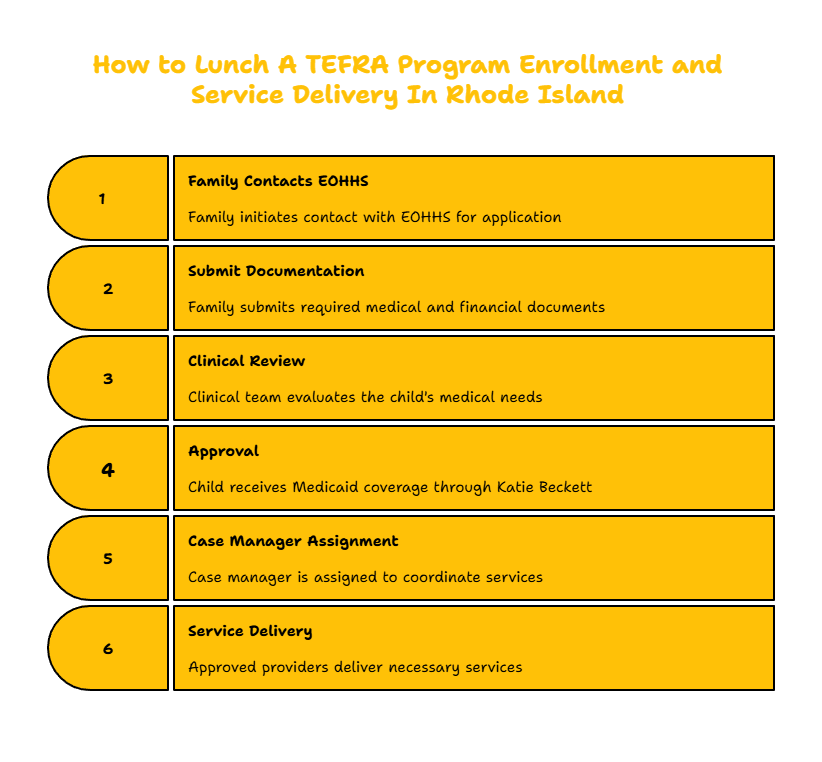
The journey from application to service delivery requires a structured approach for both families and provider agencies. For families, the process begins by contacting the EOHHS or utilizing the online Katie Beckett application portal. This phase requires the compilation of comprehensive documentation, including detailed medical records, SSI-standard disability evaluations, and verified financial statements pertaining only to the child. Once submitted, the EOHHS clinical review team assesses the application to determine if the child meets the necessary functional limitations for program participation.
For provider agencies, the engagement process involves rigorous Medicaid credentialing and ongoing administrative maintenance. Providers must verify that all staff—ranging from registered nurses and therapists to behavior technicians—hold active, state-required licenses and possess relevant pediatric experience. Successful service delivery relies on the seamless integration of Medicaid authorizations, accurate plan-of-care documentation, and consistent communication with assigned case managers who oversee the child's wraparound services.
Professional Standards, Staffing, and Compliance Requirements
To remain compliant with Medicaid standards, providers must adhere to stringent staffing and documentation protocols. Clinical staff, such as RNs, LPNs, and therapists, are expected to maintain current Rhode Island licensure and follow evidence-based treatment protocols. Similarly, behavioral health providers must demonstrate credentialing in their specific fields to ensure that the care provided meets the high standard of safety and efficacy required for pediatric populations. Training programs focusing on person-centered planning, pediatric safety, and HIPAA-compliant documentation are essential for staff retention and audit preparedness.
The administrative burden of these programs necessitates robust internal systems. Providers should maintain organized records of service authorizations, daily treatment notes, and quarterly progress reports. This documentation not only justifies the medical necessity of the services provided but also serves as the primary defense during state audits or compliance reviews. Furthermore, all services must align with the federal Home and Community-Based Services (HCBS) Settings Rule, which mandates that care provided in the home promotes community integration and independence.
- Clinical Oversight: Verification of NPI, licensure, and Medicaid enrollment for all billable staff.
- Plan of Care (POC): Development of individualized, measurable goals reviewed and updated periodically.
- Compliance Monitoring: Regular tracking of service notes, family engagement logs, and billing accuracy.
- Policy Development: Maintenance of comprehensive pediatric-focused policy and procedure manuals.
Frequently Asked Questions
How does the TEFRA program handle transitions as a child reaches age 19?
The Katie Beckett/TEFRA eligibility pathway is designed specifically for children under the age of 19. As a child approaches this age, the EOHHS and the child’s case manager will facilitate a transition assessment to determine if the individual qualifies for adult-focused Medicaid waiver programs or other community-based support services.
Are providers required to maintain specific certifications beyond state licensure?
Yes, all providers must be enrolled as active Rhode Island Medicaid providers. Depending on the service, specialized certifications or training—such as ABA board certification or pediatric-specific nursing credentials—may be required to satisfy the clinical necessity requirements defined by the state’s medical review team.
What should a provider do if a child’s medical needs change significantly?
If a child's clinical condition changes, the provider must coordinate with the case manager to update the Plan of Care (POC). Any significant shift in service intensity requires a new service authorization from the EOHHS to ensure that the level of care remains aligned with current medical necessity and Medicaid reimbursement standards.
Key Takeaway
The Rhode Island TEFRA/Katie Beckett program provides a critical safety net, allowing children with complex needs to remain in the home environment while accessing the medical support they require. For provider agencies, success in this space depends on a deep commitment to administrative compliance, clinical excellence, and consistent engagement with the EOHHS/DHS systems. By maintaining rigorous documentation and adhering to the established Medicaid enrollment and service authorization timelines, providers can play a pivotal role in delivering high-quality, sustainable care to this vulnerable population.
Last verified: May 2024. This content is for informational purposes only and does not constitute legal or professional Medicaid advice. Providers should consult the official Rhode Island EOHHS provider portal and federal CMS guidelines for the most current regulatory requirements and policy updates.