SUPPORTIVE HOUSING SERVICES PROVIDER IN NEW YORK
By Fatumata Kaba · 2025-09-04 · 5 min read
What is a Supportive Housing Services Provider in New York?
A Supportive Housing Services provider in New York is a specialized entity that delivers integrated housing assistance and community-based support services to individuals with disabilities, mental health conditions, or chronic health challenges. These providers function within the New York Medicaid Home and Community-Based Services (HCBS) framework, acting as a critical bridge between secure, affordable housing and the wraparound supports necessary to ensure long-term stability and successful independent living.
By coordinating housing placement with personalized services such as life skills training, case management, and crisis intervention, these providers enable vulnerable New Yorkers to remain integrated within their communities. Authorized under various Medicaid waiver programs, these providers must adhere to rigorous standards set by the New York State Department of Health (NYSDOH), the Office for People With Developmental Disabilities (OPWDD), and the Office of Mental Health (OMH) to ensure high-quality, person-centered care.
Who Governs Supportive Housing Services in New York?
The regulatory landscape for supportive housing in New York is multifaceted, involving both state and federal oversight to ensure compliance and quality of care. The New York State Department of Health (NYSDOH) serves as the primary administrator of Medicaid waiver funding, overseeing the enrollment of providers and the authorization of service reimbursement. This structure ensures that programs remain consistent with the broader goals of the state’s Medicaid program.
Specific agencies provide specialized oversight depending on the population served. The Office for People With Developmental Disabilities (OPWDD) governs services for individuals with developmental disabilities, while the New York State Office of Mental Health (OMH) ensures compliance for programs targeting those with mental and behavioral health needs. At the federal level, the Centers for Medicare & Medicaid Services (CMS) maintains overarching authority to ensure that all Medicaid-funded services meet federal standards for safety, quality, and community-based integration.
How Do Providers Deliver Comprehensive Supportive Housing Services?
Supportive housing providers utilize a multidisciplinary approach to prevent housing instability and promote personal autonomy. Approved providers deliver a suite of essential services designed to address both the physical requirements of living independently and the behavioral or social supports required to maintain that independence. These services are typically delivered through a person-centered plan of care that evolves with the participant's changing needs.
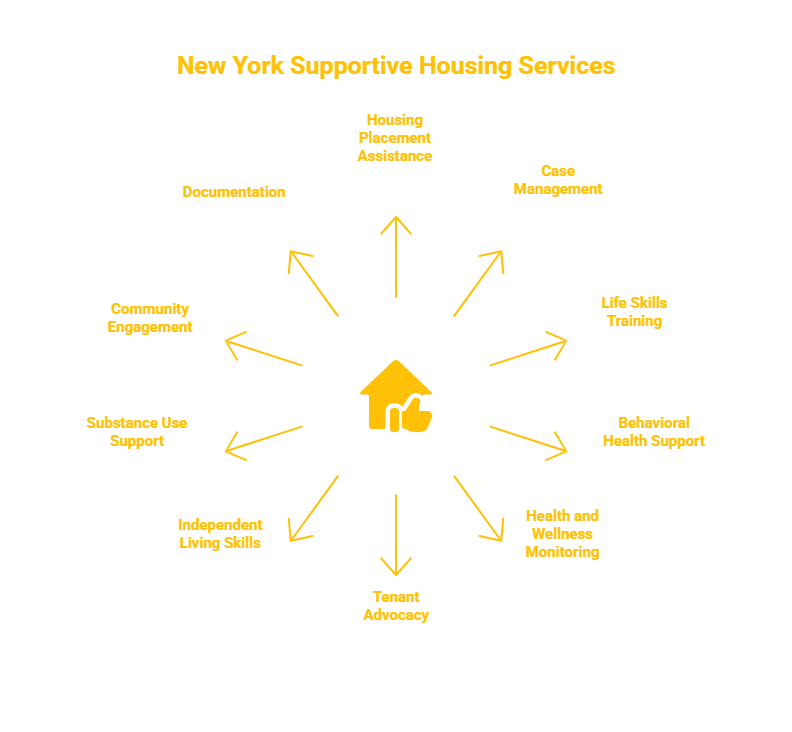
Providers are responsible for delivering the following core services to ensure program success:
- Housing Placement Assistance: Helping individuals navigate the market to secure accessible and affordable housing.
- Case Management: Coordinating care, medical appointments, and external support services.
- Life Skills Training: Teaching practical daily living skills, including budgeting, meal preparation, and household management.
- Behavioral Health Support: Facilitating access to counseling, crisis intervention, and mental health resources.
- Health and Wellness Monitoring: Tracking physical health markers and encouraging proactive medical care.
- Tenant Advocacy: Assisting individuals in understanding their rights, responsibilities, and landlord-tenant relations.
- Independent Living Skills: Enhancing the capacity for self-advocacy and community participation.
- Substance Use Support: Coordinating access to addiction treatment and recovery-oriented services.
- Community Engagement: Facilitating social connections and participation in neighborhood activities.
- Documentation: Maintaining rigorous records of housing stability, service delivery, and clinical outcomes.
What Are the Licensing and Provider Enrollment Requirements?
Launching a supportive housing agency requires a systematic approach to business entity formation and regulatory compliance. Before engaging with the Medicaid system, an agency must be legally registered with the New York Department of State and obtain an Employer Identification Number (EIN) from the IRS, along with a Type 2 National Provider Identifier (NPI). This foundational step establishes the legal identity of the provider within the healthcare system.
Following business formation, prospective providers must prepare for the rigorous enrollment process through the New York Medicaid Provider Enrollment Portal (eMedNY). This process involves verifying that the organization maintains comprehensive general and professional liability insurance and has developed robust policies regarding tenant support, housing stabilization, and safety. All staff must undergo background checks and health screenings, and providers must ensure that their operational infrastructure aligns with the requirements of the specific Medicaid waiver programs under which they intend to operate.
How Does the Enrollment and Readiness Review Process Function?
The enrollment process is designed to ensure that providers are fully prepared to offer safe and effective services upon activation. The journey begins with submitting the formal application via the eMedNY portal. This application must include supporting documentation, such as Articles of Incorporation, proof of financial stability, and detailed manuals outlining the provider’s housing support and crisis intervention protocols.
Once documentation is submitted, the relevant agencies—NYSDOH, OPWDD, or OMH—conduct a Program Readiness Review. This review evaluates the provider’s capacity to execute their stated policies, the qualifications of their proposed staff, and the adequacy of their safety protocols. Only after successful completion of this review and subsequent approval are providers authorized to use designated Medicaid billing codes for service reimbursement.
What Are the Staffing and Documentation Expectations?
A supportive housing program is only as effective as its workforce. Successful providers prioritize the hiring of a Program Director with a background in social work, human services, or healthcare administration, ensuring that the agency has experienced leadership. Case Managers and Housing Support Coordinators must also possess relevant academic credentials or significant field experience in client advocacy, property management, and crisis intervention.
Beyond initial hiring, agencies must maintain a continuous cycle of documentation and training. All staff are required to undergo training in HIPAA compliance, tenant rights, and evidence-based housing stabilization techniques. Furthermore, the agency must maintain an up-to-date Policy & Procedure Manual that covers emergency response, grievance handling, and the specific documentation standards required for Medicaid billing, ensuring that the organization is always prepared for state and federal audits.
Frequently Asked Questions
Which Medicaid waiver programs cover these services?
Supportive Housing Services are authorized under several key New York Medicaid waivers, including the OPWDD Comprehensive Waiver, the Home and Community-Based Services (HCBS) Waiver, the Nursing Home Transition and Diversion (NHTD) Waiver, the Traumatic Brain Injury (TBI) Waiver, and the Children’s Waiver.
How long does the launch process generally take?
The timeline varies based on organizational readiness, but the full lifecycle—from business formation through Medicaid billing setup—typically spans 6 to 9 months, depending on the complexity of the specific waiver application and readiness review process.
What core components must be included in a Policy & Procedure Manual?
The manual must detail housing placement protocols, tenant support and crisis intervention guidelines, staff credentialing procedures, HIPAA compliance measures, grievance handling, safety and emergency response protocols, and established standards for billing and quality assurance.
Key Takeaway
Establishing a Supportive Housing Services provider in New York is a highly regulated undertaking that requires meticulous attention to agency-specific requirements, comprehensive documentation, and a focus on person-centered care. By aligning business operations with the guidelines set forth by NYSDOH, OPWDD, and OMH, providers can build sustainable programs that significantly improve the housing stability and quality of life for New York’s most vulnerable residents.
Last verified: November 2024. This information is intended for educational purposes and does not constitute legal or professional medical advice. Always consult with the New York State Department of Health or the relevant regulatory body regarding current requirements for your specific jurisdiction and service model.