SUPPORTED LIVING SERVICES PROVIDER IN GEORGIA
By Fatumata Kaba · 2025-07-14 · 5 min read
ASSISTING INDIVIDUALS IN ACHIEVING INDEPENDENCE WHILE LIVING IN HOMES OF THEIR CHOICE WITH PERSONALIZED SUPPORT
Supported Living Services in Georgia provide a vital pathway for individuals with intellectual and developmental disabilities to reside in their own homes or apartments while receiving customized, person-centered support. These services are authorized under Georgia’s Medicaid Home and Community-Based Services (HCBS) waiver programs, ensuring that participants maintain their health, safety, and community integration while exercising personal choice and autonomy.
Becoming a provider of these services involves rigorous adherence to federal and state standards. Organizations must successfully navigate the regulatory frameworks established by the Georgia Department of Behavioral Health and Developmental Disabilities (DBHDD) and the Georgia Department of Community Health (DCH) to deliver compliant, high-quality care.
What Are the Governing Agencies and Regulatory Roles?
The delivery of Supported Living Services is governed by a tripartite structure involving federal and state oversight. This ensures that the services meet stringent quality standards while maintaining alignment with the Americans with Disabilities Act and the Centers for Medicare & Medicaid Services (CMS) community-based requirements.
The Georgia Department of Behavioral Health and Developmental Disabilities (DBHDD) acts as the primary administrator for the NOW and COMP waivers. They define service standards and oversee the clinical and operational readiness of providers. Simultaneously, the Georgia Department of Community Health (DCH) manages the fiscal and legal aspects of Medicaid participation, including provider enrollment, claims processing, and reimbursement oversight.
- DBHDD: Responsible for service authorization and programmatic oversight for NOW and COMP waiver participants.
- DCH: Manages Medicaid provider enrollment, ongoing credentialing, and reimbursement protocols.
- CMS: Provides the federal mandate and regulatory framework ensuring that all HCBS services promote community integration and person-centered living.
How Do Supported Living Services Facilitate Independence?
Supported Living Services are fundamentally designed to replace institutional care with individualized, home-based support. The goal is to provide just enough assistance to enable the participant to live as independently as possible, rather than providing custodial care that limits autonomy.
Providers deliver a broad spectrum of services tailored to the participant’s Individual Service Plan (ISP). These services are intended to foster independence in daily living, social engagement, and personal health maintenance. By focusing on person-centered planning, providers help participants navigate the complexities of managing a household and engaging with their surrounding community.
- Personal Assistance: Support with Activities of Daily Living (ADLs) such as bathing, grooming, dressing, and mobility.
- Home Management: Assistance with Instrumental Activities of Daily Living (IADLs) like meal preparation, cleaning, laundry, and financial management.
- Health & Safety: Non-nursing health maintenance, medication reminders, emergency preparedness, and crisis intervention.
- Community Integration: Advocacy, transportation assistance, and support in developing local social connections.
What Are the Prerequisites for Provider Enrollment?
Launching a service agency requires a structured approach to legal, administrative, and operational readiness. Before engaging with state agencies, prospective providers must establish their business entity in compliance with Georgia law and obtain all necessary federal identifiers.
Operational infrastructure is critical during the initial phase. Providers must demonstrate that they have the internal policies required to protect participant rights, manage HIPAA-compliant data, and ensure high standards of care. This includes creating a robust policy manual that outlines how the agency will handle incident reporting, emergency responses, and quality assurance.
- Business Formation: Registering the business with the Georgia Secretary of State and obtaining an EIN from the IRS.
- Provider Identification: Acquiring a Type 2 NPI for organizational billing.
- Insurance: Maintaining adequate general liability insurance coverage.
- System Access: Enrolling as a Medicaid provider through the Georgia Medicaid Management Information System (GAMMIS).
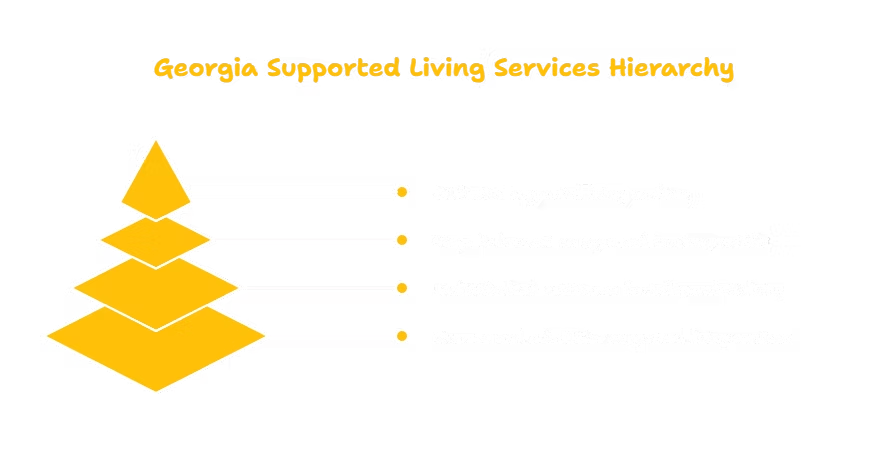
What Is the Step-by-Step Enrollment and Readiness Process?
The path to becoming an approved provider is a multi-phased journey that demands attention to detail and consistent documentation. The process begins with submitting a Letter of Intent to the DBHDD, which signals an organization's interest in delivering specific services under the waiver programs.
Following the initial inquiry, the applicant must undergo a comprehensive Program Readiness Review. During this stage, the DBHDD evaluates the provider's operational capacity, including the hiring of qualified staff, the development of documentation systems, and the ability to execute the ISP for prospective participants. Only after meeting these benchmarks can the provider finalize their Medicaid enrollment through GAMMIS to begin billing for services.
- Initial Setup: 1–2 weeks for business registration and credentialing.
- Application Phase: 60–90 days for the DBHDD Provider Application and Readiness Review.
- Operational Setup: 30–45 days for staff hiring, training, and systems implementation.
- Final Enrollment: 45–60 days to complete Medicaid billing configuration in the GAMMIS portal.
What Are the Staffing and Training Requirements?
Quality of care in supported living is largely dependent on the competence and compassion of the staff. Agencies must employ a qualified Supported Living Manager or Supervisor to oversee daily operations, ensure clinical standards are met, and manage staff schedules. This role typically requires a background in human services or social work.
Direct Support Professionals (DSPs) are the core of the service delivery model. They must meet specific educational and training requirements, including background screenings to ensure participant safety. Ongoing professional development is mandatory, focusing on person-centered planning, emergency response, and adherence to the specific rights and needs of the individuals they support.
Frequently Asked Questions
What is the difference between the NOW and COMP waivers?
Both programs operate under the Medicaid HCBS umbrella. The New Options Waiver (NOW) is generally designed for individuals who need less intensive services, while the Comprehensive Supports Waiver Program (COMP) is designed for individuals who require more intensive, 24/7-style support. Providers must be authorized for the specific waivers under which they plan to deliver services.
Is a nursing license required to provide health-related support?
Supported Living Services are categorized as non-nursing supports. While providers assist with medication reminders and general health monitoring, they do not provide medical or nursing services. Any health-related assistance must fall within the defined non-nursing scope of the waiver programs.
Can an agency begin billing as soon as the application is submitted?
No. Billing can only commence once the agency has received formal approval from the DBHDD and has completed the subsequent enrollment process with the DCH/GAMMIS. Operating without proper authorization or attempting to bill prior to full enrollment is a violation of Medicaid provider agreements.
WAIVER CONSULTING GROUP’S START-UP ASSISTANCE SERVICE — GEORGIA SUPPORTED LIVING SERVICES PROVIDER
WCG supports residential and community living providers in launching Medicaid-compliant Supported Living Services. Our scope of work includes business registration, DBHDD and Medicaid provider enrollment assistance, policy and procedure manual development, staff credentialing templates, and the setup of billing and quality assurance systems.
Key takeaway: Success as a Supported Living Services provider in Georgia requires a rigorous, systematic approach to regulatory compliance, prioritizing the person-centered mission defined by the DBHDD and the fiscal integrity mandates of the DCH. By focusing on quality, documentation, and staff training, providers can build sustainable organizations that significantly improve the lives of individuals with developmental disabilities.
Last verified: October 2023. Disclaimer: This article is provided for informational purposes only and does not constitute legal or professional advice. Always verify current state regulations and policy requirements directly through the Georgia Department of Behavioral Health and Developmental Disabilities (DBHDD) and the Georgia Department of Community Health (DCH).