SUPPORTED LIVING SERVICES PROVIDER IN COLORADO
By Fatumata Kaba · 2025-07-06 · 5 min read
Becoming a Supported Living Services (SLS) provider in Colorado is a vital step toward enhancing the quality of life for adults with intellectual and developmental disabilities (IDD). This specialized service delivery model allows providers to support participants in their own homes or with their families, focusing on community integration, functional independence, and personalized care as authorized under the Colorado Department of Health Care Policy and Financing (HCPF) HCBS-SLS Waiver.
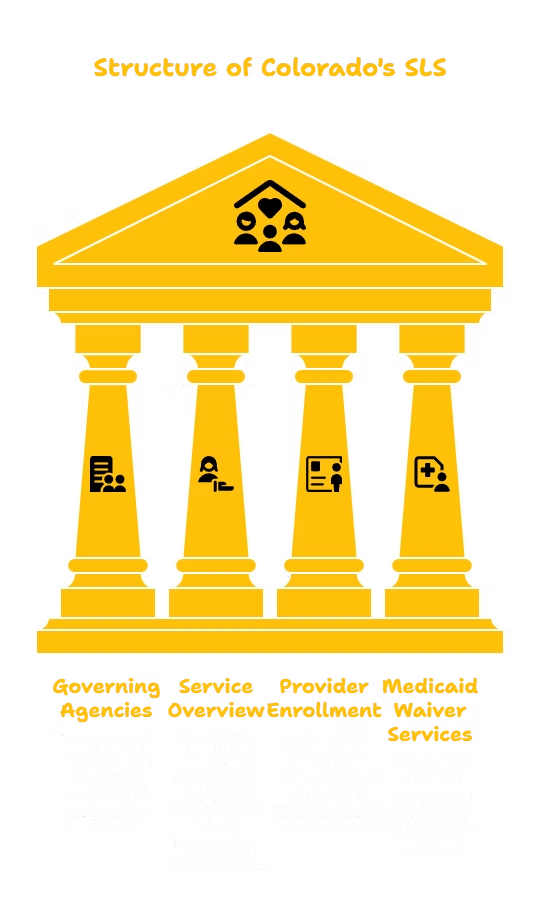
Understanding the HCBS-SLS Waiver Framework
The HCBS-SLS waiver is a cornerstone of Colorado’s commitment to person-centered care. Administered by the HCPF, this program provides the necessary funding for services that allow individuals to remain in non-licensed residential settings while receiving the support they need to thrive. As a provider, your role is to translate these waiver objectives into daily, high-quality care that respects the autonomy and dignity of every participant.
To operate effectively, agencies must maintain strict alignment with both state and federal mandates. While HCPF sets the overarching rules for reimbursement and service participation, the Centers for Medicare & Medicaid Services (CMS) ensures that all services uphold federal standards for community integration. Furthermore, if your agency provides medical or personal care, the Colorado Department of Public Health and Environment (CDPHE) serves as the primary licensing body, ensuring that clinical and hygiene standards are strictly met.
Navigating Licensing and Provider Requirements
Launching a compliant agency requires a disciplined approach to both business formation and regulatory adherence. Before delivering services, providers must ensure their business is legally recognized by the Colorado Secretary of State and that they possess a valid EIN and a Type 2 National Provider Identifier (NPI). These foundational elements are essential for enrollment in the state’s Medicaid system.
Beyond basic business registration, specific service offerings dictate your regulatory burden. For instance, agencies intending to provide personal care must obtain a Class B Home Care Agency license from the CDPHE. This licensure process is rigorous, requiring documentation that proves your agency’s capability to provide safe, professional care in a home setting. Compliance is not a one-time achievement but a continuous process of maintaining insurance, staff certifications, and robust internal policies.
- Registering the legal business entity with the Colorado Secretary of State.
- Obtaining an IRS Employer Identification Number (EIN).
- Acquiring a Type 2 National Provider Identifier (NPI) for claims and billing.
- Securing mandatory general and professional liability insurance coverage.
- Obtaining the Class B Home Care Agency license via the CDPHE if personal care is offered.
The Enrollment Process for Medicaid Providers
The provider enrollment journey is centered on the Gainwell Technologies Medicaid Provider Portal. This digital gateway is where your agency will formally submit applications to become a recognized waiver provider. Accuracy during this phase is critical, as any discrepancies in documentation can result in significant delays in your ability to bill for services provided under the HCBS-SLS waiver.
Once enrolled, your agency must proactively establish referral pathways. Coordination with Case Management Agencies (CMAs) and local Regional Centers is a vital component of a successful launch. These agencies act as the gatekeepers for participant services and are responsible for matching eligible individuals with qualified providers. Building strong, transparent relationships with these stakeholders ensures a steady pipeline of referrals and fosters a reputation for reliability within the IDD support community.
Establishing Essential Documentation and Operational Procedures
An audit-ready agency is built on the strength of its policy and procedure manual. This document is not merely a requirement; it is the blueprint for your daily operations. It must clearly outline how your agency manages intake, validates service authorizations, and handles the sensitive, person-centered documentation required by the state. Every staff member must be well-versed in these protocols to ensure consistency and compliance across all shifts.
Your documentation framework should be comprehensive, covering everything from emergency protocols to incident reporting. Because supported living happens in the community, tracking progress notes and ensuring HIPAA compliance is non-negotiable. Agencies that invest in high-quality templates for progress notes, community integration tracking, and transportation logs will find the audit process significantly more manageable.
- Formal intake procedures and verification of participant service authorizations.
- Comprehensive incident reporting and abuse prevention documentation.
- Individualized service planning templates that align with participant goals.
- HIPAA-compliant systems for storing participant data and consent forms.
- Structured templates for daily progress tracking and service coordination.
Maintaining Quality Staffing and Training Standards
The quality of your agency is directly reflected in the competence and compassion of your Direct Support Professionals (DSPs). Because your staff will be working directly with individuals with IDD, hiring and training requirements are stringent. All personnel must undergo thorough background checks and hold certifications in CPR and First Aid. Beyond these technical requirements, staff must be trained to support the unique needs of the IDD population.
Supervision is equally critical. The Program Supervisor or Agency Administrator must possess the professional background necessary to oversee human services delivery effectively. They must be proficient in person-centered planning and understand the nuances of the HCBS-SLS waiver. Regular, ongoing training for all staff members regarding client rights, mandatory reporting of abuse, and documentation procedures is essential for maintaining both high care quality and regulatory compliance.
Frequently Asked Questions
What is the primary role of a Case Management Agency (CMA)?
Case Management Agencies (CMAs) are responsible for evaluating individual needs, developing care plans, and linking participants to the appropriate waiver services. As an SLS provider, you will work closely with these agencies to receive referrals and ensure your service delivery aligns with the approved service plan for each participant.
How long does the provider enrollment process typically take?
The timeline varies based on your specific requirements. Generally, business formation takes 1–2 weeks, while CDPHE licensing (if required) can take between 30–90 days. Medicaid enrollment via the Gainwell portal typically ranges from 30–60 days, assuming all documentation is submitted accurately and without error.
What are the key training topics for staff supporting IDD participants?
Mandatory training areas include client rights and dignity, person-centered service delivery, abuse prevention and mandatory reporting, medication reminders, and ADL/IADL assistance. Training must also cover documentation and emergency response protocols to ensure the safety and wellbeing of participants.
Key Takeaway
Operating as a Supported Living Services provider in Colorado requires a deep commitment to regulatory rigor and person-centered care. By maintaining focus on compliant documentation, professional staffing, and strong relationships with Case Management Agencies, providers can deliver essential services that foster independence for Coloradans with IDD. Success in this field relies on your ability to integrate state-mandated processes with a compassionate, reliable approach to daily service delivery.
Last verified: 2024. This information is provided for educational purposes and should not be considered legal or professional regulatory advice. Requirements may change periodically; please consult official Colorado Department of Health Care Policy and Financing (HCPF) and CDPHE documentation for the most current rules and regulations.