SUPPORTED LIVING SERVICES PROVIDER IN ALASKA
By Fatumata Kaba · 2025-07-03 · 5 min read
Supported Living Services in Alaska provide essential, round-the-clock individualized care for individuals with intellectual and developmental disabilities (IDD) who require consistent support while residing in their own private homes. By operating under Alaska’s Home and Community-Based Services (HCBS) Medicaid Waiver programs, these services prioritize autonomy, person-centered planning, and community integration, offering a vital alternative to traditional group living arrangements.
What Are Supported Living Services and Who Do They Serve?
Supported Living Services are designed for individuals who desire a non-congregate living environment but need personalized, 24/7 care to live safely and independently. Unlike group homes, which often feature communal living dynamics, the Supported Living model focuses on a home environment either leased or owned by the individual. This approach ensures that the resident maintains maximum control over their daily routines, personal space, and lifestyle choices.
The scope of service includes comprehensive assistance tailored to the unique requirements of each participant’s person-centered plan. This may range from hands-on support with Activities of Daily Living (ADLs)—such as bathing, grooming, and dressing—to specialized care involving medication administration, nutritional planning, and behavioral support. Because these services are delivered in a private setting, providers must be adept at integrating professional care into the participant's home life while respecting their privacy and dignity.
- 24/7 monitoring and supervision to ensure participant safety.
- Skill-building initiatives for independent living, including money management and home safety.
- Community integration support, including transportation assistance and social engagement.
- Health-related care tasks and coordination with external medical professionals.
- Comprehensive daily documentation and individualized service tracking.
Which Regulatory Bodies Oversee Alaska Supported Living?
The provision of Supported Living Services is subject to rigorous oversight to ensure the safety and quality of life for all participants. The Alaska Department of Health’s Division of Senior and Disabilities Services (SDS) serves as the primary regulatory body, responsible for approving providers, monitoring home environments, and enforcing compliance with all HCBS standards.
In addition to state-level oversight, providers must work closely with Alaska Medicaid for enrollment and billing operations. At the federal level, the Centers for Medicare & Medicaid Services (CMS) establishes the overarching rules for HCBS, ensuring that all services remain community-based, person-centered, and fully compliant with federal civil rights and disability regulations.
How to Navigate the Provider Enrollment Process
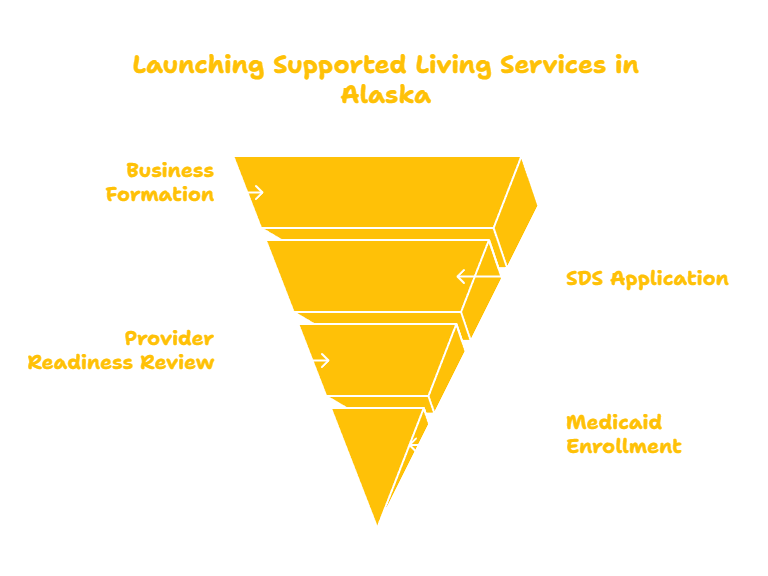
Becoming an approved provider involves a structured sequence of applications and readiness reviews. The process begins with the initial registration of the business entity through the Alaska Division of Corporations, Business and Professional Licensing, followed by obtaining an Employer Identification Number (EIN) and a Type 2 National Provider Identifier (NPI).
Once the business is legally established, the prospective provider must contact the Division of Senior and Disabilities Services (SDS) to initiate the application process. This typically involves attending a mandatory orientation session and submitting a detailed operational plan. This plan must articulate the intended support model, staffing schedules, training modules, and robust emergency response protocols that will safeguard participants 24/7.
- Request the official application package from SDS.
- Submit a detailed description of the support model, staffing, and documentation systems.
- Participate in a Readiness Review, which includes an evaluation of staff qualifications and, if applicable, the physical environment.
- Complete the Medicaid enrollment process through the Conduent MMIS portal once SDS has granted initial approval.
What Are the Essential Staffing and Policy Requirements?
High-quality residential services depend on a well-trained workforce. Organizations must hire a Residential Program Supervisor with proven experience in Medicaid documentation and staff coordination, alongside a team of Direct Support Professionals (DSPs). All staff members must satisfy background check requirements, maintain valid CPR/First Aid certifications, and hold at least a high school diploma or GED.
Beyond individual credentials, the agency must maintain a comprehensive Policy & Procedure Manual. This document is the cornerstone of regulatory compliance and must cover intake assessments, incident reporting, medication management, and client rights. Documentation is not merely a formality; it is a critical component of the audit trail required by SDS to verify that the care provided matches the participant's person-centered service plan.
Timeline and Strategic Planning for New Agencies
Establishing an agency capable of providing 24-hour support requires careful project management. The total timeline from inception to becoming a billing-ready provider typically spans several months. The initial phases—business formation and securing residential settings—are relatively brief, while the subsequent application, readiness review, and Medicaid enrollment processes require more time due to the complexity of state and federal regulatory requirements.
- Business Formation and Housing Setup: 1–2 weeks.
- SDS Application and Provider Readiness Review: 60–90 days.
- Staff Hiring and Home Readiness Checks: 30–45 days.
- Medicaid Enrollment and MMIS Setup: 45–60 days.
Frequently Asked Questions
Can Supported Living Services be provided in a group home?
No. Supported Living Services are specifically designed for non-group settings. The goal is to provide a private, individualized home environment, such as a residence owned or leased by the participant, rather than a congregate facility.
What waivers authorize these services in Alaska?
These services are typically authorized under the Individuals with Intellectual and Developmental Disabilities (IDD) Waiver, the Adults with Physical and Developmental Disabilities (APDD) Waiver, and the Children with Complex Medical Conditions (CCMC) Waiver, particularly for those approaching the transition to adult care.
What is the role of the Readiness Review?
The Readiness Review is an evaluative process conducted by the SDS to confirm that the provider has the infrastructure, documentation systems, and safety protocols necessary to manage 24/7 care in a residential setting before they are authorized to bill Medicaid.
Key Takeaway
Operating a successful Supported Living Services agency in Alaska requires a steadfast commitment to person-centered care, meticulous regulatory compliance, and a clear understanding of the transition from business formation to Medicaid billing. By prioritizing the autonomy of the individuals served and adhering to the guidelines set forth by the Alaska Division of Senior and Disabilities Services, providers can build sustainable, high-impact programs that foster independence and community integration.
Last verified: [Insert Date]. Disclaimer: This information is for educational purposes only and does not constitute legal or professional advice. Requirements for Medicaid HCBS programs are subject to change; always consult with the Alaska Division of Senior and Disabilities Services (SDS) and official Medicaid enrollment resources to confirm current compliance standards.