SUPPORTED EMPLOYMENT SERVICES PROVIDER IN SOUTH CAROLINA
By Fatumata Kaba · 2025-10-13 · 5 min read
Empowering individuals with disabilities to gain meaningful employment through individualized job supports and community partnerships is the core mission of Supported Employment providers in South Carolina. These services provide the essential, person-centered Medicaid-funded support necessary for individuals with intellectual and developmental disabilities (IDD), traumatic brain injuries, or behavioral challenges to secure and maintain competitive, integrated employment within their local communities.
What are the Roles of Governing Agencies in South Carolina?
Supported Employment services operate under a strict regulatory framework in South Carolina to ensure both participant success and fiscal accountability. The South Carolina Department of Disabilities and Special Needs (DDSN) serves as the primary authority for service standards. DDSN is responsible for authorizing providers, establishing the specific requirements for service delivery, and managing the intake and referral processes for individuals seeking job coaching and placement assistance.
Complementing this, the South Carolina Department of Health and Human Services (SCDHHS) provides the necessary oversight for Medicaid reimbursement under the state's Home and Community-Based Services (HCBS) waivers. Their role focuses on program integrity, ensuring that all services rendered are both medically necessary and compliant with federal and state billing standards. Additionally, the South Carolina Vocational Rehabilitation Department (SCVRD) offers vital pre-employment and transition services that are frequently coordinated with waiver-funded supports to create a seamless pathway to the workforce.
At the federal level, the Centers for Medicare & Medicaid Services (CMS) enforces the overarching Medicaid standards for employment-related HCBS. They ensure that all state programs adhere to the federal mandates regarding person-centered outcomes, which prioritize the individual’s choices, strengths, and personal goals throughout the employment journey.
What Scope of Services Should a Provider Offer?
Supported Employment Services are designed to promote competitive, integrated work environments for individuals who require long-term, individualized support to succeed in the workforce. A successful provider agency must be prepared to deliver a comprehensive suite of services that address every stage of the employment lifecycle, from initial discovery and career planning to long-term job retention.
Approved providers generally deliver the following core services to ensure high-quality participant outcomes:
- Job Development & Placement: Active employer outreach and individualized job matching based on the participant’s skills and interests.
- Job Coaching: Hands-on, on-site training and intensive support to build job-specific skills and foster professional confidence.
- Workplace Accommodations: Expert consultation to ensure the work environment is accessible, inclusive, and tailored to the individual’s needs.
- Employment Skills Training: Instruction on essential soft skills, workplace communication, and task-specific workflows.
- Ongoing Support & Monitoring: Routine check-ins with both the employer and the participant to maintain success and resolve any emerging workplace challenges.
- Documentation: Rigorous maintenance of employment plans, service delivery logs, progress reports, and Medicaid billing records.
How Do You Navigate the Provider Enrollment Process?
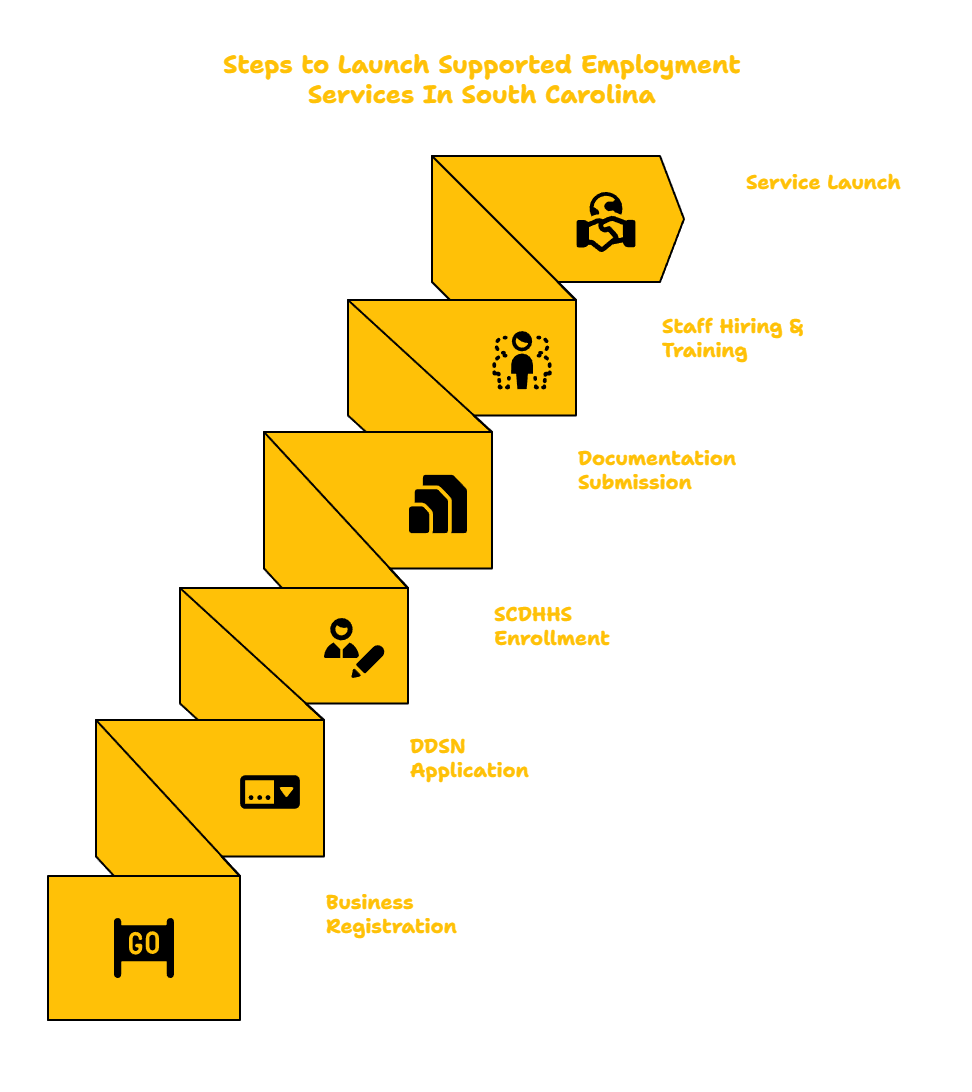
Launching a Supported Employment agency requires a methodical approach to business formation and regulatory enrollment. The process begins with standard business registration through the South Carolina Secretary of State, followed by the acquisition of an Employer Identification Number (EIN) and a Type 2 National Provider Identifier (NPI). These are the foundational credentials required for all professional healthcare and social service entities operating in the state.
Once the legal entity is established, the prospective provider must seek formal approval from DDSN to deliver Supported Employment services. This phase involves demonstrating organizational readiness and clinical capacity. Following DDSN approval, the agency must initiate the enrollment process with SCDHHS to become an authorized Medicaid provider. This step is critical, as it establishes the direct financial relationship with the state’s Medicaid program.
To successfully complete enrollment, agencies must submit a detailed documentation package. This package typically includes staff resumes, verification of specialized training certifications, and sample documentation, such as model employment support plans. Once these administrative hurdles are cleared, the agency is positioned to begin receiving referrals and service authorizations, officially transitioning into an active provider status.
What Are the Key Staffing and Compliance Requirements?
Staffing quality is the most significant determinant of a program’s success. Job coaches and employment specialists must possess demonstrated experience in disability employment services. Furthermore, all staff must undergo rigorous background checks and complete mandatory training, including HIPAA compliance, participant rights, abuse prevention, and accurate Medicaid billing protocols. Oversight should be provided by an Employment Program Supervisor who ensures all staff actions align with DDSN standards.
Professional development is highly encouraged to maintain service excellence. Certifications, such as those from the Association of Community Rehabilitation Educators (ACRE) or the National APSE Certification in Employment Services, provide staff with the tools needed to facilitate successful long-term outcomes. Consistency in documentation and regular competency evaluations are essential to ensure the agency remains in good standing during audits.
Which Medicaid Waiver Programs Cover These Services?
Supported Employment services are funded through specific HCBS waivers that cater to different populations. The ID/RD Waiver serves adults with intellectual or developmental disabilities, while the HASCI Waiver is specifically for individuals with brain or spinal cord injuries. The Community Supports Waiver also offers limited provisions for employment-related assistance, making it another potential avenue for funding.
For youth under 21, services may be accessible through EPSDT or TEFRA programs, often in conjunction with transition planning provided by SCVRD. Furthermore, the model of Self-Directed Services allows participants to play a more active role in choosing their employment providers, provided the chosen provider remains within the established waiver guidelines. Understanding the specific constraints and requirements of each waiver type is vital for administrative accuracy and successful reimbursement.
Frequently Asked Questions
What is the typical timeline for launching a Supported Employment agency in South Carolina?
The timeline typically spans 5 to 7 months. Business registration and manual development usually take 1–2 months, followed by 2–3 months for the DDSN and SCDHHS enrollment processes. Hiring and training staff takes an additional 30–60 days before the agency is ready to accept its first participant referrals.
What must be included in a Supported Employment Policy & Procedure Manual?
A comprehensive manual must include person-centered job matching protocols, intake procedures, job coach supervision guidelines, employer engagement templates, incident reporting policies, quality assurance measures, and detailed instructions for accurate service documentation and Medicaid billing.
Are there ongoing requirements for maintaining provider status?
Yes, providers must maintain active insurance, ensure all staff stay current with required training, conduct ongoing competency evaluations, and perform regular internal audits of service logs and billing records to ensure full compliance with both DDSN and SCDHHS requirements.
Key Takeaway: Successful participation in South Carolina’s Supported Employment landscape requires a balanced commitment to person-centered service delivery and meticulous regulatory compliance. By adhering to the established frameworks provided by DDSN and SCDHHS and maintaining a well-trained, professional staff, agencies can effectively support individuals with disabilities in achieving sustainable, long-term employment success.
Last verified: October 2023. Disclaimer: This information is for educational purposes and does not constitute legal or professional advice. Always consult official state guidance and the relevant department websites when establishing a Medicaid-funded business.