SUPPORTED EMPLOYMENT SERVICES PROVIDER IN RHODE ISLAND
By Fatumata Kaba · 2025-10-09 · 5 min read
Understanding the Role of Supported Employment Services in Rhode Island
Supported Employment Services in Rhode Island are specialized, Medicaid-funded programs designed to empower individuals with intellectual and developmental disabilities (IDD) to secure and maintain competitive, integrated employment. These services, authorized under Rhode Island’s Home and Community-Based Services (HCBS) 1115 Waiver, shift the focus from traditional day programs toward individualized career development, ensuring that participants have the necessary supports to thrive in the community workforce.
Managed primarily by the Department of Behavioral Healthcare, Developmental Disabilities & Hospitals (BHDDH) in collaboration with the Executive Office of Health and Human Services (EOHHS), this program aligns with the national "Employment First" philosophy. By providing professional job coaching and discovery services, providers assist participants in identifying their unique vocational strengths while fostering long-term career independence through customized, ongoing workplace supports.
Navigating the Regulatory and Governing Framework
Success as a Medicaid-funded employment provider requires a comprehensive understanding of the state and federal entities that govern service delivery. The regulatory environment ensures that all supports provided are person-centered, high-quality, and compliant with the federal HCBS Final Settings Rule. Each agency plays a distinct role in the authorization and monitoring of services.
The Executive Office of Health and Human Services (EOHHS) serves as the primary authority for Medicaid waiver structure and provider enrollment, while BHDDH acts as the operational lead for authorizing services for individuals with IDD. Additionally, the Office of Rehabilitation Services (ORS) is often involved in coordinating pre-employment services, and the Centers for Medicare & Medicaid Services (CMS) provides the overarching federal framework for all HCBS activities. Maintaining alignment across these entities is essential for regulatory compliance and continued program eligibility.
- EOHHS: Manages Medicaid waiver infrastructure and establishes provider enrollment protocols.
- BHDDH: Authorizes specific employment services and ensures provider alignment with Employment First objectives.
- ORS: Coordinates initial vocational rehabilitation and pre-employment funding efforts.
- CMS: Sets the federal standards for community integration and service delivery under the Final Settings Rule.
Core Components of Supported Employment Service Delivery
Providers are tasked with delivering a continuum of care that starts with discovery and lasts through long-term retention. These services are not one-size-fits-all; they are highly individualized based on the participant’s strengths, preferences, and long-term career goals. Effective providers utilize structured frameworks to move participants through the vocational lifecycle, from initial assessment to ongoing, "follow-along" workplace stabilization.
Key service components include Career Planning and Discovery, where providers perform person-centered assessments to identify appropriate vocational paths, and Job Development, which involves active outreach and application assistance. Once a participant is hired, the focus shifts to Job Coaching and workplace accommodations to ensure the participant can perform their duties effectively. Follow-along support is critical, as it allows providers to monitor the employee’s success and address any challenges that may arise after initial placement.
Strategic Steps for Provider Enrollment and Authorization
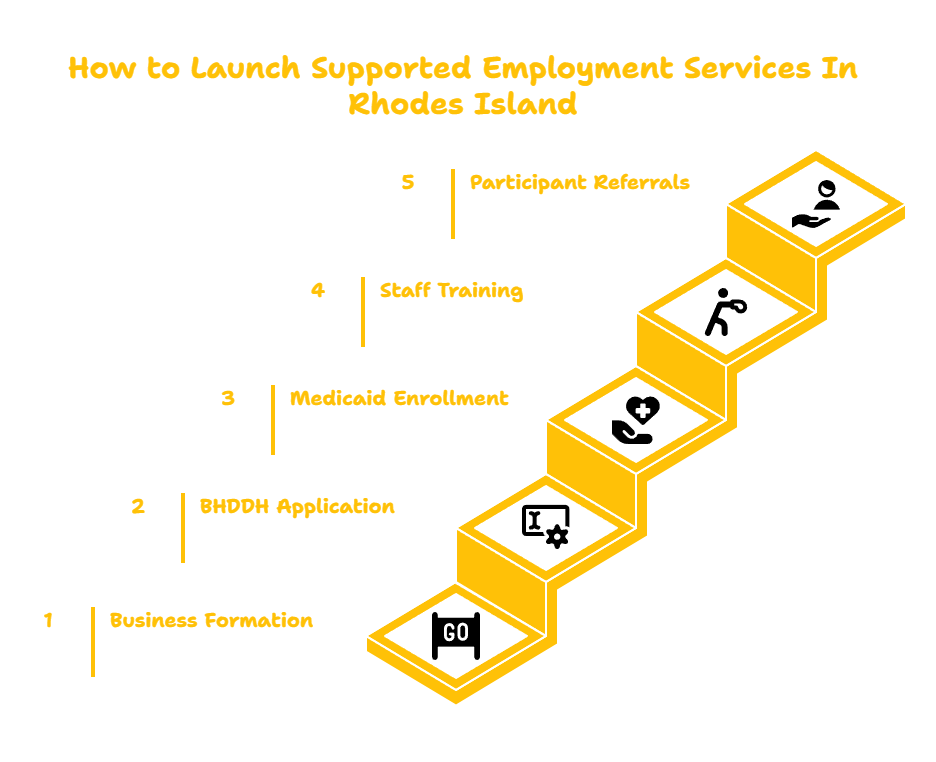
The journey to becoming an approved employment provider in Rhode Island is a sequential process that requires rigorous attention to documentation and policy development. Before a provider can offer services or bill for Medicaid reimbursement, they must establish a formal business entity, obtain necessary tax identifiers, and successfully navigate the BHDDH approval process. This involves demonstrating both operational capability and a deep understanding of the service model.
The enrollment timeline generally spans several months, beginning with business formation and culminating in the receipt of participant referrals. Providers must ensure their internal infrastructure—including staff training, policy manuals, and billing systems—is fully developed before submitting their application to BHDDH. Once approved, the provider must then register through the Rhode Island Medicaid provider portal to finalize their status and begin service authorization procedures.
- Phase 1: Entity formation, obtaining EIN and Type 2 NPI, and securing liability/workers' compensation insurance.
- Phase 2: Submitting formal program design, staffing plans, and comprehensive policy manuals to BHDDH.
- Phase 3: Finalizing Medicaid enrollment and establishing procedures for service authorization and billing.
Staffing, Training, and Operational Compliance
High-quality employment support is highly dependent on the competence and professional preparation of the staff delivering the services. Employment Specialists and Job Coaches must possess a blend of vocational expertise and an understanding of disability-related accommodations. Furthermore, the agency must maintain a robust administrative framework to ensure compliance with HIPAA, state safety protocols, and person-centered planning requirements.
Staff members are required to undergo specific training covering the HCBS Settings Rule, Employment First initiatives, and crisis de-escalation techniques. The agency itself must maintain a Policy & Procedure Manual that serves as a blueprint for operations, detailing everything from emergency incident responses to the maintenance of accurate, audit-ready progress notes and vocational assessments. Consistent documentation of these outcomes is a non-negotiable aspect of long-term program sustainability.
Frequently Asked Questions
What is the difference between Job Development and Job Coaching?
Job Development focuses on the pre-employment phase, including resume writing, job searching, and securing an interview. Job Coaching occurs after the individual is hired, providing on-the-job training and ongoing support to ensure the employee successfully integrates into the workplace and meets employer expectations.
Can self-employment be supported under these services?
Yes, if authorized under the specific participant’s Individualized Support Plan (ISP) and the provider's scope of service. This includes assistance with business planning, marketing strategies for microenterprises, and navigating the logistics of small business ownership for individuals with IDD.
How does the Office of Rehabilitation Services (ORS) coordinate with BHDDH?
The ORS often works in the initial phases of employment, providing vocational rehabilitation and assessment services. These efforts are frequently braided with Medicaid supports provided through BHDDH to ensure a seamless transition from job search activities to long-term community employment.
Key Takeaways for Prospective Providers
Establishing a successful Supported Employment Service in Rhode Island requires a commitment to the mission of community integration and a rigorous adherence to the regulatory standards set by BHDDH and EOHHS. By focusing on compliant documentation, standardized training for staff, and strong employer relationships, providers can create sustainable, high-impact programs that significantly improve employment outcomes for individuals with IDD. Success is found in the detail of the administrative build-out and the ongoing commitment to person-centered, outcome-oriented service delivery.
Last verified: October 2023. This information is for educational purposes only and does not constitute legal or professional consulting advice. Always verify current state regulations and policy requirements directly through the Rhode Island EOHHS and BHDDH websites before initiating service delivery.