SUPPORTED EMPLOYMENT SERVICES PROVIDER IN NORTH DAKOTA
By Fatumata Kaba · 2025-09-18 · 5 min read
Empowering Individuals with Disabilities Through Workplace Integration and Career Support
Supported Employment Services in North Dakota provide a critical pathway for individuals with disabilities to secure, maintain, and excel in competitive integrated employment within their local communities. By leveraging Medicaid Home and Community-Based Services (HCBS) waiver funding, these services deliver essential job coaching, individualized career planning, and long-term vocational support that empowers participants to achieve economic independence and meaningful workplace inclusion.
For provider agencies, launching and operating a successful supported employment program requires a deep understanding of the regulatory landscape mandated by the North Dakota Department of Human Services (NDDHS) and the Centers for Medicare & Medicaid Services (CMS). This guide outlines the necessary steps for organizational development, provider enrollment, and operational compliance to ensure high-quality service delivery for North Dakota’s diverse workforce.
Who are the Governing Agencies Overseeing Supported Employment in North Dakota?
The regulatory framework for supported employment is anchored by a collaborative effort between state and federal entities. The North Dakota Department of Human Services (NDDHS) serves as the primary administrator for Medicaid waiver funding, overseeing the integrity of provider enrollment, service authorization, and the reimbursement processes that sustain these programs.
In addition to the NDDHS, the North Dakota Medical Services Division (MSD) manages the technical administration of Medicaid waiver services, ensuring that providers meet the necessary standards for participation in the state’s healthcare network. Furthermore, the North Dakota Division of Vocational Rehabilitation (DVR) plays a vital role in coordinating employment training and vocational assistance, ensuring that services are aligned with broader rehabilitation goals. At the federal level, the Centers for Medicare & Medicaid Services (CMS) provides the overarching regulatory structure, ensuring that all Medicaid-funded services uphold stringent quality, safety, and person-centered care standards.
What Services are Provided Under the Supported Employment Model?
Supported Employment Services are designed to be flexible and highly tailored to the unique goals and capabilities of each participant. Approved providers are tasked with facilitating a smooth transition into the workforce, often starting with vocational assessments to identify an individual’s strengths and job readiness. Once a baseline is established, the provider works to match the individual with roles that align with their personal interests and professional potential.
Beyond initial placement, the scope of services extends into comprehensive retention support. This includes:
- Job Development: Identifying and securing employment opportunities tailored to the participant's specific skills.
- Job Coaching: Providing hands-on support in the workplace to assist the individual in mastering tasks and adapting to the organizational culture.
- Workplace Accommodation: Coordinating with employers to implement adaptive tools or environmental modifications.
- Career Planning and Skill Development: Creating individualized employment plans and teaching essential workplace etiquette and social skills.
- Follow-Along and Peer Mentoring: Providing ongoing monitoring to ensure long-term job satisfaction and stability, often through peer-to-peer connection.
What are the Licensing and Provider Approval Prerequisites?
Before an agency can begin billing for Medicaid-reimbursed services, it must establish a formal legal and operational foundation. The process begins with registering the business entity with the North Dakota Secretary of State and obtaining a Federal Employer Identification Number (EIN) from the IRS, followed by securing a Type 2 National Provider Identifier (NPI) for organizational billing.
Compliance is a critical pillar of the provider approval process. Agencies must maintain adequate general and professional liability insurance to protect both the organization and the individuals they serve. Furthermore, providers must develop a robust set of internal policies that address every aspect of employment support, from initial intake and job coaching protocols to client advocacy and grievance procedures. Staffing requirements also demand rigorous attention; all personnel must undergo comprehensive background checks, health screenings, and specialized training in employment support practices to ensure the safety and quality of service delivery.
How Do Agencies Navigate the North Dakota Provider Enrollment Process?
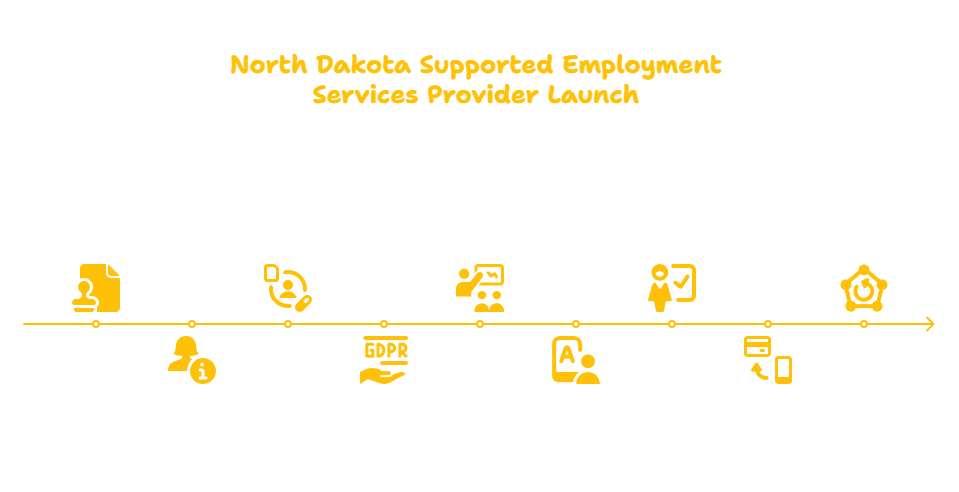
The enrollment journey is a multi-phase progression designed to ensure that only qualified, ready-to-operate agencies enter the Medicaid provider network. Initial interest begins with the submission of a formal application via the North Dakota Medicaid Management Information System (MMIS). This system serves as the central hub for the HCBS waiver program provider enrollment.
Following the initial submission, the applicant must provide extensive documentation, including Articles of Incorporation, proof of EIN/NPI, insurance certificates, and detailed organizational policy manuals. The NDDHS and DVR will then conduct a program readiness review to evaluate whether the applicant has established the necessary vocational support protocols, safety standards, and staff qualification tracking systems required by the state. Upon successful completion of this review, the provider is formally approved and granted the authority to bill Medicaid using the state’s designated billing codes.
What are the Essential Staffing and Documentation Requirements?
Operating a compliant program requires a team equipped with specific professional backgrounds and ongoing education. The Employment Program Director typically holds a Bachelor’s or Master’s degree in vocational rehabilitation, social work, or a related human services field, combined with experience in management. Job Coaches and Vocational Specialists must demonstrate expertise in workforce development, career counseling, and job placement to effectively serve participants.
Documentation is the backbone of Medicaid compliance and audit preparation. A comprehensive Policy & Procedure Manual must be maintained, covering the following essential areas:
- Vocational Assessment: Standardized procedures for evaluating and planning career paths.
- Service Tracking: Clear documentation standards for billing, service delivery, and progress monitoring.
- Compliance and HIPAA: Protocols ensuring data privacy, participant rights, and transparent grievance processes.
- Quality Assurance: Internal systems for monitoring the efficacy of employment supports and ensuring adherence to safety and hygiene standards.
Frequently Asked Questions
Which North Dakota Medicaid waivers include Supported Employment Services?
These services are available under several programs, including the Aged and Disabled Waiver, the Technology Dependent Waiver, the Developmental Disabilities Waiver, and the broader Home and Community-Based Services (HCBS) Waiver framework.
How long does the launch process generally take for a new provider?
The timeline typically spans several months. Business formation and initial compliance preparation take 1–2 months, followed by 2–3 months for hiring and program development. The formal Medicaid enrollment and readiness review process takes an additional 60–90 days, with final billing setup requiring 30–45 days.
What is the primary role of the Division of Vocational Rehabilitation (DVR)?
The DVR works in tandem with the NDDHS to provide specialized employment training and vocational assistance. Their focus is on ensuring that the support services delivered through Medicaid waivers remain aligned with effective, evidence-based vocational rehabilitation strategies.
Key Takeaway
Establishing a Supported Employment Services agency in North Dakota requires a meticulous approach to regulatory compliance, staff training, and operational documentation. By aligning agency policies with the requirements set forth by the NDDHS, DVR, and CMS, providers can successfully integrate into the Medicaid waiver network and provide high-impact, person-centered support for individuals with disabilities.
Last verified: October 2023. Disclaimer: This information is for educational purposes only and does not constitute legal or professional consulting advice. Requirements for Medicaid waiver programs are subject to change; always verify current regulations through the North Dakota Department of Human Services and the North Dakota Medicaid Management Information System (MMIS) official channels.