SUPPORTED EMPLOYMENT SERVICES PROVIDER IN NORTH CAROLINA
By Fatumata Kaba · 2025-09-15 · 5 min read
EMPOWERING INDIVIDUALS WITH DISABILITIES TO ACHIEVE AND MAINTAIN EMPLOYMENT THROUGH PERSONALIZED SUPPORT
Supported Employment Services in North Carolina provide essential pathways for individuals with disabilities or mental health challenges to secure, maintain, and advance in competitive, integrated employment. These services are authorized under North Carolina Medicaid Home and Community-Based Services (HCBS) Waiver programs, ensuring that participants receive the individualized training, job development, and ongoing coaching necessary to thrive in the modern workforce.
What Are the Governing Agencies and Regulatory Frameworks?
The delivery of Supported Employment Services in North Carolina is subject to strict oversight by both state and federal authorities to ensure the delivery of high-quality, person-centered care. The North Carolina Department of Health and Human Services (NCDHHS) serves as the primary entity responsible for the administration of Medicaid waiver funding, provider enrollment protocols, service authorization, and reimbursement structures. Working in tandem, the North Carolina Division of Health Benefits (NC Medicaid) manages the operational aspects of waiver services and monitors provider participation to maintain compliance with state regulations.
In addition to state-level management, the North Carolina Division of Vocational Rehabilitation Services (NCDVRS) provides critical oversight for programs specifically targeting individuals with disabilities, ensuring that vocational outcomes are prioritized. At the federal level, the Centers for Medicare & Medicaid Services (CMS) mandates that all Medicaid-funded services adhere to rigorous quality, safety, and person-centered care standards, protecting the rights of individuals participating in waiver programs.
How Do Supported Employment Services Function in Practice?
Supported Employment Services are structured to address the diverse needs of participants throughout their employment journey, from initial career exploration to long-term retention. By providing a comprehensive suite of interventions, approved providers help bridge the gap between vocational potential and successful integration into the competitive labor market. This model relies on a highly personalized approach that considers both the strengths of the individual and the specific requirements of the employer.
Approved providers are responsible for delivering a range of specialized interventions, including:
- Job Development: Actively identifying job opportunities that align with an individual’s unique skills, interests, and vocational goals.
- Employment Assessment: Evaluating an individual’s current job readiness, vocational preferences, and areas for skill development.
- Job Placement: Providing direct assistance with the application, interview, and hiring processes.
- Job Coaching: Offering one-on-one, on-the-job training and support during the critical early stages of employment.
- Skills Training: Instructing participants on essential soft skills, such as effective communication, workplace problem-solving, and professional teamwork.
- Workplace Accommodation Support: Collaborating with employers to modify tasks or environments to improve accessibility.
- Follow-Along Services: Maintaining consistent communication with both the employee and employer to ensure long-term job satisfaction and retention.
What Are the Requirements for Provider Approval?
Becoming an approved provider for Supported Employment Services requires a structured approach to business formation and regulatory compliance. Before a provider can begin billing for services, they must establish a formal business entity registered with the North Carolina Secretary of State and secure all necessary federal identifiers, including a Type 2 National Provider Identifier (NPI) and an Employer Identification Number (EIN). These foundational steps are necessary to initiate the enrollment process via the NCTracks Provider Portal.
Beyond administrative setup, agencies must demonstrate a commitment to operational excellence. This includes maintaining comprehensive general and professional liability insurance and developing robust internal policies that govern the entire scope of service delivery—from initial job development and placement to ongoing coaching and crisis intervention. Compliance is not a static requirement; agencies must implement ongoing training and background check protocols for all staff to ensure the safety and well-being of the populations they serve.
What Does the North Carolina Provider Enrollment Process Entail?
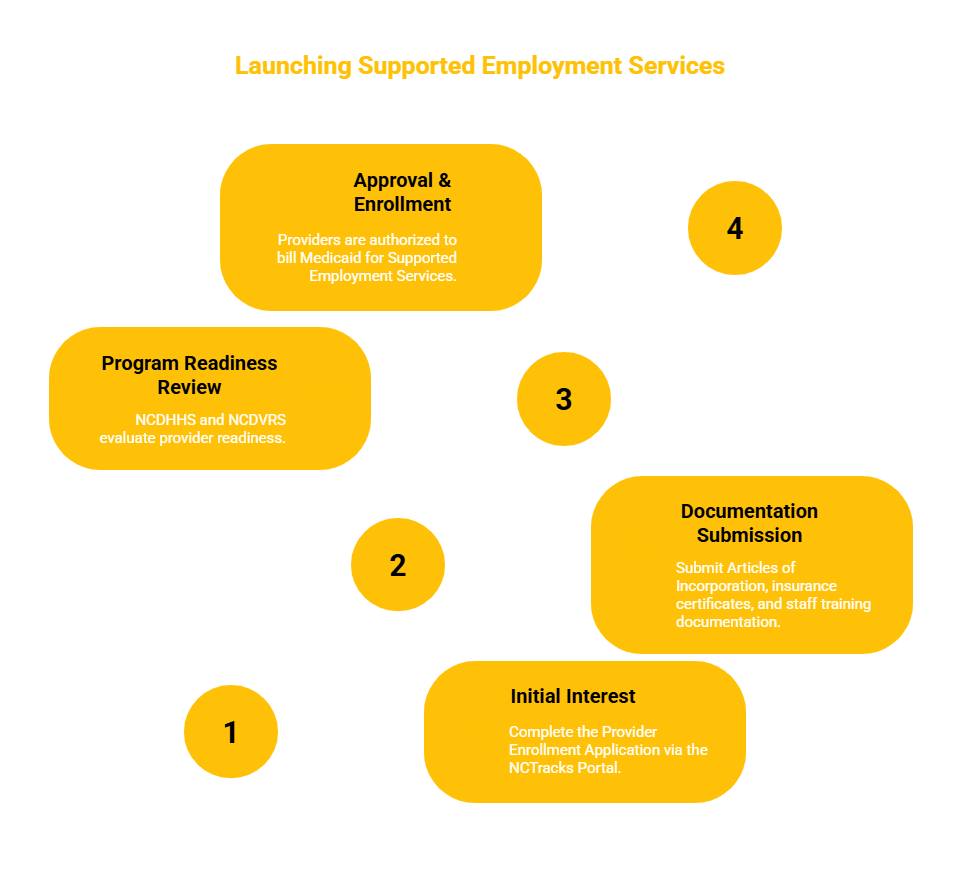
The enrollment process for Supported Employment providers is a multi-phased journey designed to ensure that every agency is fully equipped to meet the standards set by NCDHHS and NCDVRS. The process begins with the submission of a formal application through the NCTracks portal, where providers must demonstrate their readiness to operate within the specific guidelines of HCBS waivers. This initial application serves as the gateway to the more intensive program readiness review.
During the review phase, state agencies evaluate the provider's infrastructure, including their documented job development protocols, support methodologies, and evidence of staff qualifications. Following a successful evaluation of these materials, the provider is officially authorized to deliver services. Once enrollment is finalized, the provider gains the ability to bill Medicaid using the specific billing codes designated for Supported Employment, provided they continue to maintain documentation and performance standards at all times.
What Are the Key Staffing and Documentation Standards?
Maintaining high-quality service delivery requires a qualified team capable of balancing vocational expertise with compassionate care. The Program Director must typically possess an advanced degree—such as a Bachelor’s or Master’s—in vocational rehabilitation, social work, or human services, along with proven experience in workforce development. Similarly, Employment Specialists and Job Coaches should hold relevant certifications, while Vocational Rehabilitation Counselors are expected to meet state licensure requirements associated with their advanced degrees.
Documentation is equally critical to the operational success of a provider agency. Agencies must keep meticulous records, including:
- Articles of Incorporation and business licenses.
- Comprehensive Policy & Procedure Manuals covering participant rights, HIPAA compliance, and crisis intervention.
- Evidence of staff credentialing, including background checks and records of ongoing professional development.
- Service notes that verify the delivery of support, job coaching activities, and progress toward vocational goals for every client enrolled in the program.
Frequently Asked Questions
Which Medicaid Waivers include Supported Employment Services?
Supported Employment Services are available under several North Carolina Medicaid Waiver programs, including the Innovations Waiver, the Community Alternatives Program for Disabled Adults (CAP/DA), the Community Alternatives Program for Children (CAP/C), the Traumatic Brain Injury (TBI) Waiver, and the standard Home and Community-Based Services (HCBS) Waiver.
What is the typical timeline to launch these services?
Launching a service provider agency generally follows a timeline of several months. The process includes 1–2 months for business formation, 2–3 months for staff recruitment and training development, 60–90 days for the Medicaid enrollment and readiness review, and an additional 30–45 days for final billing setup and implementation.
How does a provider ensure compliance during the initial launch?
Providers ensure compliance by developing rigorous internal policies from the outset, focusing on HIPAA adherence, staff training requirements, and consistent documentation standards. Establishing a robust Quality Assurance system helps identify potential compliance gaps during the early stages of operation before they become operational or regulatory issues.
Key Takeaway
Launching a Medicaid-compliant Supported Employment agency in North Carolina is a complex but rewarding endeavor that requires strict adherence to NCDHHS and NCDVRS guidelines. By focusing on professional staffing, meticulous documentation, and a clear understanding of the Medicaid billing environment, providers can build sustainable organizations that play a vital role in supporting the employment goals of North Carolinians with disabilities.
Last verified: 2024. The information provided herein is for general educational purposes only and does not constitute legal or professional consulting advice. Requirements for Medicaid waiver programs are subject to change; always consult the official NCDHHS and NCTracks portals for the most current regulatory updates and provider manuals.