SUPPORTED EMPLOYMENT SERVICES PROVIDER IN NEBRASKA
By Fatumata Kaba · 2025-08-08 · 5 min read
Empowering Individuals Through Meaningful Work and Community Integration
Supported Employment Services in Nebraska are essential Medicaid-funded programs designed to assist individuals with disabilities in securing, maintaining, and thriving in competitive community-based employment. By providing tailored job coaching, skill development, and ongoing vocational support, these services empower participants to achieve greater independence, financial stability, and long-term career growth under the state’s Home and Community-Based Services (HCBS) waiver structure.
What Are the Governing Agencies Overseeing Supported Employment in Nebraska?
The regulatory framework for Supported Employment Services in Nebraska is a multi-tiered system involving federal and state-level oversight. The Nebraska Department of Health and Human Services (DHHS) serves as the primary state agency responsible for managing the delivery of Medicaid waiver services. DHHS is tasked with overseeing the critical functions of provider enrollment, service authorization, and the administration of Medicaid reimbursement, ensuring that all agencies operating within the state adhere to established protocols.
Within the state structure, the Nebraska Medicaid and Long-Term Care (MLTC) Division acts as the operational arm responsible for service quality and regulatory compliance. They ensure that all service delivery models remain aligned with the HCBS waiver requirements. At the federal level, the Centers for Medicare & Medicaid Services (CMS) provides overarching guidance. CMS ensures that Medicaid-funded Supported Employment Services consistently meet stringent standards regarding participant protection, person-centered planning, and the delivery of high-quality, community-integrated care.
How Do Supported Employment Services Function in a Clinical Setting?
Supported Employment Services are not one-size-fits-all; they are highly individualized interventions developed through a participant’s Individualized Service Plan (ISP). These services are designed to address the specific barriers an individual may face in the labor market, ensuring they have the necessary scaffolding to perform their jobs effectively. Approved providers deliver a spectrum of services ranging from pre-employment preparation to long-term workplace retention strategies.
The service array typically includes the following core components:
- Job Readiness Training: Focused instruction on soft skills, professional workplace etiquette, and effective resume writing.
- Job Development: Proactive identification of suitable employment opportunities and hands-on assistance during the application and interview process.
- Job Coaching: Targeted on-the-job assistance to build task proficiency and ensure that the participant meets performance expectations.
- Follow-Along Support: Long-term monitoring to address new challenges as they arise and to maintain overall job stability.
- Employer Engagement: Educating business owners and managers on disability inclusion, workplace culture, and the implementation of reasonable accommodations.
What Are the Requirements for Provider Approval and Licensing?
Becoming an approved Medicaid provider for Supported Employment in Nebraska is a rigorous process that requires strict adherence to administrative and operational standards. Before a provider can engage in service delivery, they must demonstrate legal and financial readiness. This includes formal registration of the business entity with the Nebraska Secretary of State and obtaining an Employer Identification Number (EIN) from the IRS, alongside a Type 2 National Provider Identifier (NPI).
Beyond basic business registration, agencies must show programmatic stability. This involves maintaining appropriate general and professional liability insurance and developing comprehensive, internal policy manuals. These manuals must cover everything from client safety procedures to specific protocols for job coaching and workplace integration. Furthermore, the agency must demonstrate a commitment to compliance by ensuring all staff members undergo thorough background screenings, health clearances, and mandatory professional training before they have direct contact with participants.
What Is the Enrollment Process for Nebraska Medicaid Providers?
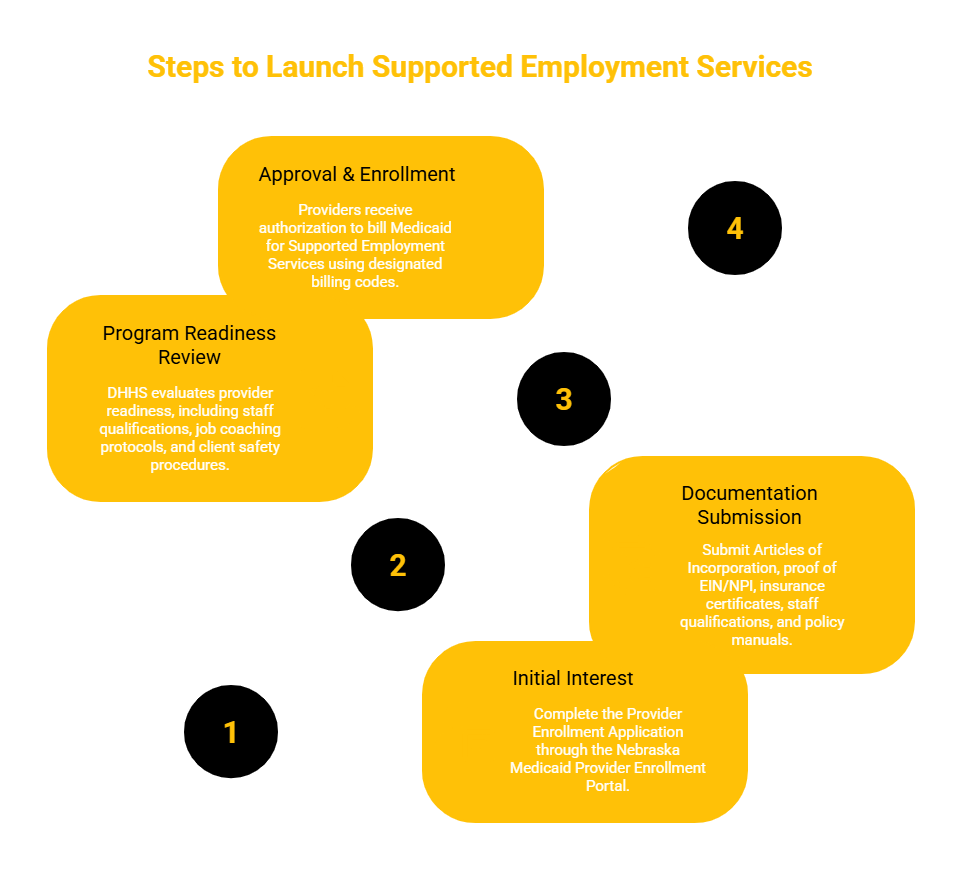
The journey to becoming an authorized provider involves a sequenced application process managed through the Nebraska Medicaid Provider Enrollment Portal. Initially, providers must submit a formal application for Supported Employment Services. This application serves as the foundation for the agency’s relationship with the state, requiring the submission of all corporate and operational documentation, including Articles of Incorporation, insurance certificates, and proof of federal identification numbers.
Once the initial application is submitted, the DHHS performs a Program Readiness Review. This critical step evaluates the provider's ability to maintain the high standards required by the HCBS waivers. Inspectors review the agency’s staffing credentials, job coaching protocols, and client safety measures to ensure they align with state expectations. Upon a successful review, the provider is officially enrolled and granted the authority to bill Medicaid using approved billing codes, marking the final milestone in the setup process.
What Are the Essential Staffing and Training Qualifications?
The efficacy of a Supported Employment program rests on the caliber of its staff. The Program Director is typically required to possess a bachelor’s degree in a field such as vocational rehabilitation, social work, or a related discipline, often coupled with professional supervisory experience. This individual oversees the strategic delivery of services and ensures that the agency remains compliant with all state and federal regulations.
Employment Specialists and Job Coaches are the primary frontline staff, requiring a minimum of a high school diploma or GED, along with specific vocational rehabilitation training. These roles necessitate strong interpersonal and instructional skills. Furthermore, all staff, regardless of their specific role, must complete mandatory training modules covering:
- HIPAA compliance and the protection of participant privacy rights.
- Crisis intervention, de-escalation, and conflict resolution strategies.
- Workplace safety protocols tailored to various employment environments.
- Annual competency evaluations and ongoing continuing education to keep pace with industry best practices.
Frequently Asked Questions
Which Medicaid waivers currently cover Supported Employment Services in Nebraska?
Supported Employment Services are authorized under several key Nebraska Medicaid waivers, including the Aged and Disabled (AD) Waiver, the Traumatic Brain Injury (TBI) Waiver, the Developmental Disabilities (DD) Waiver, the Children with Disabilities Waiver, and the broader Home and Community-Based Services (HCBS) Waiver.
How long should an agency expect the entire startup and enrollment process to take?
The full timeline to launch is generally divided into phases. It typically takes 1–2 months for business formation, 2–3 months for staffing and internal development, 60–90 days for the Medicaid Readiness Review, and an additional 30–45 days to finalize billing setup and begin service delivery.
What specific documentation is required in the policy and procedure manual?
Providers must maintain a comprehensive manual that includes detailed protocols for job coaching and skill development, safety and crisis management, staff training records, billing documentation standards, and clear procedures for maintaining HIPAA compliance and handling participant grievances.
Key Takeaway
Successfully launching a Supported Employment Services agency in Nebraska requires a meticulous approach to administrative compliance, staff training, and clinical readiness. By adhering to the guidelines set forth by the Nebraska Department of Health and Human Services and maintaining a consistent focus on person-centered care, providers can effectively navigate the Medicaid enrollment process and provide high-value vocational support to individuals with disabilities across the state.
Last verified: October 2023. Disclaimer: This article is for informational purposes only and does not constitute legal or professional advice. Requirements for Nebraska Medicaid providers may be subject to change; always verify current rules and regulations through the official Nebraska Department of Health and Human Services (DHHS) and the Nebraska Medicaid Provider Enrollment Portal.