SUPPORTED EMPLOYMENT SERVICES PROVIDER IN MISSISSIPPI
By Fatumata Kaba · 2025-08-06 · 5 min read
Empowering Individuals Through Supported Employment in Mississippi
Supported Employment Services represent a critical component of Mississippi’s commitment to inclusive community living, allowing individuals with disabilities to secure and maintain competitive, integrated employment. By partnering with state agencies, provider organizations deliver essential job coaching, skills training, and long-term retention support that transforms the lives of participants while strengthening the local workforce.
For agencies and entrepreneurs, becoming a Medicaid-funded provider of these services requires a deep understanding of the intersection between the Mississippi Division of Medicaid (DOM) and the Mississippi Department of Rehabilitation Services (MDRS). Successful providers act as intermediaries, bridging the gap between an individual’s professional goals and the regulatory frameworks established by the Centers for Medicare & Medicaid Services (CMS) to ensure quality and compliance.
Navigating the Governance of Mississippi HCBS Waiver Services
The regulatory landscape for supported employment in Mississippi is structured around both vocational rehabilitation and long-term care support systems. The Mississippi Department of Rehabilitation Services (MDRS) serves as the primary entity for vocational development, while the Mississippi Division of Medicaid (DOM) manages the funding streams for Home and Community-Based Services (HCBS) waivers. Understanding these roles is essential for any administrative team aiming to remain compliant.
Federal oversight provided by the Centers for Medicare & Medicaid Services (CMS) ensures that all services meet rigorous quality standards and remain centered on the individual. Providers must operate within these guidelines to ensure that every service rendered—from initial career planning to on-the-job coaching—aligns with the specific requirements of the participant's Person-Centered Plan (PCP) or Individual Program Plan (IPP).
- Mississippi Department of Rehabilitation Services (MDRS): Oversees vocational rehabilitation programs and the delivery of supported employment services.
- Mississippi Division of Medicaid (DOM): Administers the Medicaid HCBS Waiver programs and provides the critical funding necessary for service delivery.
- Centers for Medicare & Medicaid Services (CMS): Sets federal standards, ensuring that state-level programs maintain waiver compliance and quality outcomes.
Core Components of Supported Employment Service Delivery
Supported Employment is not a one-size-fits-all model; it is a highly individualized service designed to meet the unique needs of the participant. Effective providers focus on a holistic approach that begins with comprehensive career planning and skills assessment. These initial steps are vital for matching an individual’s strengths and interests with suitable competitive employment opportunities within the community.
Once a placement is secured, the provider’s role shifts toward active support and retention. This includes on-the-job coaching, where staff assist the participant in learning specific tasks, navigating workplace culture, and developing soft skills. Ongoing follow-up is necessary to troubleshoot any challenges, ensure workplace accommodations are being utilized correctly, and support the long-term professional growth of the participant.
- Job development and placement: Identifying and securing integrated employment opportunities tailored to individual capabilities.
- On-the-job coaching and training: Providing direct support at the workplace to ensure the acquisition of essential job functions.
- Job retention support: Regular check-ins and performance coaching to ensure sustained success.
- Workplace accommodations: Facilitating the tools and environmental adjustments required for the participant to thrive.
Establishing Your Agency: Licensing and Provider Enrollment
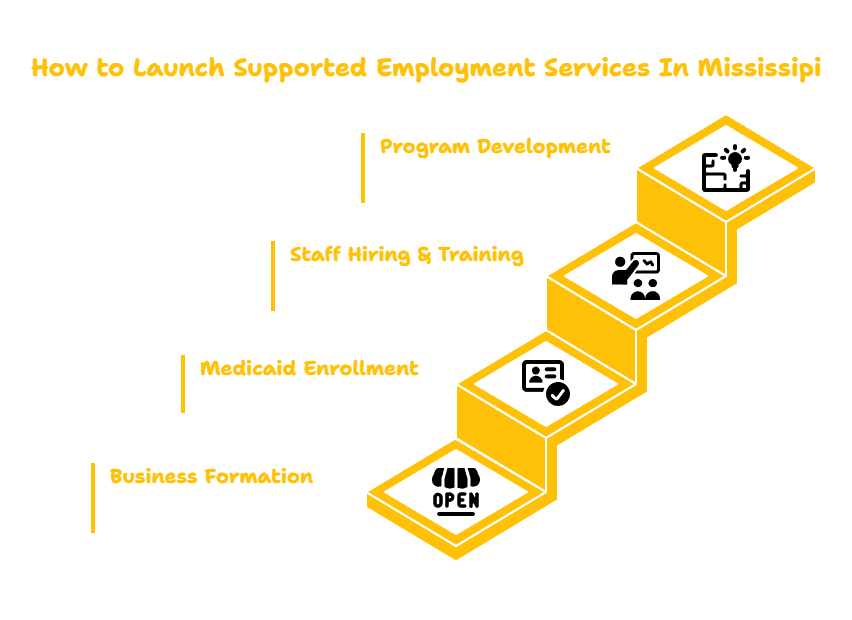
The path to becoming an approved provider begins with formal business registration with the Mississippi Secretary of State and obtaining an EIN from the IRS. A Type 2 National Provider Identifier (NPI) is a mandatory requirement for administrative processing and claims submission. Once the business entity is legally established, the focus must shift to the technical requirements of the Medicaid and MDRS systems.
Enrollment as a Medicaid provider with the Mississippi Division of Medicaid is a rigorous, multi-step process that requires clear documentation of business operations, liability insurance, and staff qualifications. Simultaneously, prospective providers must seek vendor approval from the Mississippi Department of Rehabilitation Services. This dual-approval pathway ensures that agencies are equipped to handle both the financial billing of Medicaid and the service-delivery standards of vocational rehabilitation.
- Business Formation: Registering with the state, obtaining federal tax IDs, and securing necessary business licenses.
- Provider Enrollment: Completing the Medicaid application and establishing status as an authorized vendor for MDRS.
- Documentation: Maintaining a comprehensive policy and procedure manual that covers job development, internal staff training, and client service agreements.
Staffing Requirements and Professional Standards
The quality of supported employment services is directly linked to the competency and dedication of the staff. Agencies must ensure that the Supported Employment Program Manager possesses a strong background in vocational rehabilitation or disability services. This leadership role is responsible for overseeing the programmatic integrity of the agency and ensuring that all staff meet the required standards for service delivery.
Job Coaches and Employment Specialists form the frontline of the organization. Beyond professional experience in workforce development or social services, these staff members must undergo thorough vetting, including background checks and TB clearance. Continuous training is essential to maintain high service standards, focusing on modern coaching techniques, ethics, safety protocols, and the nuances of client rights.
- Job Coach / Employment Specialist: Requires a blend of social service experience, CPR/First Aid certification, and specialized training in job retention strategies.
- Managerial Oversight: Ensures that all staff training, supervision logs, and client progress notes are kept current and compliant.
- Professional Development: Annual refreshers on ethics, employer engagement, and specialized coaching techniques are encouraged to maintain service excellence.
Waiver Alignment and Programmatic Timelines
Mississippi offers Supported Employment services across several HCBS waiver categories, including the Intellectual and Developmental Disabilities (IDD) Waiver, the Independent Living Waiver, and the Traumatic Brain Injury/Spinal Cord Injury (TBI/SCI) Waiver. Providers must be well-versed in the specific requirements of each waiver, as they define the scope of services that can be authorized and billed.
Launching these services is a time-intensive process that requires careful sequencing. While business formation can often be completed in a few weeks, the Medicaid provider enrollment and programmatic setup generally follow a 60-to-90-day timeline. Agencies should account for these lead times when planning their organizational development to ensure that staff hiring and employer outreach coincide with the final stages of state approval.
Frequently Asked Questions
What is the primary role of the Mississippi Department of Rehabilitation Services (MDRS)?
MDRS serves as the lead agency for vocational rehabilitation, overseeing the clinical and professional standards of supported employment service delivery in the state.
How does a provider ensure compliance with Medicaid billing?
Compliance is achieved by maintaining meticulous documentation, including Individual Employment Plans, progress tracking, staff training logs, and adhering to the guidelines set by the Mississippi Division of Medicaid.
Can an agency provide services across multiple HCBS waivers?
Yes, providers may deliver services across the IDD, Independent Living, and TBI/SCI waivers, provided they meet the specific provider qualifications and enrollment requirements mandated for each respective program.
Key Takeaway: Successfully launching a Supported Employment provider agency in Mississippi requires a disciplined approach to business registration, strict adherence to both Medicaid and MDRS credentialing processes, and a commitment to maintaining detailed, audit-ready documentation for all participant services.
Last verified: September 2023. Disclaimer: This article is intended for informational purposes only and does not constitute legal or professional regulatory advice. Requirements for Medicaid provider enrollment and HCBS waivers are subject to change; always verify current regulations through the official Mississippi Division of Medicaid and Mississippi Department of Rehabilitation Services websites.