SUPPORTED EMPLOYMENT SERVICES PROVIDER IN KANSAS
By Fatumata Kaba · 2025-07-24 · 5 min read
Becoming a provider of Supported Employment services in Kansas is a strategic way to support individuals with disabilities in achieving competitive integrated employment while contributing to the state’s workforce development. These services, authorized under the Kansas Medicaid (KanCare) system through the Intellectual/Developmental Disability (IDD) Waiver, focus on person-centered planning, job placement, and long-term retention to ensure that participants successfully thrive in community-based work settings.
The regulatory environment in Kansas requires a coordinated approach involving the Kansas Department for Aging and Disability Services (KDADS), the Kansas Department of Health and Environment (KDHE), and the Managed Care Organizations (MCOs) that administer KanCare. By navigating these requirements, providers can deliver essential vocational support that empowers Kansans with disabilities to maintain meaningful careers while meeting rigorous federal and state integration standards.
Navigating the Regulatory Framework and Oversight Agencies
Success in the Kansas Medicaid landscape begins with understanding the roles of the various governing agencies. KDADS serves as the primary entity responsible for administering the IDD Waiver and establishing the specific standards that employment support providers must follow to maintain compliance. Their oversight ensures that services remain person-centered and aligned with the intended outcomes of the HCBS waiver program.
Complementing KDADS, the KDHE Division of Health Care Finance manages the administrative side of Medicaid, specifically overseeing provider enrollment and reimbursement via the Kansas Medical Assistance Program (KMAP). Meanwhile, the Managed Care Organizations (MCOs) act as the primary point of contact for service authorization, care coordination, and the processing of payments. Additionally, the Kansas Department for Children and Families (DCF) Rehabilitation Services plays a vital role by partnering with HCBS programs to facilitate Pre-Employment Transition Services (Pre-ETS) and specialized job development initiatives.
- KDADS: Administers the IDD Waiver and oversees employment support standards and provider eligibility.
- KDHE (Division of Health Care Finance): Handles Medicaid provider enrollment and reimbursement under KanCare.
- DCF (Rehabilitation Services): Partners with HCBS programs for Pre-Employment Transition Services (Pre-ETS) and job development.
- MCOs: Authorize services, coordinate with ISPs, and process Medicaid payments for employment supports.
- CMS: Ensures Medicaid-funded employment services comply with federal community integration standards.
Understanding the Scope of Supported Employment Services
Supported Employment Services are designed to break down barriers to workforce inclusion. These services provide the individualized infrastructure—from initial discovery and job matching to long-term coaching—that allows individuals with disabilities to secure and maintain competitive, integrated employment. Every service delivery must be clearly outlined within the participant’s Individualized Service Plan (ISP) to ensure the support is tailored to their unique strengths and career goals.
Approved providers must be prepared to offer a comprehensive suite of interventions. This includes active job development, which involves assisting participants with applications, interview preparation, and employer engagement. Once a position is secured, the provider delivers job coaching, workplace task modification, and ongoing retention support to ensure the participant succeeds in their role over the long term.
- Job development and assistance with job search, applications, and interviews.
- Workplace assessments and job matching based on participant strengths.
- Job coaching and on-site support (initial and ongoing).
- Support with workplace accommodations and task modification.
- Social skills training and transportation coordination.
- Ongoing follow-along and retention support.
- Coordination with employers, case managers, and vocational rehab agencies.
The Roadmap to Provider Enrollment and Certification
Establishing an agency to provide these services requires a disciplined, multi-step administrative process. Before delivering services, an organization must be legally formed, registered with the Kansas Secretary of State, and equipped with a federal EIN and a Type 2 NPI. Following these foundational steps, the provider must undergo the certification process with KDADS, which typically includes a readiness review to verify that the agency has the capacity to deliver high-quality, compliant services.
After achieving KDADS certification, the provider must enroll in the Kansas Medical Assistance Program (KMAP) to become a recognized Medicaid provider. The final critical step is contracting with all three KanCare MCOs—Sunflower Health Plan, UnitedHealthcare Community Plan, and Aetna Better Health of Kansas. These contracts are essential, as they facilitate the receipt of participant referrals and provide the mechanism for billing authorized services.
Establishing Documentation and Operational Requirements
Operational excellence is maintained through a robust set of policies and procedures. A formal Policy & Procedure Manual is a mandatory requirement, covering areas such as incident reporting, participant rights, grievance protocols, and HIPAA compliance. This manual serves as the blueprint for how the agency manages its day-to-day operations and ensures that all services are audit-ready.
Effective documentation is the backbone of Medicaid reimbursement. Providers must implement systems for tracking time, documenting progress toward employment goals, and maintaining clear records of staff training and credentialing. Because Medicaid audits focus heavily on whether the services delivered match the authorizations in the ISP, having a standardized and reliable documentation workflow is critical for long-term financial stability.
Staffing, Training, and Competency Standards
The quality of Supported Employment services is directly tied to the competency of the staff. Agencies must employ an Employment Services Program Supervisor who possesses a background in workforce development, special education, or vocational rehabilitation. This supervisor is responsible for overseeing the quality of job coaching and ensuring that all interventions remain compliant with KDADS standards.
Job Coaches and Employment Specialists must undergo rigorous background screenings and receive consistent training. This training should encompass person-centered planning, the Americans with Disabilities Act (ADA), workplace safety, and best practices for customized employment. By investing in ongoing staff development, agencies ensure that their team can handle the complexities of employer engagement while maintaining a supportive and safe environment for participants.
Frequently Asked Questions
What is the primary funding source for these services?
Supported Employment Services are primarily funded through the Kansas Medicaid IDD Waiver. Additionally, providers may coordinate with the Department for Children and Families (DCF) for Vocational Rehabilitation (VR) funding or school-based transition programs for individuals under 21.
How long does the start-up process typically take?
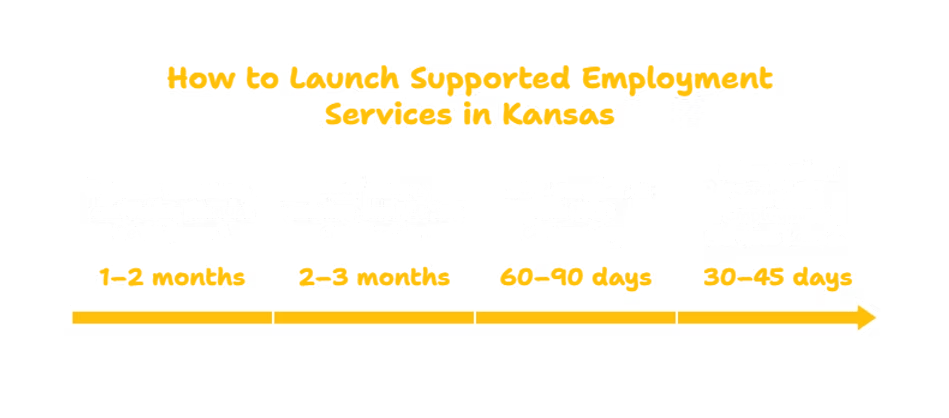
While timelines vary based on organizational preparedness, the process typically takes several months. This includes 1–2 months for business formation, 2–3 months for staff training and KDADS certification, 60–90 days for KMAP/MCO enrollment, and 30–45 days for system implementation.
Are providers required to work with all three KanCare MCOs?
Yes, to serve the widest range of Medicaid participants in Kansas, it is highly recommended to contract with all three KanCare MCOs: Sunflower Health Plan, UnitedHealthcare Community Plan, and Aetna Better Health of Kansas, as each manages different member populations across the state.
Key Takeaway
Launching a Supported Employment program in Kansas is a complex administrative undertaking that requires strict adherence to KDADS, KMAP, and MCO requirements. By focusing on robust policy development, staff training, and efficient billing systems, providers can build a sustainable model that meets both federal Medicaid standards and the vocational needs of Kansans with disabilities.
Last verified: 2024. This content is provided for informational purposes only and does not constitute legal or professional advice. Always consult directly with KDADS and relevant state agencies for the most current regulatory updates and requirements.