SUPPORTED EMPLOYMENT SERVICES PROVIDER IN IDAHO
By Fatumata Kaba · 2025-07-17 · 5 min read
Empowering Individuals Through Supported Employment in Idaho
Supported Employment Services in Idaho represent a vital bridge for individuals with disabilities seeking to achieve competitive, integrated employment (CIE) within their local communities. By operating under the framework of Idaho’s Medicaid Home and Community-Based Services (HCBS) waiver programs and in partnership with Vocational Rehabilitation initiatives, these services provide the necessary individualized supports for participants to obtain, maintain, and advance in meaningful careers that promote economic self-sufficiency and social inclusion.
For organizations looking to enter this service space, success requires navigating complex regulatory requirements managed by the Idaho Department of Health and Welfare (IDHW) and the Centers for Medicare & Medicaid Services (CMS). This guide outlines the essential infrastructure, staffing, and documentation required to establish a compliant and effective Supported Employment agency in Idaho, ensuring that business operations align with the person-centered goals of the populations served.
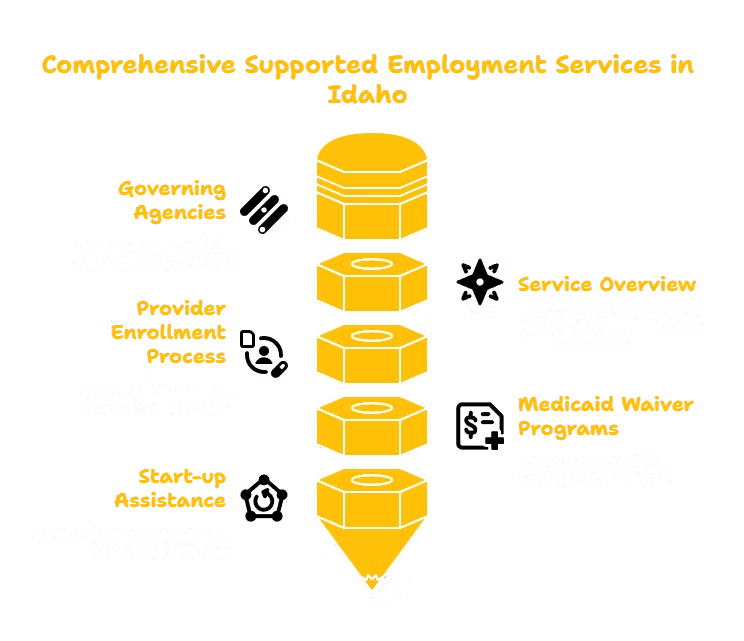
Understanding the Governance and Regulatory Landscape
The regulatory environment for Supported Employment in Idaho is structured to ensure accountability and high-quality outcomes for Medicaid participants. The Idaho Department of Health and Welfare (IDHW), specifically the Division of Medicaid, acts as the primary authority, overseeing the critical functions of provider enrollment, service authorization, and the complex reimbursement processes required for HCBS delivery.
Collaboration with the Idaho Division of Vocational Rehabilitation (IDVR) is equally essential, as this agency often partners with providers to facilitate the initial phases of job development and placement. Meanwhile, the Centers for Medicare & Medicaid Services (CMS) provide the federal backbone for these programs, mandating strict compliance with HCBS standards. Providers must ensure that their operations maintain participant choice, community integration, and adherence to federal mandates regarding the nature of competitive employment.
Defining Core Supported Employment Service Deliverables
Supported Employment is not a one-size-fits-all model; it requires a sophisticated array of services tailored to the unique strengths and needs of each participant. Approved providers are expected to deliver professionalized support, ranging from the initial assessment of vocational interests to long-term workplace stabilization. Each service provided must be clearly articulated within the participant’s Individualized Service Plan (ISP) to remain eligible for Medicaid reimbursement.
The essential service components that providers must be equipped to offer include:
- Job Development: Actively scouting competitive opportunities and matching participant skill sets to employer needs.
- Job Coaching: Providing hands-on, on-the-job training and supervision to ensure the participant successfully learns and masters specific work tasks.
- Career Planning: Assisting participants in identifying long-term professional goals and developing actionable paths toward career advancement.
- Employment Retention: Offering ongoing support to navigate workplace dynamics, resolve conflicts, and liaise with employers to ensure long-term stability.
- Customized Employment: Creating or modifying job roles that align specifically with the participant’s unique abilities and support requirements.
- Benefits Counseling: Guiding participants through the complexities of how earned income impacts their Social Security and Medicaid benefits.
Navigating the Provider Enrollment and Readiness Process
Transitioning into an approved Idaho Medicaid provider is a sequential, rigorous process that requires meticulous attention to operational detail. Before enrollment, an organization must formally register as a business entity with the Idaho Secretary of State and secure both an Employer Identification Number (EIN) and a Type 2 National Provider Identifier (NPI). These foundational steps allow the agency to enter the Idaho Medicaid Management Information System (MMIS) for official provider enrollment.
Following the submission of the initial application, the IDHW conducts a thorough Program Readiness Review. This phase is designed to evaluate the provider’s ability to manage participant safety, maintain accurate clinical and employment documentation, and utilize Medicaid-compliant billing systems. Applicants should be prepared to present evidence of robust operational policies, including sample career plans, detailed job coaching logs, and comprehensive risk management protocols that demonstrate a high standard of care.
Establishing Essential Staffing and Credentialing Standards
The quality of Supported Employment services is directly tied to the caliber of the staff delivering them. A successful agency must recruit and retain qualified professionals who understand both the clinical aspects of disability services and the practical realities of the modern workforce. The Program Manager typically requires a bachelor’s degree in a human services or rehabilitation-related field, coupled with demonstrated experience in vocational programming to ensure proper oversight of all service delivery.
Employment Specialists and Job Coaches represent the frontline of the organization and must also meet specific requirements to ensure participant success. While high school diplomas are the minimum requirement, degrees in related fields are highly preferred. Regardless of background, all staff members must complete mandatory training covering the following areas:
- HIPAA confidentiality and rigorous protection of participant rights.
- Person-centered employment planning and effective job development strategies.
- Disability awareness, the application of reasonable workplace accommodations, and effective employer engagement.
- Annual documentation refreshers to maintain compliance with Medicaid auditing standards.
Frequently Asked Questions
Which Idaho Medicaid waivers support these services?
Supported Employment services are authorized primarily through the Developmental Disabilities (DD) Waiver and the Aged and Disabled (A&D) Waiver, particularly when employment is identified as a formal goal in the participant’s care plan.
What is the typical timeline for launching a provider agency?
The process generally takes several months: 1–2 weeks for business formation, 2–3 months for staffing and program development, 60–90 days for Medicaid enrollment and readiness reviews, and 30–45 days for billing system configuration.
What documentation is critical for Medicaid audits?
Providers must maintain comprehensive records, including initial vocational assessments, detailed job coaching logs, employment monitoring reports, incident reports, staff credentialing records, and proof of HIPAA-compliant billing and service tracking protocols.
Key Takeaway
Successfully operating as a Supported Employment provider in Idaho requires a harmonious blend of administrative rigor, adherence to HCBS standards, and a dedicated, trained workforce. By focusing on person-centered outcomes and maintaining meticulous documentation, agencies can ensure both regulatory compliance and the sustained professional success of the individuals they support.
Last verified: 2024. This information is intended for educational and guidance purposes only and does not constitute legal or financial advice. Service providers should consult directly with the Idaho Department of Health and Welfare and relevant state statutes for the most current regulations and policy updates.