SUPPORTED EMPLOYMENT SERVICES PROVIDER IN FLORIDA
By Fatumata Kaba · 2025-07-11 · 5 min read
EMPOWERING INDIVIDUALS WITH DISABILITIES TO ACHIEVE COMPETITIVE, INTEGRATED EMPLOYMENT
Supported Employment Services in Florida and across the United States help individuals with disabilities prepare for, obtain, and maintain meaningful employment in the community. These services are authorized under Medicaid Home and Community-Based Services (HCBS) waiver programs and are designed to promote independence, self-sufficiency, and full participation in the workforce.
For entrepreneurs and social service agencies, becoming a Medicaid-approved Supported Employment provider is a significant undertaking that requires a commitment to person-centered care and rigorous regulatory compliance. This guide outlines the essential steps, requirements, and structural components necessary to launch a successful agency in the current Medicaid landscape.
What Are the Governing Agencies for Supported Employment Providers?
Operating as a Medicaid HCBS provider requires navigating a multi-layered regulatory environment. Understanding the roles of the oversight agencies is the first step in ensuring that your business practices remain compliant with both state and federal mandates.
The state Medicaid agency, such as the Florida Agency for Health Care Administration (AHCA) or Colorado Department of Health Care Policy & Financing (HCPF), serves as the primary authority for provider enrollment, service authorization, and the processing of Medicaid reimbursements. Concurrently, the state Department of Vocational Rehabilitation (e.g., Florida DVR) is responsible for coordinating pre-employment and vocational rehabilitation services, often acting as a bridge between the individual and the workforce.
At the federal level, the Centers for Medicare & Medicaid Services (CMS) provides the overarching regulatory framework. CMS ensures that all supported employment services strictly adhere to HCBS settings requirements and person-centered service planning, preventing the segregation of individuals with disabilities and ensuring they have access to the same community opportunities as the general population.
How Do Supported Employment Services Function in Practice?
Supported Employment Services are designed to help individuals find and retain competitive, integrated jobs that align with their personal interests, unique skills, and long-term career goals. Unlike traditional day programs, these services emphasize real-world integration, where the individual is treated as a valued employee in the community.
Approved providers deliver a comprehensive suite of interventions, including individualized employment assessments, job development, customized job placement, resume development, and interview coaching. Once an individual is hired, the provider continues to offer on-the-job support, skills training, assistance with workplace accommodations, and ongoing career advancement guidance. Depending on the state and the participant's plan, services may also include self-employment exploration or small business support.
- Individual Supported Employment: One-on-one coaching and job development provided in the community.
- Group Supported Employment: Small groups working in community settings, ensuring peer support while maintaining integration.
All activities must be documented and executed in strict alignment with the participant’s person-centered employment plan, adhering to "Employment First" principles, which prioritize competitive integrated employment as the primary outcome for individuals with disabilities.
What Prerequisites Are Required for Provider Approval?
The road to becoming an approved provider begins with establishing a legally compliant business entity. Before any services can be billed, the organization must be registered with the Secretary of State in the operating state and obtain a Federal Employer Identification Number (EIN) from the IRS. Furthermore, you must secure a Type 2 National Provider Identifier (NPI), which is essential for organizational billing in the Medicaid system.
Beyond basic business registration, agencies must maintain comprehensive general liability insurance and draft a robust Policy & Procedure manual. This manual serves as the foundational document for your agency, outlining how your staff will deliver care, maintain client rights, and ensure HIPAA compliance. It must also detail the specific qualifications for your staff, as the state will scrutinize your ability to provide services through individuals trained in vocational rehabilitation, special education, or related employment support fields.
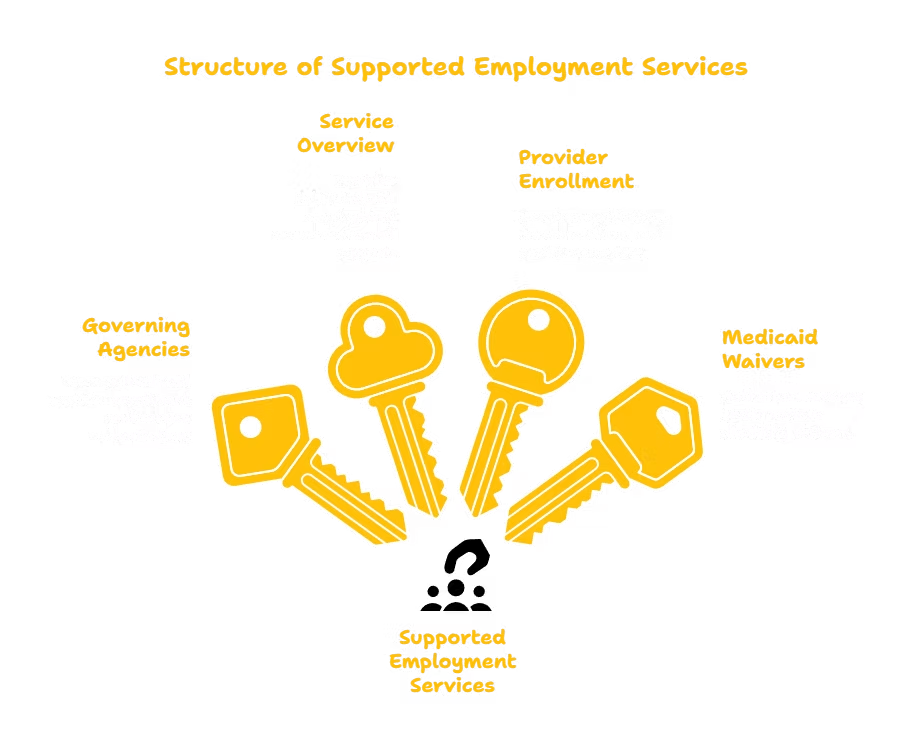
How Does the Enrollment and Readiness Process Work?
The provider enrollment process is a structured journey that generally begins with requesting application materials from your state’s Department of Developmental Disabilities or the primary Medicaid agency. It is highly recommended to attend state-sponsored orientation sessions on HCBS waiver service standards to avoid common pitfalls in the application process.
The submission phase requires the compilation of your Articles of Incorporation, proof of insurance, and detailed descriptions of your service delivery model. Agencies must provide sample intake forms, employment goal-setting documents, and job coaching plans. Once submitted, the state will initiate a program readiness review. During this time, the agency evaluates your compliance readiness, which may include site visits or formal interviews with leadership to ensure that your procedures meet the state’s quality and safety standards.
Upon final approval, the agency must complete the formal Medicaid enrollment process and configure the necessary billing codes to ensure that services can be reimbursed accurately and on time.
What Documentation and Staffing Standards Must Be Met?
Maintaining a compliant agency requires meticulous documentation. Essential records include proof of business registration, NPI confirmation, and a comprehensive Policy & Procedure Manual. This manual must explicitly cover participant intake, HIPAA compliance, emergency preparedness, and internal quality assurance systems to monitor goal achievement.
Staffing requirements are equally specific. An Employment Services Program Coordinator or Manager typically requires a bachelor’s degree in a relevant field and prior experience in vocational support. Employment Specialists and Job Coaches generally require at least a high school diploma or GED, with experience in job placement preferred. All staff members must undergo rigorous background screenings and receive mandatory training in Employment First principles, person-centered planning, and confidentiality protocols.
Frequently Asked Questions
Which Medicaid waivers typically authorize Supported Employment?
Supported Employment is commonly authorized under Developmental Disabilities waivers (such as the Florida iBudget Waiver), Elderly, Blind, and Disabled (EBD) waivers for certain age groups, and Brain Injury waivers when employment is a stated outcome of the participant's rehabilitation plan.
What is the typical timeline to launch an agency?
From business formation to full operational status, the process generally takes between 150 and 210 days. This includes 1–2 weeks for registration, 60–90 days for application and readiness review, 30–45 days for staff onboarding and training, and 45–60 days for final Medicaid enrollment and billing configuration.
What core documents must be included in the Policy & Procedure Manual?
The manual must contain protocols for participant intake, job development, confidentiality and HIPAA compliance, incident response, staff credentialing, and detailed methods for tracking progress toward individual employment goals.
Key Takeaway
Launching a Supported Employment provider agency is a complex regulatory process that necessitates high standards of professional documentation, rigorous staff training, and deep integration with state-specific Medicaid requirements. Success hinges on a clear commitment to person-centered principles and the ability to maintain compliant, scalable systems that prioritize the career success of individuals with disabilities.
Last verified: 2024. The information provided in this article is for educational purposes only and does not constitute legal or professional advice. Always consult with state-specific Medicaid regulations and legal counsel before undertaking provider enrollment or business formation activities.