SUPPORTED EMPLOYMENT SERVICES PROVIDER IN CALIFORNIA
By Fatumata Kaba · 2025-07-07 · 5 min read
ADVANCING INCLUSIVE WORKFORCE OPPORTUNITIES FOR INDIVIDUALS WITH DEVELOPMENTAL DISABILITIES ACROSS COMMUNITY SETTINGS
Supported Employment Services in California are specialized programs designed to assist individuals with intellectual and developmental disabilities (IDD) in securing and maintaining competitive, integrated employment. These services are authorized and funded through the California Department of Developmental Services (DDS), the Lanterman Act, and California’s Home and Community-Based Services (HCBS) waivers to ensure participants receive the individualized support necessary for long-term career success.
What Are the Governing Agencies and Regulatory Frameworks?
The delivery of supported employment in California is governed by a multi-tiered regulatory structure involving state and federal oversight. The California Department of Developmental Services (DDS) serves as the primary authority, overseeing service delivery through a statewide network of 21 Regional Centers. These centers are responsible for the direct coordination and authorization of services for eligible participants, ensuring that every program operates in alignment with the Lanterman Act and federal HCBS standards.
At the federal level, the Centers for Medicare & Medicaid Services (CMS) provides the overarching regulatory guidance to ensure that all waiver-funded services promote person-centered practices and community integration. Additionally, the California Department of Health Care Services (DHCS) manages the Medicaid (Medi-Cal) program, overseeing the federal financial participation that supports these vital services. Providers must demonstrate compliance with these entities to maintain their vendorization and eligibility for reimbursement.
- DDS: Oversees Supported Employment as a regional center-funded service and maintains HCBS waiver compliance.
- DHCS: Manages Medi-Cal operations and federal funding oversight for HCBS waiver services.
- Regional Centers: Serve as the 21 local agencies responsible for authorizing and coordinating services.
- CMS: Establishes the federal regulatory requirements for HCBS programs and person-centered standards.
How Do Providers Structure Supported Employment Services?
Supported Employment providers facilitate meaningful workforce participation by tailoring services to the unique needs identified in each participant’s Individual Program Plan (IPP). The service model is built on the philosophy that all individuals, regardless of disability, can succeed in competitive, integrated work environments when provided with the appropriate supports, accommodations, and coaching.
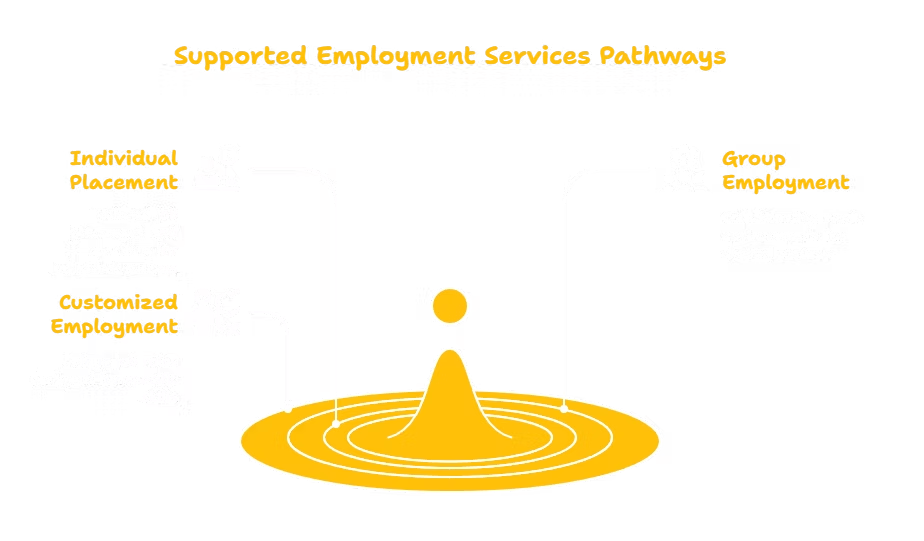
Service delivery models are highly flexible, ranging from Individual Placement and Support (IPS) and Customized Employment to group-based models like enclaves or work crews. Providers act as intermediaries between the participant and the employer, focusing on both the initial acquisition of a job and the ongoing coaching required to ensure sustained performance and professional development.
- Vocational Assessments: Evaluating job readiness and individual interests.
- Job Development: Identifying and securing competitive community-based job placements.
- Coaching: Providing on-the-job skills training and soft skills development.
- Follow-along Support: Offering long-term workplace accommodations and communication support.
What Are the Steps to Become a Vendorized Provider?
Becoming a vendorized provider is a formal, multi-step process that begins with establishing a legal business entity in California. Before applying for vendorization, an agency must secure an Employer Identification Number (EIN) from the IRS and a Type 2 National Provider Identifier (NPI). The organization must then select the appropriate service code—Service Code 950 for individual placements or 952 for group employment—when submitting applications to the Regional Centers.
The application packet must include a comprehensive Program Design. This document serves as the foundation for operations, outlining the agency's mission, staffing qualifications, service methodologies, and participant engagement strategies. Once submitted, the Regional Center performs a rigorous review, which includes site visits, verification of insurance coverage (general liability, auto, and workers' compensation), and background checks for all personnel.
- Register the business with the California Secretary of State.
- Obtain required federal identifiers (EIN and NPI).
- Submit a formal Program Design to the regional center.
- Complete the vendorization process, including site inspections and staff background reviews.
What Essential Documentation and Policies Are Required?
Operational excellence in supported employment is evidenced by comprehensive internal policies and procedures. Providers are required to maintain detailed documentation that accounts for every hour of service delivered, as these records serve as the basis for state billing and auditing. A robust policy manual is essential to ensure that services are delivered ethically, legally, and safely.
Policy manuals should explicitly address the intake process, job matching criteria, and standardized documentation templates. Furthermore, providers must establish clear protocols for participant rights, HIPAA compliance, and confidentiality. These internal controls are vital for risk management and for ensuring that the organization is fully prepared for periodic state audits.
- Intake and Matching: Standardized procedures for pairing candidates with employers.
- Documentation: Templates for progress notes, service logs, and outcome reporting.
- Safety and Risk: Comprehensive incident reporting, grievance policies, and emergency plans.
- Staff Management: Protocols for supervision, professional development, and performance evaluations.
What Are the Requirements for Program Staffing and Training?
Staffing quality is the cornerstone of effective supported employment. The role of the Job Coach or Employment Specialist requires individuals who possess both vocational expertise and the ability to foster independence. At a minimum, staff must hold a high school diploma, though preference is generally given to those with degrees in human services or related fields. All staff must be vetted through background checks and hold current certifications in CPR and First Aid.
Program Managers are responsible for overseeing quality assurance and maintaining the vital relationships between the agency and the local business community. Training for all staff must be continuous, focusing on person-centered planning, workplace safety, and the nuances of mandated reporting. Maintaining accurate records of staff professional development and CEU tracking is a standard expectation during regional center reviews.
Frequently Asked Questions
What is the typical timeline for launching a supported employment program?
The business formation phase typically takes 1–2 weeks, followed by the Regional Center vendorization process, which usually spans 60–90 days. Staff hiring and final program setup require an additional 2–4 weeks before accepting client referrals.
What is the difference between Service Code 950 and 952?
Service Code 950 is designated for Individual Supported Employment, which focuses on one-on-one placement and coaching in the competitive workforce. Service Code 952 is designated for Group Supported Employment, which covers enclaves or work crews in integrated community settings.
Who funds supported employment services in California?
Funding is provided through California’s HCBS waivers via Medi-Cal, regional center funding under the Lanterman Act, and the Department of Rehabilitation (DOR), which supports pre-placement and short-term coaching activities.
Key Takeaway
Launching a successful Supported Employment program in California requires careful navigation of the Lanterman Act, strict adherence to Regional Center vendorization protocols, and a commitment to person-centered service delivery. By maintaining meticulous documentation, rigorous staff training standards, and strong partnerships with both the Department of Developmental Services and local employers, providers can ensure sustainable operations that directly improve employment outcomes for individuals with disabilities.
Last verified: October 2023. Disclaimer: This information is for educational purposes only and does not constitute legal or professional advice. Always consult with the California Department of Developmental Services or your local Regional Center for the most current regulatory requirements and regional policy updates.