SUPPORTED EMPLOYMENT SERVICES PROVIDER IN ARKANSAS
By Fatumata Kaba · 2025-07-06 · 5 min read
Supported Employment Services in Arkansas provide essential vocational pathways for individuals with developmental disabilities to secure and maintain competitive, integrated employment within their local communities. Administered through the Community and Employment Supports (CES) Waiver, these services are facilitated by approved provider agencies that offer professional job coaching, intensive skills training, and ongoing workplace advocacy to ensure long-term success and financial independence.
Understanding the Regulatory Landscape and Agency Roles
The delivery of Supported Employment services in Arkansas is governed by a multi-layered regulatory framework designed to uphold the principles of the HCBS Final Rule. The Arkansas Department of Human Services (DHS), specifically the Division of Developmental Disabilities Services (DDS), serves as the primary authority responsible for approving and monitoring provider agencies. DDS ensures that all service delivery models remain aligned with the mission of the CES Waiver, which prioritizes community-based outcomes over segregated settings.
In addition to DDS, the Arkansas Division of Medical Services (DMS) manages the fiscal integrity of the program by overseeing Medicaid reimbursement processes. Because these services are funded through Medicaid, providers must maintain rigorous documentation standards that satisfy both state and federal requirements. At the federal level, the Centers for Medicare & Medicaid Services (CMS) provides oversight to ensure that Arkansas’s waiver programs adhere to national standards regarding "employment-first" policies and the promotion of competitive, integrated work environments.
- DHS/DDS: Monitors quality of care, provider credentialing, and adherence to CES Waiver goals.
- Arkansas Medicaid (DMS): Processes claims and manages the reimbursement portal for HCBS providers.
- CMS: Sets the overarching federal compliance standards for home and community-based services.
Core Components of Supported Employment Service Delivery
Supported Employment is a person-centered service designed to transition individuals from traditional day programs into the general workforce. Providers act as intermediaries between the participant and the employer, focusing on job development, placement, and long-term retention. These services are highly individualized, recognizing that every participant has unique vocational interests, physical or cognitive needs, and support requirements.
When delivering these services, providers are expected to engage in active community outreach. This includes building partnerships with local businesses to identify suitable job openings, conducting job analyses to ensure the worksite is a good fit for the participant, and providing intensive on-the-job coaching during the initial phase of employment. As the individual gains proficiency, the provider’s role shifts toward "fading," where support is gradually reduced while maintaining the necessary oversight to ensure the participant remains successful and integrated into the workplace culture.
Navigating the Provider Enrollment and Licensing Requirements
Establishing an agency to provide Supported Employment under the CES Waiver requires a structured approach to administrative compliance. Founders must first ensure the business is legally recognized in Arkansas by registering with the Secretary of State and obtaining the necessary federal tax identifiers, specifically an EIN. Furthermore, the agency must secure a Type 2 NPI, which is essential for billing Medicaid for organizational services.
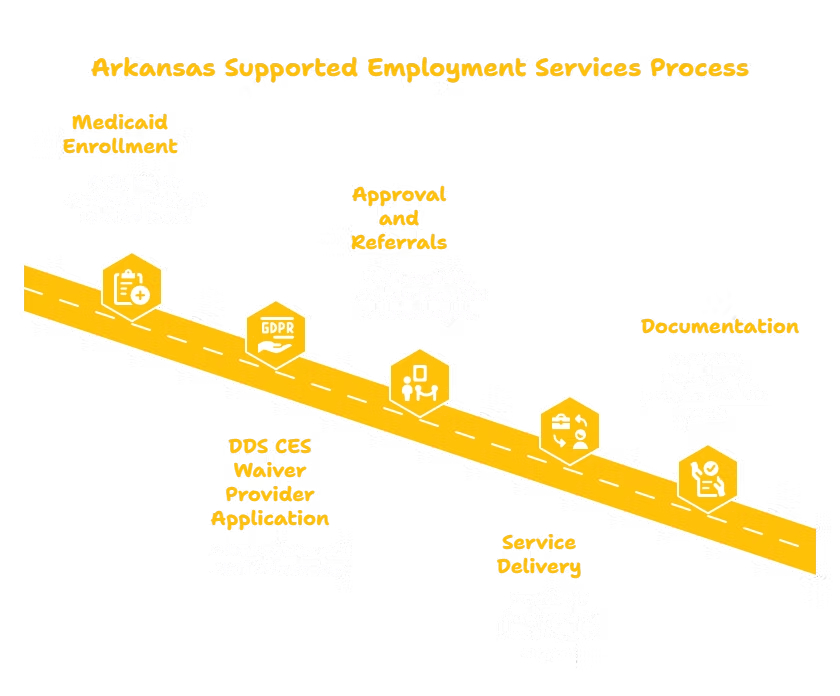
The enrollment process involves two distinct tracks: one through the Medicaid Provider Portal and the other through the DDS provider application process. During the DDS application, the agency must present a comprehensive service delivery model, including robust policies for staff training, incident reporting, and data collection. Providers must demonstrate that they have the infrastructure to manage sensitive client information, maintain workplace safety protocols, and execute professional-level job coaching strategies.
- Register business entity with the Arkansas Secretary of State.
- Obtain Employer Identification Number (EIN) and Type 2 NPI.
- Complete Medicaid provider enrollment via the Arkansas Medicaid Portal.
- Submit the formal CES Waiver provider application to DDS.
- Establish comprehensive internal policies and procedures for service delivery.
Staffing, Training, and Competency Standards
The quality of Supported Employment services is directly tied to the competency of the staff. Providers must hire individuals who possess a blend of vocational rehabilitation experience and a deep understanding of disability inclusion. Employment Specialists or Job Developers are typically tasked with the high-level work of employer relations, job matching, and labor market analysis. Conversely, Job Coaches work directly with participants on-site to provide hands-on assistance, behavior support, and skill acquisition training.
All personnel must meet specific educational and training prerequisites. At a minimum, staff should hold a high school diploma or GED and complete state-mandated training regarding disability awareness, ethics, and the delivery of person-centered support. Ongoing professional development is a critical component of agency operations, as staff must remain current on evolving best practices in Supported Employment and changes in Medicaid reimbursement policies.
Operational Timelines for New Provider Agencies
Launching a service agency requires careful planning to manage the transition from formation to active service delivery. The initial phase—securing the legal and tax-related foundational documents—is generally the most straightforward part of the process, often taking 1–2 weeks. The more complex phase involving Medicaid enrollment and the DDS CES Waiver application typically requires between 45 and 90 days. During this time, agencies must be diligent in responding to any inquiries from state reviewers to avoid delays.
Following approval, agencies should allocate 30–45 days for rigorous staff onboarding, including background checks, registry clearances, and required training modules. The final phase of service readiness involves outreach to local vocational resources and DDS case managers, which can take an additional 2–4 weeks. By following this structured timeline, providers can ensure they are fully prepared to accept referrals and begin providing high-quality support to the disability community.
Frequently Asked Questions
What is the primary difference between Job Development and Job Coaching?
Job Development focuses on the pre-employment phase, including employer outreach, resume building, and matching an individual's skills to specific job openings. Job Coaching takes place once the individual has secured the position, involving on-the-job training, workplace integration support, and ongoing monitoring to ensure job retention.
Is insurance required to become a CES Waiver provider?
Yes, all providers are required to maintain general liability insurance as part of their compliance obligations. This coverage is essential to protect both the agency and the individuals receiving services in various community-based settings.
How does an agency receive referrals for new clients?
Referrals are managed through the DDS system. Once a provider is fully enrolled and approved for the CES Waiver, they will begin to work directly with DDS case managers and transition coordinators who identify eligible individuals in need of Supported Employment services.
Key Takeaways for Prospective Providers
Success as an Arkansas Supported Employment provider requires an unwavering commitment to the person-centered mission of the CES Waiver. By maintaining strict adherence to the licensing, documentation, and staffing requirements mandated by DDS and Medicaid, agencies can create sustainable programs that offer meaningful vocational opportunities. Focus on high-quality documentation, professional staff training, and strong community outreach to build a reputable and compliant organization capable of supporting individuals with disabilities in achieving their employment goals.
Last verified: September 2024. This information is for educational purposes only and does not constitute legal or professional consulting advice. For specific regulatory questions, please contact the Arkansas Department of Human Services (DDS) directly.