SUPPORTED EMPLOYMENT SERVICES PROVIDER IN ARIZONA
By Fatumata Kaba · 2025-07-02 · 5 min read
EMPOWERING INDIVIDUALS WITH DISABILITIES TO ACHIEVE COMPETITIVE, COMMUNITY-BASED EMPLOYMENT
Supported Employment Services in Arizona serve as a vital component of the state’s Home and Community-Based Services (HCBS) Medicaid Waiver programs, offering pathways for individuals with disabilities to secure and maintain competitive, integrated employment. By facilitating job development, coaching, and long-term career support, these services empower participants to achieve greater self-sufficiency and full community inclusion under the oversight of the Arizona Health Care Cost Containment System (AHCCCS) and the Division of Developmental Disabilities (DDD).
What is the Regulatory Framework for Arizona Supported Employment?
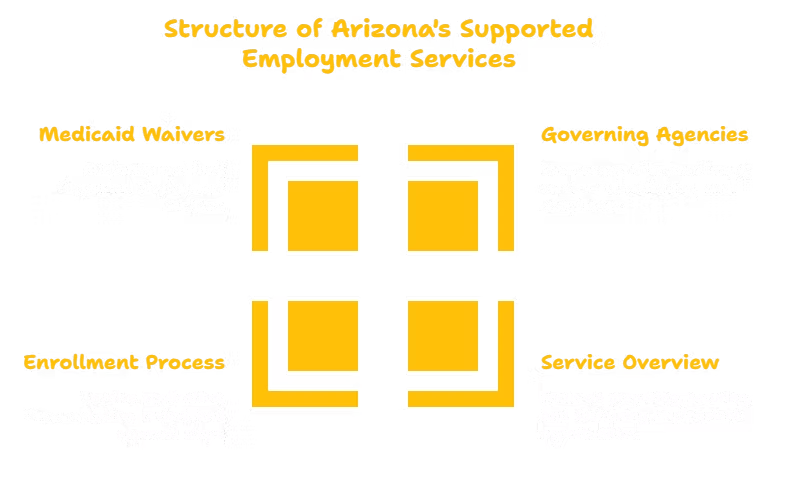
The delivery of Supported Employment services in Arizona is governed by a multi-layered regulatory structure designed to ensure high-quality care and federal compliance. The Centers for Medicare & Medicaid Services (CMS) provides the overarching federal authority, requiring that all Medicaid-funded employment services adhere to stringent HCBS settings rules and person-centered planning requirements. This alignment ensures that individuals receive support in environments that promote independence rather than isolation.
At the state level, the Arizona Health Care Cost Containment System (AHCCCS) serves as the primary Medicaid agency, responsible for managing provider enrollment, establishing reimbursement rates, and setting service authorization standards. For individuals with developmental disabilities, the Arizona Department of Economic Security (DES) – Division of Developmental Disabilities (DDD) acts as the operational lead. DDD manages the specific requirements for Qualified Vendors, ensuring that service delivery models align with the state’s Employment First philosophy.
How Does the Provider Enrollment Process Work?
Becoming an approved provider is a multi-stage process that requires meticulous preparation of business, clinical, and administrative documentation. Prospective agencies must first demonstrate their readiness to meet the rigorous standards established by DDD. This begins with the formal submission of a Qualified Vendor Application (QVA), which outlines the agency's operational capacity, staffing qualifications, and service delivery methodologies.
Once an agency has successfully navigated the DDD approval phase, it must finalize enrollment with AHCCCS to become a recognized Medicaid provider. This secondary phase involves formalizing contracts with applicable Managed Care Organizations (MCOs) under the DDD or ALTCS programs. Providers are advised to participate in orientation sessions offered by AHCCCS and DDD to understand the complexities of billing, service authorization, and the electronic health record requirements necessary to maintain compliance in the Arizona Medicaid ecosystem.
What Documentation Is Required for Compliance?
Maintaining a compliant provider agency requires a robust administrative infrastructure. Beyond basic business formation documents, such as Articles of Incorporation, IRS EIN, and NPI (Type 2) registration, providers must maintain a comprehensive Policy and Procedure Manual. This manual serves as the operational blueprint for the organization, covering critical areas such as participant intake, individualized employment planning, incident reporting, and health and safety protocols.
- Business Credentials: Current business license, NPI documentation, and proof of comprehensive liability insurance.
- Clinical Oversight: Templates for person-centered employment plans and consistent progress tracking tools.
- Human Resources: Documented procedures for background checks, staff credentialing, and annual training logs.
- Operational Records: Standardized billing protocols, service logging systems, and mechanisms for tracking MCO authorizations.
What Are the Essential Staffing and Training Standards?
The quality of Supported Employment services is directly tied to the competency of the staff. A typical agency structure requires a Supported Employment Services Coordinator to oversee clinical direction, usually holding a bachelor’s degree in social work, special education, or a related rehabilitation field. Job Coaches, or Employment Specialists, provide the direct, daily support to participants and must possess a high school diploma or GED along with relevant experience in vocational support.
Before working with participants, all staff must complete mandatory training regarding Employment First principles, person-centered planning, and Medicaid documentation standards. Ongoing education is equally vital; staff must receive annual training on workplace safety, abuse prevention, and the protection of client rights. These requirements ensure that every interaction between the Job Coach and the participant is aligned with both state regulation and the participant’s unique career goals.
What Services Do Approved Providers Deliver?
Supported Employment services are categorized into models designed to meet the diverse needs of the population. Individual Supported Employment offers one-on-one assistance, which may include customized job development, interview preparation, and intensive on-the-job coaching. For those who benefit from a peer-based environment, Group Supported Employment provides small group support within an integrated community setting, fostering social connections while maintaining a focus on professional skill acquisition.
The scope of service also extends to long-term stability. Providers are responsible for ongoing monitoring to ensure job satisfaction and career growth. This involves helping participants navigate workplace accommodations, natural supports, and, when appropriate, assisting them in transitioning toward greater independence with minimal or no paid supports. All interventions must be anchored in the participant’s person-centered employment plan, which is reviewed periodically to reflect the individual's changing career interests and skill levels.
Frequently Asked Questions
How long does the startup process for a new provider agency typically take?
The timeline involves several distinct phases. Business formation and initial staffing setup generally take 2–3 weeks. The DDD Qualified Vendor Application process is the most intensive, spanning 60–90 days. Subsequent hiring, training, and internal system setup require 30–45 days, while final AHCCCS enrollment and MCO contracting typically take 45–60 days to complete.
What is the difference between Individual and Group Supported Employment?
Individual Supported Employment is characterized by one-on-one job development, placement, and coaching designed to help a participant integrate into a competitive work environment independently. Group Supported Employment involves providing support to a small group of individuals in an integrated community setting, where the provider offers ongoing oversight and training within that specific work environment.
Are there specific waivers that authorize these services?
Yes. Supported Employment services are authorized under the Arizona Long Term Care System (ALTCS) Developmental Disabilities program, the DDD HCBS programs, and in certain instances, the ALTCS Elderly and Physically Disabled (EPD) program for younger adults with disabilities who meet the criteria for vocational support.
Key Takeaway: Establishing a Medicaid-compliant Supported Employment agency in Arizona requires strict adherence to DDD and AHCCCS standards, from initial business registration and policy development to comprehensive staff training and rigorous documentation of services. Success is dependent upon a deep understanding of Employment First principles and a commitment to maintaining the administrative rigor necessary for long-term Medicaid program participation.
Last verified: 2024. The information provided is for educational purposes only and does not constitute legal or formal clinical advice. Prospective providers should consult directly with the Arizona Department of Economic Security (DES) – Division of Developmental Disabilities (DDD) and the Arizona Health Care Cost Containment System (AHCCCS) for the most current regulatory requirements and enrollment guidelines.