SPEECH AND LANGUAGE SERVICES PROVIDER IN ALABAMA
By Fatumata Kaba · 2025-06-27 · 5 min read
How to Become a Speech and Language Services Provider in Alabama
Speech and Language Services in Alabama provide critical therapeutic interventions for individuals with intellectual and developmental disabilities (IDD) who face challenges with communication, language processing, and swallowing. These services are authorized under Alabama’s Home and Community-Based Services (HCBS) Medicaid Waivers and require formal certification through the Alabama Department of Mental Health (ADMH). By providing these specialized services, providers play a vital role in enhancing functional communication, fostering social interaction, and ensuring the long-term safety and independence of individuals in their homes and communities.
To operate as a service provider, entities must navigate a rigorous regulatory landscape involving the ADMH, the Alabama Medicaid Agency, and federal standards set by the Centers for Medicare & Medicaid Services (CMS). This process involves establishing a legally recognized business entity, securing qualified licensed staff, and developing a comprehensive infrastructure for clinical documentation, billing, and HIPAA-compliant record management. Achieving authorization requires strict adherence to state standards for service delivery, reporting, and quality assurance.
Understanding the Governance of Alabama HCBS Speech Services
The regulatory framework for speech and language therapy in Alabama is built upon a tiered system of oversight designed to ensure that vulnerable populations receive evidence-based care. The Alabama Department of Mental Health (ADMH) acts as the primary gatekeeper, approving providers and performing ongoing monitoring of service delivery to ensure that every therapy session aligns with HCBS waiver guidelines and therapeutic outcomes. Providers must view the ADMH not just as an approving body, but as the primary auditor of their clinical performance and operational integrity.
The Alabama Medicaid Agency works in tandem with the ADMH to manage the fiscal side of service delivery, including provider enrollment, claims processing, and reimbursement for authorized services. At the federal level, the Centers for Medicare & Medicaid Services (CMS) provides the overarching authority, ensuring that Alabama’s waiver programs meet federal compliance regulations. Providers must ensure that all services delivered are deemed medically necessary and are clearly defined within the individual’s person-centered service plan, as this is the primary document used for audit and verification purposes.
Key Requirements for Provider Licensing and Approval
Launching a service agency requires substantial preparation, beginning with the foundational business structures. Prospective providers must be registered with the Alabama Secretary of State, obtain a valid Employer Identification Number (EIN) from the IRS, and secure a Type 2 National Provider Identifier (NPI). These components are non-negotiable prerequisites for the formal application process. Furthermore, providers must be prepared to demonstrate their capability to deliver therapy in various settings, including the client's home, a dedicated clinical office, or via approved teletherapy platforms.
A central pillar of the provider application is the submission of an ADMH-compliant Policy and Procedure Manual. This manual serves as the operational roadmap for the organization and must cover essential areas of daily practice. Key elements include:
- Detailed protocols for evaluation, diagnostics, and the development of individualized therapy plans.
- Clear standards for therapy documentation, progress tracking, and goal-setting methodologies.
- Strict HIPAA compliance measures and policies for the secure maintenance of client health records.
- Comprehensive emergency response, incident reporting, and professional discharge planning procedures.
- Documented staff training, supervision protocols, and recurring performance review processes.
Navigating the ADMH Provider Enrollment Process
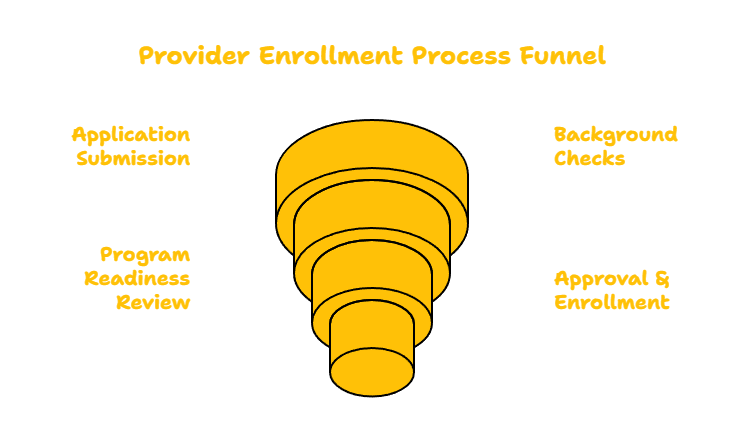
The transition from a business idea to an approved provider involves a multi-phase engagement with the ADMH. The process begins with requesting the formal Speech and Language Services Provider Application Packet. The applicant must curate a comprehensive service plan that outlines the therapy protocols, identifies the qualifications of clinical staff, and provides templates for evaluation reports, therapy notes, and progress updates. These documents are scrutinized during the program readiness review to ensure they meet the specific needs of the IDD population.
Following the submission, the agency undergoes an evaluation of its operational readiness. This involves verifying that all clinical staff have cleared background checks and drug screenings, and confirming that all Speech-Language Pathologists (SLPs) hold active, unencumbered Alabama licenses. Once the ADMH grants approval, the provider must then complete the enrollment process with the Alabama Medicaid Agency, ensuring that the appropriate CPT and HCPCS billing codes are associated with their provider profile to facilitate accurate reimbursement for services rendered.
Staffing Standards and Clinical Competency
The quality of speech and language services is entirely dependent on the expertise of the clinical staff. The core of the service team must be composed of Speech-Language Pathologists (SLPs) who possess a Master’s degree in Speech-Language Pathology and maintain an active license in the state of Alabama. While experience with the IDD population is strongly preferred, all personnel—including Speech Therapy Assistants who must work under the direct supervision of an SLP—are required to maintain professional standards of practice.
Training is a mandatory, ongoing requirement for all clinical and administrative staff members. Providers are responsible for ensuring that their team completes ADMH-mandated orientation and specific HCBS waiver training prior to engaging with clients. Annual training sessions must also be conducted to cover ethics, evolving documentation standards, disability sensitivity, and clinical progress monitoring. By maintaining high staffing standards, agencies ensure consistent, high-quality care that meets both state regulatory requirements and the specific communication needs of the individuals they serve.
Frequently Asked Questions
Which Alabama Medicaid waivers cover speech and language services?
Speech and Language Services are authorized under the Intellectual Disabilities (ID) Waiver, the Living at Home (LAH) Waiver, and the State of Alabama Community Waiver Program. Each program is designed to facilitate access to necessary clinical interventions for eligible participants.
How long should a provider expect the entire launch process to take?
The timeline is segmented into phases, with business formation taking approximately 0–1 week, followed by a 60–90 day ADMH application review period. Clinical staff onboarding and program setup generally require 30–60 days, while final Medicaid enrollment can take an additional 60–90 days to complete.
What are the primary documentation requirements for a new provider?
New providers must maintain rigorous records including articles of incorporation, an IRS EIN letter, NPI confirmation, and current SLP license verification. Additionally, the agency must have a robust Policy and Procedure Manual, signed treatment plans, client consent forms, and organized outcome tracking sheets for every participant.
Key Takeaway
Launching a Speech and Language Services agency in Alabama requires a disciplined approach to regulatory compliance, clinical staffing, and administrative organization. By strictly adhering to the standards set by the ADMH and the Alabama Medicaid Agency, and by maintaining a focus on high-quality, evidence-based care, providers can successfully integrate into the HCBS waiver system and provide essential communication and swallowing support to individuals with intellectual and developmental disabilities.
Last verified: 2024. The information provided is for educational purposes and does not constitute legal or professional advice. Always consult directly with the Alabama Department of Mental Health or the Alabama Medicaid Agency for the most current regulatory guidance and policy updates.