SPECIALIZED THERAPY SERVICES PROVIDER IN IDAHO
By Fatumata Kaba · 2025-07-17 · 5 min read
Specialized Therapy Services in Idaho provide essential therapeutic interventions to individuals with disabilities, chronic illnesses, and developmental challenges, focusing on improving functional abilities, communication, mobility, and emotional well-being. These services are authorized under the Idaho Department of Health and Welfare (IDHW) Medicaid Home and Community-Based Services (HCBS) waiver programs and State Plan benefits to help participants achieve greater levels of independence and community integration.
Operating a specialized therapy practice within the Idaho Medicaid landscape requires strict adherence to regulatory standards set by both the Idaho Division of Medicaid and the federal Centers for Medicare & Medicaid Services (CMS). Agencies must navigate comprehensive enrollment, clinical credentialing, and ongoing compliance requirements to ensure that high-quality, person-centered care is delivered to the state’s most vulnerable populations.
What Are the Core Components of Specialized Therapy Services?
Specialized Therapy Services encompass a diverse range of clinical interventions tailored to the specific needs of participants. These services are not one-size-fits-all; they are designed based on comprehensive, individualized assessments that dictate the frequency, intensity, and goals of the therapeutic support. The objective is to bridge the gap between a participant's current functional status and their potential for greater self-sufficiency.
Approved therapy disciplines often integrated into these programs include:
- Physical Therapy (PT): Focused on rehabilitation for mobility, strength, balance, and gross motor skills.
- Occupational Therapy (OT): Targeted skill-building for activities of daily living (ADLs) and functional independence.
- Speech-Language Pathology (SLP): Developmental support for communication skills, speech therapy, and swallowing interventions.
- Behavioral Therapy: Evidence-based interventions such as ABA to support the management of behaviors and the development of social and emotional regulation.
- Cognitive Rehabilitation Therapy: Specialized support for individuals recovering from brain injuries or living with cognitive impairments.
How Do Agencies Secure Provider Enrollment with Idaho Medicaid?
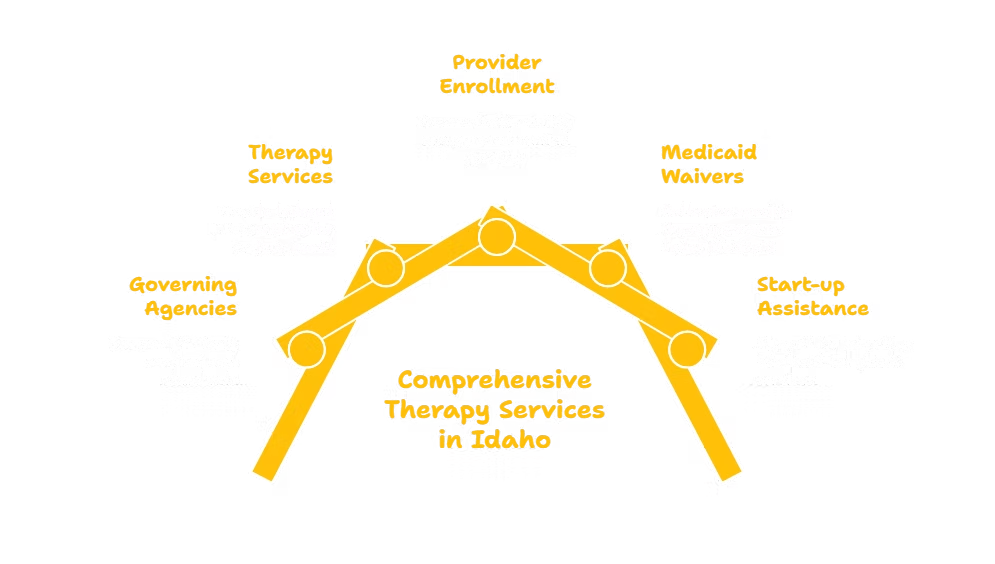
The provider enrollment process is a multi-stage undertaking managed through the Idaho Medicaid Management Information System (MMIS). Before submitting an application, prospective providers must complete the necessary business foundational steps, including registering the business entity with the Idaho Secretary of State and obtaining a valid Employer Identification Number (EIN) from the IRS and a Type 2 National Provider Identifier (NPI).
Once the foundational setup is complete, the organization must submit a formal Provider Enrollment Application. This process involves uploading extensive documentation, including articles of incorporation, clinical service protocols, professional liability insurance certificates, and detailed participant intake procedures. Following submission, the IDHW conducts a program readiness review to evaluate the provider’s ability to meet Medicaid billing standards, clinical documentation requirements, and participant safety and protection protocols.
What Documentation Is Required for Regulatory Compliance?
Maintaining compliance is an ongoing obligation that requires robust administrative systems. Beyond initial licensure and NPI confirmation, agencies must maintain a comprehensive Policy and Procedure Manual. This document serves as the backbone of the organization, providing clear instructions for staff regarding HIPAA confidentiality, the handling of grievances, and strict adherence to participant rights as defined by federal and state law.
Essential documentation and systems include:
- Clinical Oversight: Evidence of active Idaho licensure for all professional staff, including PTs, OTs, SLPs, and behavior analysts.
- Emergency Readiness: Formalized emergency preparedness plans, incident reporting systems, and active risk management protocols.
- Billing Integrity: Established systems for tracking service authorizations and ensuring accurate, audit-ready Medicaid billing records.
- Staffing Records: Proof of thorough background checks, clinical supervision logs, and mandatory training documentation related to abuse prevention and participant safety.
What Are the Staffing and Supervision Requirements?
The quality of therapeutic care is directly tied to the qualifications and supervision of the staff. Each therapy program requires a Clinical Supervisor or Therapy Program Manager—a licensed professional in their respective field—to oversee clinical outcomes and ensure services align with the Individualized Service Plan (ISP) or Plan of Care (POC). This individual is responsible for the overall efficacy of the treatment provided by the clinical team.
Staff members, including assistants such as Physical Therapist Assistants (PTAs) or Certified Occupational Therapy Assistants (COTAs), must operate under the direct supervision of licensed professionals where mandated by state regulations. All staff must undergo periodic competency evaluations and maintain active credentials throughout their tenure. Additionally, mandatory training covering HIPAA protocols, participant safety, and emergency response is a baseline requirement for all employees interacting with Medicaid participants.
Which Medicaid Waivers Authorize These Services?
Specialized Therapy Services are primarily accessed through specific Idaho Medicaid waiver programs designed to provide community-based alternatives to institutional care. These waivers recognize that consistent, high-quality therapy is a critical component of allowing individuals to remain in their homes and communities. Understanding which waivers support these services is essential for proper service authorization and claims management.
Key programs include:
- Developmental Disabilities (DD) Waiver: Focused on individuals with qualifying developmental disabilities needing support to maintain independence.
- Aged and Disabled (A&D) Waiver: Provides rehabilitation and functional maintenance for individuals who have experienced injury, chronic illness, or age-related disability onset.
- Children's Developmental Disabilities Waiver: Targeted support for children to foster skill development and integration.
Frequently Asked Questions
What is the typical timeline for launching a therapy agency in Idaho?
The timeline varies based on organizational readiness, but generally follows a trajectory of 1–2 weeks for business formation, 2–3 months for staffing and credentialing, 60–90 days for Medicaid enrollment and readiness review, and 30–45 days for final billing system configuration.
Do therapy assistants require specific supervision?
Yes, therapy assistants such as PTAs or SLPAs must work under the direct supervision of licensed, qualified professionals in their respective disciplines, as defined by Idaho licensing boards and Medicaid provider standards.
What is the role of an Individualized Service Plan (ISP)?
The ISP or Plan of Care (POC) is a mandatory document that outlines the participant's specific clinical goals, the intensity and duration of therapy, and the expected functional outcomes. All billing for Specialized Therapy Services must be directly tied to these documented, personalized goals.
Key Takeaway
Launching a Specialized Therapy Services agency in Idaho requires a methodical approach that balances rigorous administrative setup, strict clinical credentialing, and a deep understanding of Medicaid compliance. By adhering to the guidelines set by the Idaho Department of Health and Welfare and maintaining organized documentation, providers can effectively support participant independence and ensure the sustainability of their programs within the state’s HCBS waiver landscape.
Last verified: 2024. This information is intended for educational purposes and should not be considered legal or professional advice. Always consult directly with the Idaho Department of Health and Welfare (IDHW) or the Centers for Medicare & Medicaid Services (CMS) for the most current regulations and program requirements.