SPECIALIZED THERAPIES SERVICES PROVIDER IN NEBRASKA
By Fatumata Kaba · 2025-08-08 · 5 min read
Promoting Recovery and Well-Being Through Individualized Therapeutic Interventions
Specialized Therapies Services in Nebraska provide essential, targeted therapeutic interventions for individuals managing disabilities, chronic conditions, or specific recovery needs. By offering professional support in areas such as mobility, communication, and cognitive function, these services significantly enhance the daily independence and overall quality of life for Medicaid participants.
These services are formally authorized under the Nebraska Medicaid Home and Community-Based Services (HCBS) Waiver programs. Operating as a provider in this space requires strict adherence to regulatory oversight, person-centered planning standards, and the operational requirements established by the Nebraska Department of Health and Human Services (DHHS).
Who Governs Specialized Therapy Services in Nebraska?
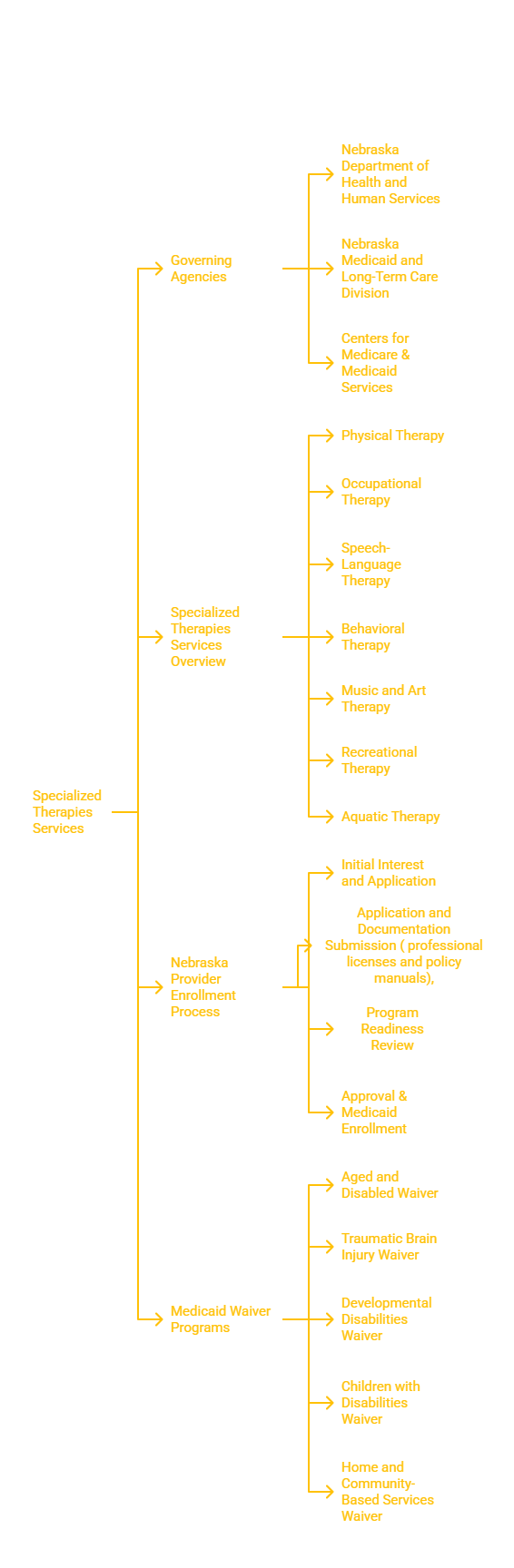
The regulatory landscape for Medicaid HCBS services in Nebraska involves a multi-tiered oversight structure. At the state level, the Nebraska Department of Health and Human Services (DHHS) serves as the primary administrator, managing the allocation of Medicaid waiver funding, overseeing the provider enrollment process, and directing service authorization and reimbursement protocols.
Within DHHS, the Nebraska Medicaid and Long-Term Care (MLTC) Division holds the responsibility for ensuring that providers maintain high quality-of-care standards. They monitor service delivery to guarantee that all interventions comply with state-specific regulations. Additionally, the Centers for Medicare & Medicaid Services (CMS) provides federal oversight, ensuring that Nebraska's Medicaid-funded programs align with national requirements regarding person-centered planning, participant protections, and HCBS quality benchmarks.
What Types of Therapeutic Services Are Authorized?
Specialized Therapies are designed to help participants reach functional milestones as outlined in their Individualized Service Plan (ISP). Providers are expected to deliver interventions that are clinically appropriate and tailored to the specific needs of the individual, whether the focus is on physical rehabilitation, behavioral improvement, or social engagement.
Approved providers generally deliver the following core therapeutic interventions:
- Physical Therapy (PT): Focused on improving mobility, physical strength, and overall bodily function through manual therapy and guided exercise.
- Occupational Therapy (OT): Dedicated to enhancing daily living skills, fine motor coordination, and the application of adaptive techniques.
- Speech-Language Therapy (SLP): Aimed at improving communication capabilities, swallowing function, and cognitive-communication skills.
- Behavioral Therapy: Focused on addressing maladaptive behaviors and cultivating positive, effective coping strategies.
- Creative and Recreational Therapies: Utilizing Music, Art, and Recreational Therapy to facilitate emotional well-being, cognitive function, and social interaction.
- Aquatic Therapy: Providing water-based rehabilitation to support physical health and promote recovery.
How Do Agencies Meet Licensing and Enrollment Requirements?
Establishing a Specialized Therapy practice requires a methodical approach to business formation and regulatory compliance. Before a provider can begin billing Medicaid, they must first establish a formal business entity with the Nebraska Secretary of State and obtain an Employer Identification Number (EIN) from the IRS. Furthermore, a Type 2 National Provider Identifier (NPI) is necessary for organizational billing.
Provider approval is contingent upon the submission of a comprehensive application via the Nebraska Medicaid Provider Enrollment Portal. This application must include proof of professional licensure for all clinical staff—such as PTs, OTs, SLPs, and BCBAs—along with evidence of professional and general liability insurance. Providers are also required to develop and maintain a robust Policy and Procedure Manual that covers assessment protocols, safety procedures, staff training, and HIPAA compliance.
What Is the Required Documentation for Program Readiness?
The DHHS conducts a Program Readiness Review to ensure that prospective providers possess the infrastructure required to deliver safe and effective services. This review evaluates the provider's operational policies, staff credentialing systems, and documentation standards. It is critical that these documents reflect a high standard of clinical care and administrative accountability.
Providers must maintain organized documentation covering the following areas:
- Articles of Incorporation and business licenses.
- Verification of staff background checks, health screenings, and ongoing competency evaluations.
- Detailed clinical workflows, including procedures for assessment, treatment planning, and goal setting.
- Comprehensive protocols for crisis intervention, de-escalation, and participant grievance handling.
- Systems for quality assurance, compliance monitoring, and accurate Medicaid billing practices.
How Are Staffing and Training Managed?
The success of a Specialized Therapy program relies on the qualifications and continuous education of its workforce. The program must be led by a qualified Program Director, typically holding a Master’s degree in a relevant therapy field with active state licensure and supervisory experience. Under their direction, licensed therapists and certified therapy assistants execute the therapeutic plans.
All staff members are mandated to participate in training programs that cover critical operational areas. This includes HIPAA compliance, the protection of participant rights, and specialized instruction in de-escalation and crisis management. Annual competency evaluations ensure that all personnel remain aligned with current Medicaid standards and safety protocols throughout their tenure.
Frequently Asked Questions
Which Medicaid waivers currently support Specialized Therapies in Nebraska?
Specialized Therapies are available under several programs, including the Aged and Disabled (AD) Waiver, the Traumatic Brain Injury (TBI) Waiver, the Developmental Disabilities (DD) Waiver, the Children with Disabilities Waiver, and the general Home and Community-Based Services (HCBS) Waiver.
What is the typical timeline for launching a Specialized Therapy business?
The launch process generally spans 6 to 9 months, depending on the complexity of business formation and the pace of the Medicaid enrollment and readiness review process. This includes 1–2 months for business formation, 2–3 months for hiring and program development, 60–90 days for Medicaid enrollment, and 30–45 days for billing system setup.
What are the primary responsibilities of the Program Director?
The Program Director is responsible for overseeing the clinical direction of the practice, ensuring that all therapeutic services align with participant ISPs, managing staff supervision, and maintaining compliance with all DHHS regulations and quality assurance requirements.
Key Takeaway
Launching a Specialized Therapy provider agency in Nebraska requires a deep commitment to both clinical excellence and administrative precision. By systematically aligning business operations with the guidelines set forth by the Nebraska Department of Health and Human Services, Medicaid and Long-Term Care Division, and federal CMS requirements, providers can establish sustainable programs that offer high-quality care to vulnerable populations while ensuring long-term operational success.
Last verified: October 2023. Disclaimer: This information is for educational purposes only and does not constitute legal or professional consulting advice. Requirements for Nebraska Medicaid waivers are subject to change. Consult the official Nebraska Department of Health and Human Services (DHHS) website and the Nebraska Medicaid Provider Enrollment Portal for the most current regulatory guidance and official documentation.