SPECIALIZED THERAPIES SERVICES PROVIDER IN MICHIGAN
By Fatumata Kaba · 2025-07-27 · 5 min read
Specialized Therapies Services in Michigan are essential components of the Home and Community-Based Services (HCBS) Medicaid Waivers, designed to enhance the physical, cognitive, and emotional well-being of individuals with disabilities or chronic conditions. Authorized providers deliver these targeted interventions under strict oversight from the Michigan Department of Health and Human Services (MDHHS) to ensure compliance with person-centered care standards and state Medicaid regulations.
What Are the Governing Structures for Specialized Therapies in Michigan?
The delivery of Specialized Therapies Services operates within a structured regulatory framework involving state and federal oversight. The primary governing entity, the Michigan Department of Health and Human Services (MDHHS), maintains ultimate authority over provider enrollment, service authorization, and ongoing Medicaid compliance. By adhering to MDHHS protocols, agencies ensure that their therapeutic interventions meet the rigorous quality standards required for HCBS waiver participation.
Complementing state oversight, the Michigan Medicaid Agency manages the fiscal and enrollment aspects of provider participation, including the essential reimbursement processes for authorized services. At the federal level, the Centers for Medicare & Medicaid Services (CMS) provides the overarching policy guidance. CMS ensures that Michigan’s waiver programs remain consistent with federal HCBS rules, focusing on community integration and the rights of waiver participants to receive care in the least restrictive settings.
- Michigan Department of Health and Human Services (MDHHS): Oversees provider enrollment, service authorization, and Medicaid compliance.
- Michigan Medicaid Agency: Manages Medicaid provider enrollment and reimbursement for Specialized Therapies Services.
- Centers for Medicare & Medicaid Services (CMS): Provides federal oversight and ensures compliance with HCBS waiver rules.
How Do Providers Deliver Specialized Therapeutic Interventions?
Specialized Therapies Services encompass a broad spectrum of interventions tailored to meet the unique goals defined in an individual’s person-centered care plan. These services are not one-size-fits-all; they are specifically designed to address complex physical, mental, or emotional needs, allowing individuals to maintain or improve their functional independence within their own homes and communities.
Providers are responsible for delivering high-quality care that integrates seamlessly with the client's broader support system. This requires constant communication, precise documentation of therapy sessions, and a commitment to evidence-based practices that track and report on patient outcomes. Whether through individual or group settings, the objective remains the enhancement of the individual’s daily living skills and overall quality of life.
- Physical Therapy: Focused on mobility, endurance, and strength enhancement.
- Occupational Therapy: Designed to improve daily living skills and adaptive functionality.
- Speech Therapy: Addressing communication challenges and swallowing or feeding issues.
- Behavioral Therapy: Providing support for emotional health and adaptive behavioral responses.
- Clinical Oversight: Therapeutic assessments, progress tracking, and outcome documentation.
What Are the Requirements for Provider Licensing and Approval?
Establishing an agency to provide Specialized Therapies requires adherence to both standard business laws and program-specific mandates. Prospective providers must first register their business entity with the Michigan Department of Licensing and Regulatory Affairs (LARA) and secure a federal Employer Identification Number (EIN). Additionally, obtaining a Type 2 National Provider Identifier (NPI) is a mandatory step for the organization to be recognized in the Medicaid billing system.
Beyond the legal entity formation, providers must demonstrate operational capacity. This includes maintaining a professional office or service location within Michigan and building a team of qualified, licensed therapists. Establishing comprehensive internal protocols is non-negotiable; agencies must develop standardized policies for therapy documentation, progress tracking, and client safety that align with the specific requirements of the MDHHS waiver programs.
- Register the business with the Michigan Department of Licensing and Regulatory Affairs (LARA).
- Obtain a federal EIN from the IRS and a Type 2 NPI.
- Maintain a dedicated physical office or service location in Michigan.
- Develop robust protocols for documentation, therapy delivery, and client progress monitoring.
How Does the Provider Enrollment Process Function?
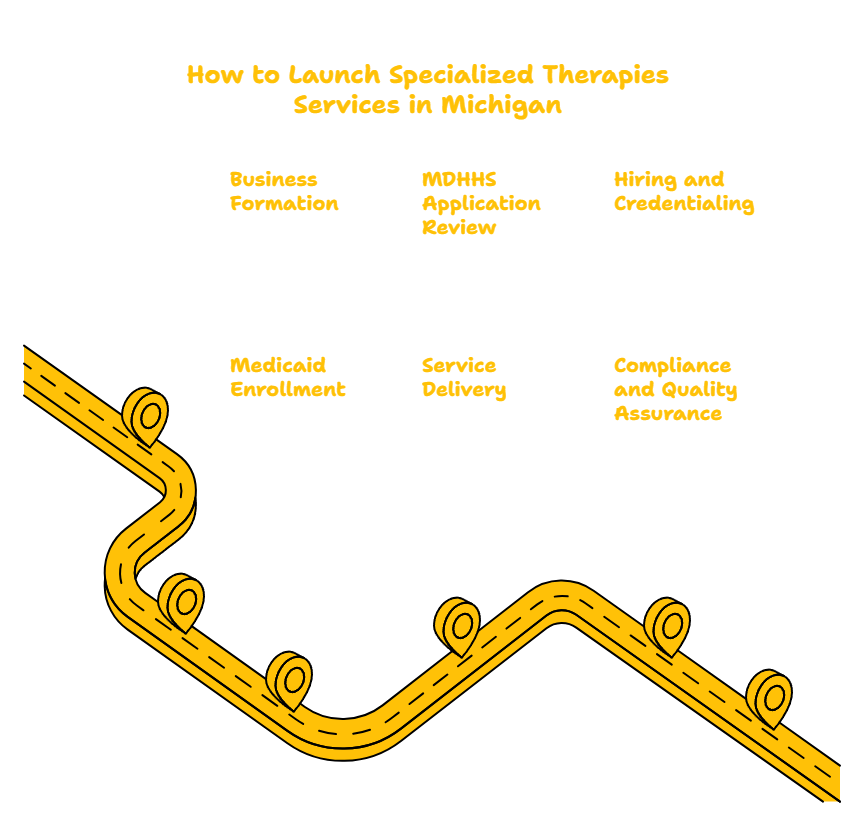
The enrollment journey is a multi-phase process designed to ensure that only qualified providers enter the Medicaid network. Initial steps involve requesting the Specialized Therapies Provider Application Packet from the MDHHS. During this phase, applicants must submit a detailed service plan that outlines the types of therapies to be offered, credentialing procedures for staff, and robust policies regarding client safety and service delivery.
Once the application is submitted, the agency will undergo a program readiness review. This review examines the provider's ability to execute person-centered care plans effectively. Central to this process are background checks for all staff involved in direct client care, as well as the rigorous verification of all professional licenses and certifications. Proof of continuing education and skills maintenance is also required to ensure that therapy staff remain current with the latest standards in their respective fields.
Frequently Asked Questions
Which Medicaid Waivers include Specialized Therapies?
Specialized Therapies Services are authorized under the MI Choice Waiver, the Habilitation Supports Waiver, and the Children’s Waiver Program.
What is the typical timeline to launch a therapy practice?
The entire launch process generally spans several months, including approximately 0–1 weeks for business formation, 60–90 days for the MDHHS application review, 30–60 days for staff hiring, and another 60–90 days for Medicaid enrollment.
What qualifications are required for the Therapy Program Manager?
The Program Manager must be a licensed therapist who possesses relevant experience in HCBS services and demonstrated expertise in program management and regulatory compliance.
What Are the Essential Staffing and Operational Standards?
Staffing requirements are rigorous to ensure the safety and success of waiver participants. Every provider agency must designate a Therapy Program Manager, who serves as the bridge between clinical operations and regulatory compliance. All therapists—whether physical, occupational, speech, or behavioral—must hold current state licensure and demonstrate a history of providing person-centered care.
Continuous professional development is a cornerstone of the service model. All staff must undergo orientation and comprehensive HCBS waiver training provided by or authorized by the MDHHS. Furthermore, annual training requirements cover crucial topics such as ethics, client rights, confidentiality, and the latest best practices in therapeutic care. This commitment to ongoing training ensures that the agency remains compliant and responsive to the evolving needs of the individuals they serve.
Key Takeaway: Successfully launching a Specialized Therapies provider agency in Michigan requires a disciplined approach to regulatory compliance, meticulous documentation practices, and a steadfast commitment to the person-centered mission defined by MDHHS waiver programs.
Last verified: October 2023. Waiver Consulting Group is a professional consulting firm and is not a government agency. Information provided is for educational purposes and should not be considered legal or medical advice. Always consult the latest MDHHS manuals and bulletins for the most current regulatory updates.