SPECIALIZED THERAPIES SERVICES PROVIDER IN INDIANA
By Watchen Roberts · 2025-07-21 · 5 min read
Becoming a Specialized Therapies provider in Indiana requires a strategic approach to clinical compliance, administrative infrastructure, and adherence to Indiana Family and Social Services Administration (FSSA) requirements. By providing essential rehabilitative and habilitative interventions, agencies help participants on Indiana’s HCBS waivers achieve improved functional outcomes, greater autonomy, and enhanced quality of life within their own communities.
This guide outlines the regulatory framework, operational requirements, and procedural steps necessary to establish a compliant, high-quality Specialized Therapies practice in the state of Indiana.
What Are the Governing Agencies and Regulatory Frameworks?
The delivery of Specialized Therapies in Indiana is governed by a collaboration between state and federal authorities to ensure the health, safety, and welfare of waiver participants. At the state level, the Indiana Family and Social Services Administration (FSSA) acts as the primary oversight body. Specifically, the Office of Medicaid Policy and Planning (OMPP) manages the fiscal and policy components, while the Division of Disability and Rehabilitative Services (DDRS) oversees the operational implementation and service quality standards for waiver-funded programs.
On a federal level, the Centers for Medicare & Medicaid Services (CMS) provides the overarching mandate for Home and Community-Based Services (HCBS). CMS requires that all services funded through Medicaid waivers adhere to strict person-centered planning requirements, documented medical necessity, and established quality of care standards. Providers must align their internal operations with these dual-layered regulations to remain in good standing.
What Scope of Services Must a Specialized Therapy Provider Deliver?
Specialized Therapies encompass a broad range of professional, clinical interventions designed to address the unique physical, cognitive, and behavioral needs of individuals. These services are intended to restore function, maintain current abilities, or teach new skills that allow for increased independence. Approved providers are responsible for delivering services authorized within the participant’s Individualized Service Plan (ISP) or Plan of Care (POC).
Commonly authorized service disciplines include:
- Physical therapy (PT): Focused on improving mobility, gross motor strength, balance, and physical independence.
- Occupational therapy (OT): Targeted at enhancing self-care, activities of daily living (ADLs), adaptive skills, and interaction with the physical environment.
- Speech-language pathology (SLP): Addressing communication disorders, cognitive-communication impairments, and safe swallowing (dysphagia) challenges.
- Behavioral therapies: Supporting individuals with complex emotional, social, or behavioral challenges through structured intervention plans and positive behavior supports.
- Respiratory therapy: Managing chronic respiratory issues and promoting pulmonary health for qualified participants.
How Do You Meet the Licensing and Operational Prerequisites?
Establishing an agency begins with formal business formation and clinical credentialing. Before seeking Medicaid enrollment, providers must be registered with the Indiana Secretary of State as a legal business entity. This foundation allows for the acquisition of an EIN from the IRS and a Type 2 NPI, which are essential for billing and identification purposes within the Medicaid system.
Clinical infrastructure is the most critical component of the readiness process. Every therapy discipline offered by the agency must be supported by active Indiana licensure. Beyond basic licensing, providers must implement a robust policy and procedure manual. This documentation must cover the full lifecycle of care, from initial intake and assessment to service delivery, progress monitoring, emergency preparedness, and HIPAA-compliant data management.
What Is the Sequence for Indiana Medicaid Provider Enrollment?
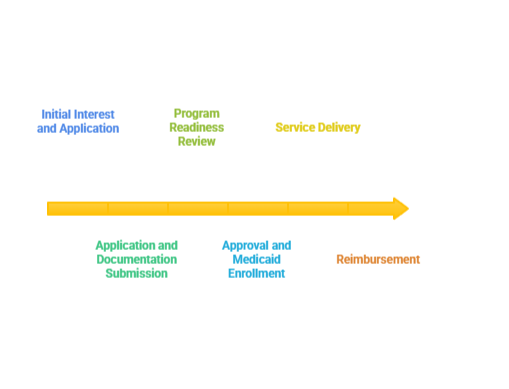
The enrollment process is a structured sequence that transitions from application submission to final program readiness verification. Providers begin by registering through the Indiana Medicaid Provider Enrollment Portal. During this phase, applicants must submit comprehensive documentation, including professional licensure, insurance certificates (covering general liability and professional malpractice), and internal clinical policies.
Following the submission, the FSSA—specifically the DDRS or Aging Division—conducts a program readiness review. This review evaluates the provider’s ability to manage participant-centered documentation, adhere to supervision structures, and ensure billing compliance. Once the state confirms that the agency meets all requirements, the provider is officially enrolled and assigned the appropriate billing codes for therapy evaluations, ongoing treatment sessions, and participant training.
What Are the Essential Staffing and Competency Standards?
The quality of Specialized Therapy services is directly linked to the clinical qualifications and continuous training of the provider’s staff. At the top of the organizational structure, a Clinical Supervisor or Therapy Program Director—typically a licensed PT, OT, SLP, Psychologist, or Behavior Analyst—must oversee the delivery of services. This individual ensures that care meets professional standards and that the agency remains in compliance with clinical regulations.
All direct care staff must hold current, active Indiana licenses in their respective disciplines. Furthermore, because these services are delivered in home and community settings, all personnel are required to complete specialized training. This includes:
- Person-centered planning and the HCBS Settings Rule.
- Abuse prevention, HIPAA compliance, and data privacy protocols.
- Infection control and emergency response procedures.
- Ongoing professional development and periodic skills competency evaluations.
Frequently Asked Questions
Which Medicaid waiver programs cover Specialized Therapies?
Specialized Therapies are reimbursed through several Indiana programs, including the Community Integration and Habilitation (CIH) Waiver, the Family Supports Waiver (FSW), the Aged and Disabled (A&D) Waiver, and the Traumatic Brain Injury (TBI) Waiver. Services are also available through the Medicaid State Plan when deemed medically necessary.
How long should a provider anticipate the startup process to take?
The timeline typically spans several months. Business formation and licensing take 1–2 months, followed by 2–3 months for hiring and program development. The Medicaid enrollment and readiness review phase generally lasts 60–90 days, with an additional 30–45 days required for final billing system setup and service launch.
What must be included in the policy and procedure manual?
The manual must detail the entire administrative and clinical workflow, including participant intake, therapy evaluation, ISP development, direct service delivery, caregiver training, incident reporting, grievance resolution, staff credentialing, and audit-ready documentation practices.
Key Takeaway: Successfully launching a Specialized Therapies practice in Indiana is contingent upon the integration of rigorous clinical standards with precise administrative documentation. Providers must ensure that every aspect of their operation—from staff credentialing to Medicaid billing—is fully aligned with FSSA and CMS requirements to maintain eligibility and provide effective support to the waiver population.
Last verified: May 2024. This content is provided for informational purposes only and does not constitute legal or professional advice. Always consult with the Indiana Family and Social Services Administration (FSSA) or professional consultants regarding current state requirements and regulations.