SPECIALIZED THERAPIES SERVICES PROVIDER IN ILLINOIS
By Fatumata Kaba · 2025-07-19 · 5 min read
Specialized Therapies Services in Illinois represent a critical component of the state’s healthcare infrastructure, providing habilitative and rehabilitative care to individuals with developmental disabilities, brain injuries, and chronic physical impairments. By operating under the Illinois Department of Healthcare and Family Services (HFS) and the Department of Human Services (DHS), these providers play an essential role in fostering functional independence, safety, and community integration for Medicaid waiver participants.
What Are Specialized Therapies Services in Illinois?
Specialized Therapies encompass a range of professional interventions designed to improve, maintain, or restore the physical, cognitive, and behavioral functions of Medicaid-eligible individuals. These services are not one-size-fits-all; rather, they are tailored to the unique requirements identified in a participant’s Individualized Service Plan (ISP) or Plan of Care (POC). By delivering evidence-based care in community settings, providers help participants navigate the challenges of daily living while striving for greater self-sufficiency.
The scope of these services is broad, covering disciplines such as physical therapy (PT), occupational therapy (OT), and speech-language pathology (SLP). Additionally, behavioral therapies—including applied behavior analysis (ABA)—and respiratory therapy are utilized to address specific health and social needs. Regardless of the discipline, all interventions must prioritize person-centered outcomes, ensuring that every session directly supports the participant’s ability to remain in their home and community rather than in institutional settings.
How Do Governing Agencies Oversee Specialized Therapy Providers?
Navigating the regulatory landscape of Illinois Medicaid requires a clear understanding of the roles played by multiple oversight bodies. The Illinois Department of Healthcare and Family Services (HFS) serves as the state’s primary Medicaid agency, handling funding administration, provider enrollment through the IMPACT system, and final reimbursement processing. Without approval from HFS, providers cannot legally bill for Medicaid-reimbursed services.
In parallel, the Illinois Department of Human Services (DHS)—specifically the Division of Developmental Disabilities (DDD) and the Division of Rehabilitation Services (DRS)—manages the day-to-day operations regarding participant eligibility and service authorization. These divisions are responsible for verifying that therapy plans align with the specific Medicaid HCBS waiver programs in which a participant is enrolled. Finally, the federal Centers for Medicare & Medicaid Services (CMS) provides the overarching regulatory framework, ensuring that all Illinois programs adhere to federal quality standards and the HCBS Settings Rule.
What Are the Requirements for Provider Enrollment?
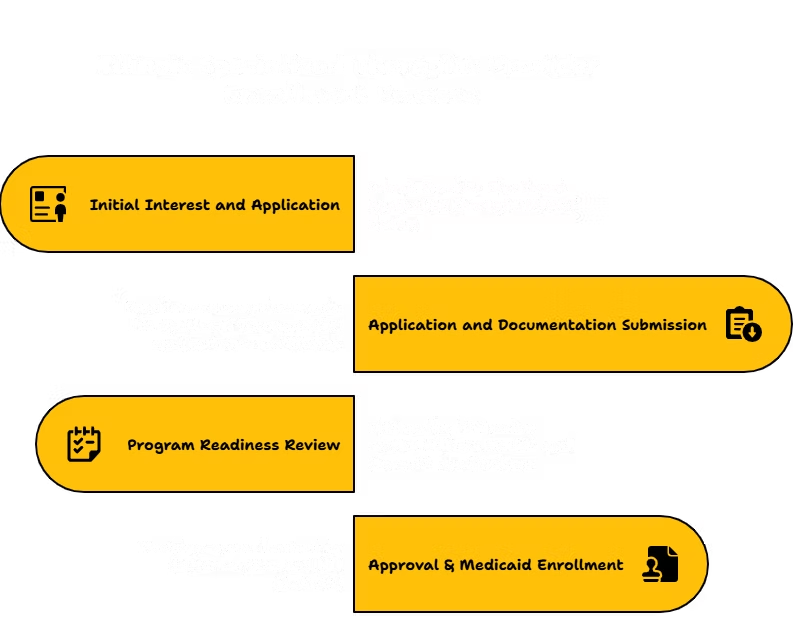
The process to become a recognized Specialized Therapies provider is rigorous, requiring a formal commitment to clinical and operational excellence. Before initiating the enrollment process via the Illinois Medicaid Provider Enrollment Portal (IMPACT), an organization must be fully registered with the Illinois Secretary of State and possess a valid Federal Employer Identification Number (EIN) and a Type 2 National Provider Identifier (NPI). This foundational step ensures the legal status of the entity within the state’s healthcare network.
Beyond basic business credentials, providers must demonstrate professional readiness through comprehensive documentation. This includes proof of active Illinois licensure for all clinical staff, evidence of professional malpractice and general liability insurance, and the development of robust internal policies. These policies must cover essential areas such as participant intake, assessment protocols, clinical documentation, and adherence to HIPAA confidentiality standards, effectively creating an audit-ready environment from the very first day of operations.
- Registration of business entity with the Illinois Secretary of State.
- Acquisition of an IRS-issued EIN and Type 2 NPI.
- Obtaining active Illinois professional licenses for all therapy disciplines.
- Securing comprehensive liability and professional malpractice insurance.
- Developing a specialized Policy & Procedure Manual for internal quality control.
How Do Providers Manage Staffing and Clinical Compliance?
Quality in therapy services is defined by the caliber of the staff delivering the care. A successful agency must appoint a Clinical Supervisor or Therapy Services Director—usually a seasoned, licensed professional—who is responsible for the oversight of all therapy interventions and the validation of clinical documentation. This role ensures that therapy assistants (such as PTAs or COTAs) operate strictly within their defined scopes of practice and under appropriate supervision.
Beyond technical proficiency, all staff members must complete mandatory training programs that reflect the complexities of working with vulnerable populations. These include training on the HCBS Settings Rule, participant-centered service delivery, and strict HIPAA compliance. Furthermore, providers must maintain rigorous records regarding background clearances and ongoing professional development, ensuring that the agency meets both state licensing requirements and the evolving standards set by DHS and HFS.
What Programs Utilize Specialized Therapies?
Specialized Therapies are integrated into several key Illinois Medicaid Waiver programs, each targeting distinct populations. These include the Adults with Developmental Disabilities Waiver, the Children and Young Adults with Developmental Disabilities Waiver, the Persons with Brain Injury (BI) Waiver, the Persons with Disabilities (PD) Waiver, and the Elderly Waiver (Community Care Program). Each of these programs provides a specific pathway for authorized therapy services, provided they are determined medically necessary through the care planning process.
Providers within these programs are not only responsible for the direct delivery of care but also for the continuous evaluation of the participant’s progress. This includes conducting regular reassessments, adjusting therapy goals in collaboration with interdisciplinary teams, and training caregivers to assist with carryover activities in the home environment. Effective coordination with case managers and primary care physicians is essential to ensuring that therapy services remain aligned with the participant’s comprehensive healthcare needs.
Frequently Asked Questions
What is the typical timeline for launching a Specialized Therapies agency?
Launching an agency involves several distinct phases, beginning with business formation and professional compliance preparation (1–2 months). This is followed by staff hiring and program development (2–3 months), the formal IMPACT Medicaid provider enrollment and readiness review (60–90 days), and finally, the setup of billing systems and the official service launch (30–45 days).
Which agency should I contact to start the enrollment process?
Providers should initiate the enrollment process through the Illinois Medicaid Provider Enrollment Portal, known as the IMPACT system. For specific guidance on programmatic requirements and participant care, you should coordinate with the Illinois Department of Human Services (DHS) divisions, specifically the Division of Developmental Disabilities or the Division of Rehabilitation Services.
What documentation is critical for a Medicaid audit?
To succeed during an audit, a provider must maintain well-organized files that include current Illinois professional licenses, proof of insurance, and a comprehensive Policy & Procedure Manual. Essential documentation includes evidence of staff credentialing, detailed therapy assessment records, signed Plans of Care, and logs of participant progress that demonstrate the medical necessity of all billed services.
Key Takeaway
Launching a Specialized Therapies services agency in Illinois requires meticulous attention to both state regulatory standards and the clinical requirements of the Medicaid HCBS waiver programs. By ensuring full compliance with HFS and DHS mandates, prioritizing evidence-based documentation, and building a highly qualified clinical team, providers can effectively support the independence and health of the individuals they serve while maintaining a sustainable and audit-ready operation.
Last verified: August 2024. This information is provided for educational purposes and does not constitute legal or professional consulting advice. Prospective providers should consult directly with the Illinois Department of Healthcare and Family Services (HFS) and the Illinois Department of Human Services (DHS) for the most current regulatory updates and specific application requirements.