SPECIALIZED THERAPIES SERVICES PROVIDER IN HAWAII
By Fatumata Kaba · 2025-07-16 · 5 min read
Specialized Therapies services in Hawaii provide essential clinical interventions designed to promote functional independence, communication, and overall well-being for participants enrolled in Medicaid Home and Community-Based Services (HCBS) waiver programs. These services are delivered through a person-centered framework, ensuring that therapeutic goals align with the unique physical, cognitive, and behavioral needs of individuals living with disabilities or chronic conditions across the islands.
What Are the Core Objectives and Scope of Specialized Therapies in Hawaii?
The primary mandate of the Specialized Therapies service category is to bridge the gap between clinical intervention and daily community living. By providing targeted support—ranging from speech-language pathology to behavioral therapy—these services enable participants to gain the skills necessary to navigate their environments with greater autonomy. Providers play a critical role in the interdisciplinary care team, translating medical recommendations into actionable, measurable outcomes.
Under the oversight of the Hawaii Department of Health (DOH) Developmental Disabilities Division (DDD) and the Med-QUEST Division of the Department of Human Services (DHS), these services are strictly regulated to maintain high standards of care. Whether the goal is improving swallowing function, enhancing sensory integration, or building behavioral coping strategies, every intervention must be rooted in an approved assessment and integrated into the participant’s Individualized Service Plan (ISP).
How Do Governing Agencies Regulate and Oversee Service Delivery?
The regulatory landscape for Hawaii HCBS providers is tiered, involving state and federal oversight to ensure participant safety and fiscal integrity. The Department of Human Services (DHS) Med-QUEST Division serves as the primary gateway for Medicaid provider enrollment and reimbursement management, while the DOH Developmental Disabilities Division (DDD) manages the specific waiver services for the IDD population. Both agencies work in tandem with federal guidelines established by the Centers for Medicare & Medicaid Services (CMS).
Providers must maintain strict adherence to these agencies' requirements, particularly regarding documentation and service authorization. Because these programs are funded through Medicaid HCBS waivers, services are subject to continuous monitoring to ensure they adhere to person-centered planning principles and the specific requirements of the participant’s waiver category. Compliance with these governing bodies is not merely an initial hurdle but an ongoing operational requirement.
What Are the Essential Requirements for Provider Enrollment?
Launching a Specialized Therapies agency requires a rigorous commitment to administrative and clinical infrastructure. Before seeking enrollment with the Med-QUEST Division, a prospective provider must establish a formal business entity registered with the Hawaii Department of Commerce and Consumer Affairs (DCCA). Obtaining an IRS Employer Identification Number (EIN) and a Type 2 National Provider Identifier (NPI) are foundational steps that precede the Medicaid enrollment application.
Clinical infrastructure is equally vital. Agencies must secure active Hawaii professional licenses for all clinical staff, including Physical Therapists, Occupational Therapists, Speech-Language Pathologists, and Psychologists. Furthermore, the organization must possess comprehensive general and professional liability insurance to protect against operational and clinical risks. Establishing robust internal policies regarding HIPAA compliance, grievance procedures, and emergency protocols is a prerequisite for a successful readiness review.
- Register the business entity with the Hawaii DCCA.
- Obtain IRS EIN and Type 2 NPI documentation.
- Ensure all clinical staff hold active, valid Hawaii professional licenses.
- Develop a comprehensive Policy & Procedure Manual addressing intake, HIPAA, and service delivery.
- Secure required general and professional liability insurance coverage.
How Does the Med-QUEST Provider Enrollment Process Work?
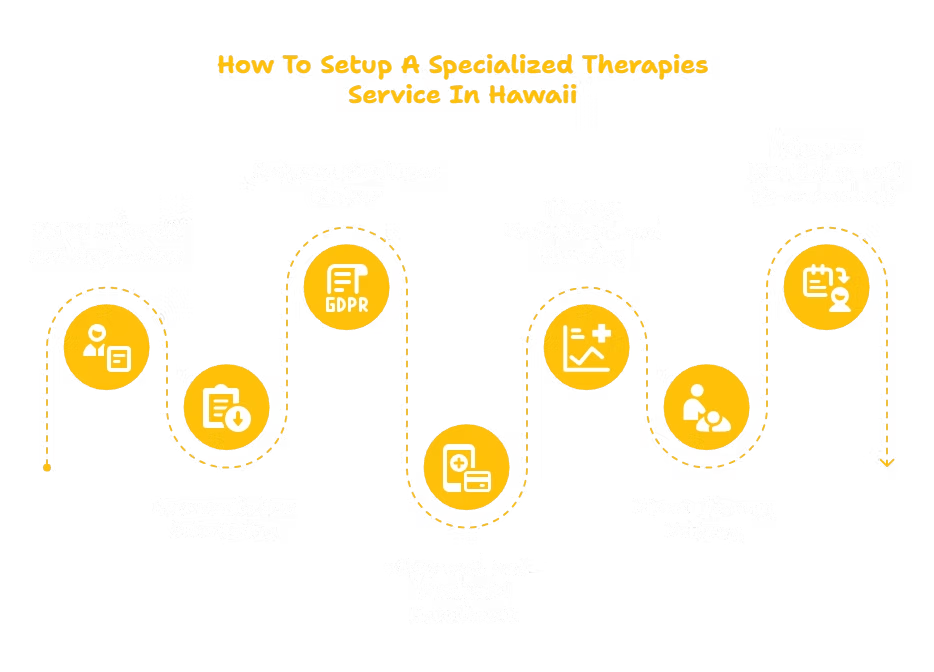
The path to becoming an approved provider involves a systematic progression from application to program readiness. Initially, the applicant must submit a provider enrollment application specifically tailored to Hawaii’s HCBS waiver services. This involves declaring the specific therapy disciplines offered and the geographic service areas covered. Following the submission of foundational documents—such as Articles of Incorporation, staff credentials, and insurance certificates—the provider undergoes a readiness review.
During the program readiness review, DHS and DOH evaluate the provider’s operational systems, including how therapy plans are developed, how progress is documented, and how emergency situations are managed. This stage is crucial for ensuring that the agency can maintain clinical documentation that meets Medicaid audit standards. Upon successful completion of the review, the provider is formally enrolled and may begin the process of configuring billing codes for the specific services authorized under the DD/ID or CCS waiver programs.
What Are the Staffing and Training Mandates for Clinical Providers?
Staffing requirements are dictated by the need for qualified, licensed professionals capable of providing high-quality care. Clinical Supervisors or Lead Therapists are expected to hold an active Hawaii license in their respective discipline, with documented supervisory experience. Similarly, all therapists and therapy assistants (such as COTAs or PTAs) must maintain current, valid licensure and undergo mandatory background screening clearances before having direct contact with participants.
Ongoing professional development is a pillar of the Specialized Therapies service delivery model. Agencies are responsible for ensuring that all staff receive consistent training in HIPAA confidentiality, participant rights, and emergency response protocols. Furthermore, agencies must conduct annual competency evaluations and provide refreshers on Medicaid-specific documentation requirements to ensure that the clinical services provided remain compliant with evolving regulatory standards.
Frequently Asked Questions
What waivers currently authorize Specialized Therapies in Hawaii?
Specialized Therapies are primarily authorized under the Hawaii Developmental Disabilities/Intellectual Disabilities (DD/ID) Waiver. Additionally, the Community Care Services (CCS) program may authorize specific therapies for individuals with chronic health conditions, provided they are included in the participant's Individualized Service Plan.
What is the typical timeline for launching a Specialized Therapies practice?
The total timeline varies based on operational readiness, typically spanning from 4 to 8 months. Business formation takes roughly 1–2 weeks, while the Med-QUEST application and readiness review process often requires 60–90 days. Staffing and systems setup usually add another 30–60 days before the agency is fully operational for billing.
Are therapy assistants allowed to provide direct services?
Yes, therapy assistants (such as PTAs or COTAs) may provide services under the supervision of a licensed professional. All such staff must hold the appropriate state-mandated certification or licensure and must clear background screenings before participating in direct service delivery.
Key Takeaway
Successful entry into the Hawaii specialized therapy provider market requires meticulous alignment between business administration and clinical compliance. By establishing rigorous documentation systems, securing qualified personnel, and adhering to the specific directives of the Med-QUEST and DOH-DDD divisions, providers can effectively contribute to the critical HCBS support network while maintaining long-term Medicaid eligibility.
Last verified August 2024. This content is provided for informational purposes only and does not constitute legal or professional advice. Always consult directly with the Hawaii Department of Human Services (DHS) Med-QUEST Division or the Department of Health (DOH) Developmental Disabilities Division for the most current regulatory requirements and policy updates.