SPECIALIZED MEDICAL EQUIPMENT SERVICES PROVIDER IN OREGON
By Fatumata Kaba · 2025-10-06 · 5 min read
Specialized Medical Equipment (SME) services in Oregon are vital Medicaid-funded supports designed to provide individuals with disabilities or chronic health conditions the essential tools required to maintain independence, safety, and health within their home and community. By facilitating access to custom mobility aids, environmental modifications, and communication devices, these services serve as a bridge between institutional care and community-based living for Oregon Health Plan (OHP) beneficiaries.
For provider agency founders, successfully navigating the Oregon Medicaid landscape requires a deep understanding of the regulatory requirements set forth by the Oregon Health Authority (OHA), the Oregon Department of Human Services (ODHS), and federal standards under the Centers for Medicare & Medicaid Services (CMS). This guide outlines the essential steps for establishing, operating, and maintaining compliance as an SME provider within Oregon’s diverse Medicaid waiver ecosystem.
Understanding the Governance of SME Services in Oregon
The regulatory framework for SME in Oregon is a multi-tiered system involving state and federal oversight. The Oregon Health Authority (OHA) acts as the primary entity responsible for administering the Oregon Health Plan, managing Medicaid provider enrollment, and authorizing funding for medical devices. Simultaneously, the Oregon Department of Human Services (ODHS)—through its Aging and People with Disabilities (APD) and Developmental Disabilities Services (DDS) divisions—coordinates the actual delivery of services at the local level.
Providers must also align with federal guidelines established by CMS, which govern Home and Community-Based Services (HCBS) and the Oregon 1915(k) K Plan. Beyond these primary agencies, business compliance is mandatory. This includes registration with the Oregon Secretary of State and, where necessary, adherence to regulations set by the Oregon Board of Pharmacy for the dispensing of specific medical devices that contain pharmaceutical components. Maintaining a working knowledge of these hierarchies is the first step toward successful enrollment and ongoing operational compliance.
Core Scope of Specialized Medical Equipment Services
SME providers offer a specialized suite of services that go beyond standard medical equipment provision. The objective is to identify and address barriers to independence in the home environment. Approved providers perform comprehensive needs assessments to determine the appropriate equipment for an individual’s specific disability or chronic condition, ensuring the device is correctly selected and customized to meet the beneficiary's physical or environmental requirements.
Beyond procurement, the scope of services is highly hands-on and includes the following essential functions:
- Needs Assessment & Device Selection: Evaluating the home environment and physical needs to recommend the most effective equipment.
- Installation & Training: Ensuring devices are installed safely and that the individual and their caregivers are fully trained in the proper use and care of the equipment.
- Maintenance & Repair: Proactively replacing worn parts and fixing broken devices to ensure continuous service and safety.
- Documentation: Maintaining rigorous service records, delivery receipts, and inventory logs to ensure audit readiness for Medicaid billing.
Licensing and Provider Approval Prerequisites
Entering the Medicaid SME market requires careful preparation of business documentation. The process begins with the establishment of a formal business entity registered with the Oregon Secretary of State, followed by the procurement of a federal Employer Identification Number (EIN) and a Type 2 National Provider Identifier (NPI). These foundational credentials are required for all subsequent applications to the Oregon Medicaid program via the OHP Provider Portal.
Depending on the specific nature of the equipment provided, providers may also need to secure national accreditation from bodies such as CHAP, ACHC, or The Compliance Team. Insurance requirements, including general liability and workers’ compensation, must be active and verifiable. Furthermore, developing a comprehensive Specialized Medical Equipment Services Policy & Procedure Manual is a mandatory step, as this document must detail the operational standards, clinical safeguards, and administrative processes required to maintain Medicaid eligibility.
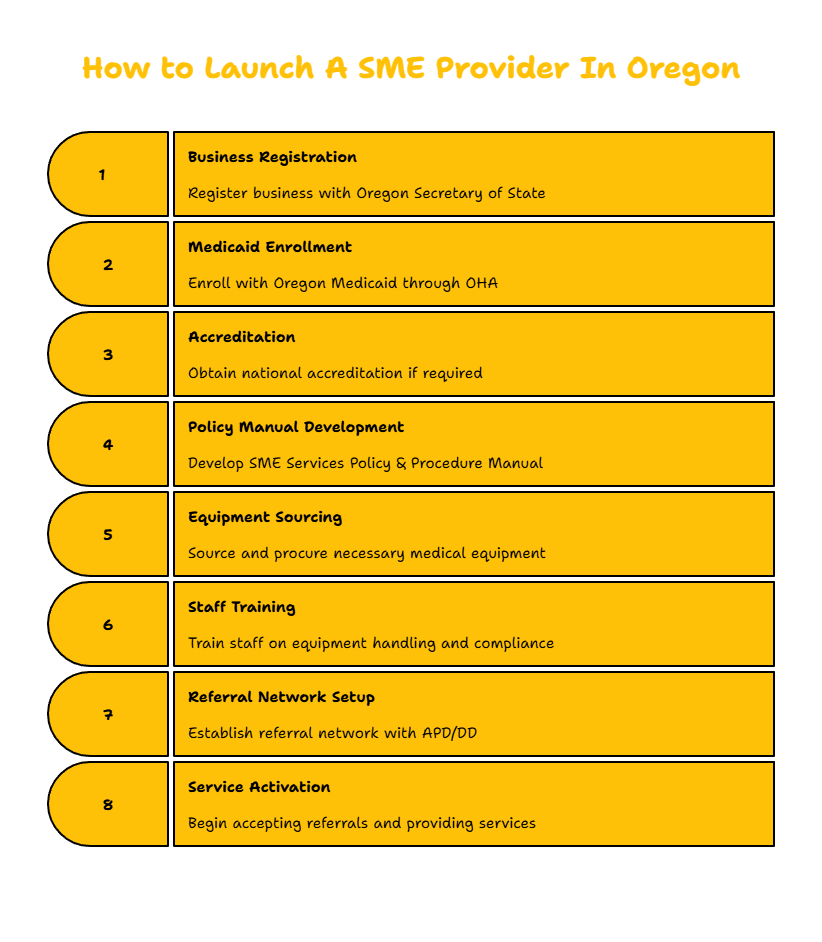
Streamlining the Oregon Provider Enrollment Process
The transition from business formation to active service delivery follows a structured timeline. Initially, the focus remains on registration and securing the necessary permits, such as Board of Pharmacy licensure if the device scope warrants it. Following this, the provider must undergo the formal Medicaid enrollment process through the OHA. It is critical during this phase to ensure that the agency’s internal infrastructure—specifically its documentation and inventory tracking systems—is fully functional.
Once enrolled, the provider moves into the service activation phase. This involves establishing relationships with APD and DD case managers who serve as the primary sources of referrals. A well-prepared agency will have its documentation templates and service protocols finalized well before the first authorization is received, ensuring that the agency can immediately begin meeting the needs of beneficiaries without administrative delays.
Staffing, Training, and Operational Compliance
The quality of SME service is heavily dependent on the competence and reliability of the staff. An equipment technician or delivery specialist must possess the technical skills required for assembly, installation, and maintenance, alongside the soft skills necessary for interacting with vulnerable populations. Program coordinators are tasked with managing the administrative side of the business, including vendor relations, scheduling, and billing accuracy.
Staff must be systematically trained to ensure high standards of care and compliance. Required training modules include:
- Regulatory Compliance: Thorough education on HIPAA privacy standards and participant rights.
- Technical Competency: Training in equipment-specific handling, infection control, and safety protocols.
- Documentation: Consistent instruction on maintaining Medicaid-compliant service logs and billing records.
- Performance Monitoring: Implementing annual performance and protocol reviews to ensure all staff operate within the defined company policies.
Frequently Asked Questions
What is the difference between the K Plan and standard DME benefits?
The K Plan (1915(k)) is designed to provide home and community-based services that support Activities of Daily Living (ADLs) and Instrumental Activities of Daily Living (IADLs), often offering more flexibility for specialized equipment that promotes independence. The State Plan DME benefit typically covers standard medical equipment such as hospital beds and wheelchairs under traditional Medicaid, subject to specific prior authorization requirements.
Is national accreditation mandatory for all SME providers in Oregon?
While accreditation requirements can vary based on the specific services and equipment provided, many Medicaid programs and managed care organizations require national accreditation from bodies like CHAP, ACHC, or The Compliance Team to verify that the provider meets rigorous quality and safety standards. Always verify the specific requirements associated with your provider enrollment category through the OHA.
How does the agency document equipment repairs for Medicaid billing?
Documentation must include detailed records of the initial assessment, the service performed, the parts replaced, and a signed verification of completion by the beneficiary or their authorized representative. Providers must utilize standardized billing templates that clearly link the service provided to the specific authorization received from the APD/DD case manager to ensure claims are processed without exception.
Key Takeaway
Becoming an approved Specialized Medical Equipment provider in Oregon requires a rigorous commitment to both administrative compliance and the delivery of high-quality, person-centered support. By mastering the enrollment process, maintaining meticulous documentation, and fostering strong professional relationships with state case managers, providers can build a sustainable, high-impact agency that empowers Medicaid beneficiaries to live more independently in their own homes.
Last verified: October 2023. This content is provided for informational purposes only and does not constitute legal or professional advice. Always verify requirements with the Oregon Health Authority (OHA) and other relevant governing agencies before initiating business activities.