SPECIALIZED EQUIPMENT AND SUPPLY SERVICES PROVIDER IN MINNESOTA
By Fatumata Kaba · 2025-07-26 · 5 min read
Specialized Equipment and Supply Services in Minnesota empower individuals with disabilities and chronic health conditions by providing the essential medical tools, mobility devices, and assistive technologies required to live independently in their own homes. By integrating these services into Home and Community-Based Services (HCBS) waivers, Minnesota ensures that qualified providers can deliver life-enhancing equipment and ongoing maintenance, directly contributing to improved safety and quality of life for program participants.
Understanding the Regulatory Landscape and Oversight Agencies
Navigating the regulatory framework for specialized equipment in Minnesota requires coordination between multiple state and federal entities. The Minnesota Department of Human Services (DHS) serves as the primary authority, overseeing the funding and delivery of services under the state’s Medicaid HCBS waiver programs. Their role is to ensure that all equipment provided aligns with the specific needs identified in an individual’s Person-Centered Plan (PCP).
In addition to the DHS, the Minnesota Department of Health (MDH) maintains rigorous oversight regarding the quality and safety of durable medical equipment (DME). Providers must remain compliant with both state health regulations and the overarching federal mandates set forth by the Centers for Medicare & Medicaid Services (CMS). This tripartite structure ensures that every piece of equipment, from simple medical supplies to complex smart home technology, meets stringent safety and efficacy standards before reaching the participant.
The Scope of Specialized Equipment and Supply Services
Service delivery under the Minnesota HCBS waiver program is comprehensive and highly tailored to the individual. Providers are responsible for more than just the supply of goods; they are often tasked with the installation, calibration, and long-term maintenance of technical systems. This ensures that the equipment remains functional and safe throughout the duration of the participant's use.
The scope of services typically encompasses four main categories: Durable Medical Equipment (DME) such as hospital beds and wheelchairs; Assistive Technology including communication devices and adaptive switches; essential Medical Supplies such as wound care and nutritional items; and Environmental Modifications like ramps or handrails. Beyond the delivery of these items, providers are expected to offer thorough training to both the individual and their caregivers to ensure the technology is utilized correctly and effectively.
- Durable Medical Equipment: wheelchairs, hospital beds, walkers, lifts
- Assistive Technology: communication devices, adaptive switches, smart home systems
- Medical Supplies: incontinence products, wound care items, nutritional supplements
- Environmental modifications: ramps, handrails, adaptive bathroom equipment
- Comprehensive installation, ongoing maintenance, and equipment repair
- Training for individuals and caregivers on proper usage and safety
Essential Requirements for Medicaid Provider Enrollment
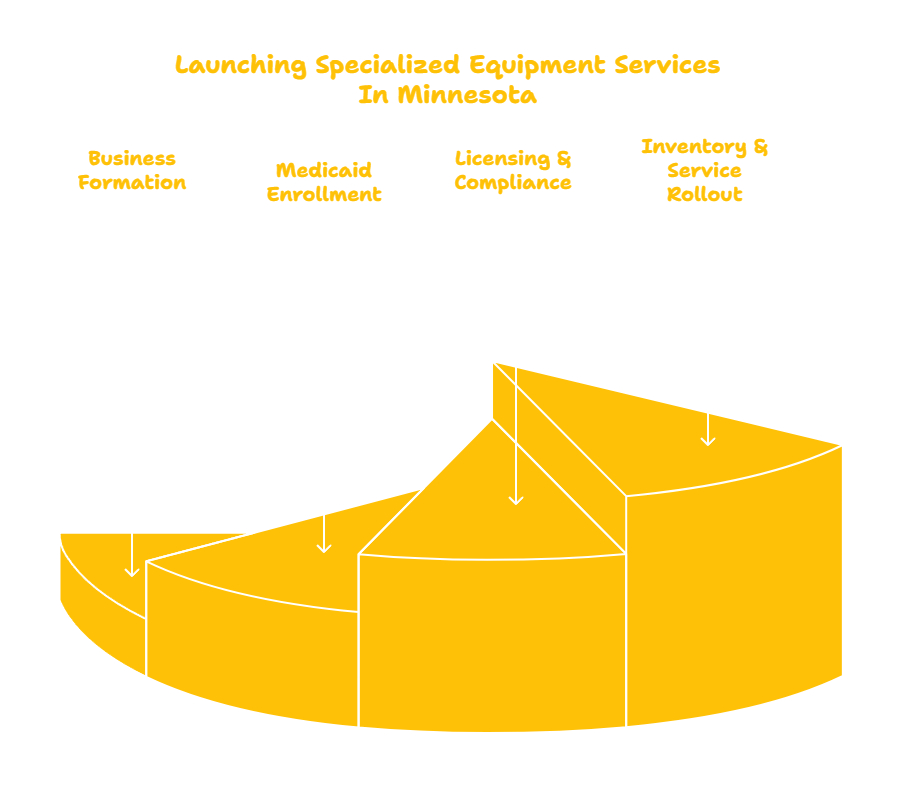
Launching a specialized equipment and supply agency requires a systematic approach to business formation and regulatory compliance. Before engaging with the Medicaid enrollment process, entrepreneurs must register their business with the Minnesota Secretary of State and secure a federal Employer Identification Number (EIN). A Type 2 National Provider Identifier (NPI) is also mandatory for organizational entities providing medical services.
The enrollment process begins with a formal inquiry to the Minnesota Department of Human Services to confirm specific equipment provider requirements based on the intended service area. Following this, the provider must compile and submit a comprehensive application package that includes licensing documentation, liability insurance, and detailed service protocols. Once submitted, the agency undergoes a compliance review to ensure the business model meets the safety and service delivery standards required by the state before receiving a Medicaid provider number.
Documentation Standards and Operational Policies
A successful provider agency must maintain meticulous documentation to ensure audit readiness and operational excellence. Beyond standard business formation documents, providers must develop a robust policy and procedure manual. This manual should cover the entire lifecycle of the equipment, from initial sourcing and quality control during inventory management to delivery, setup, and post-installation support.
Documentation protocols are particularly critical for billing and verification purposes. Agencies must maintain clear records of product assessments, user training, and follow-up support calls. This evidence-based approach is essential for demonstrating that the equipment provided satisfies the requirements of the individual's service plan, as well as meeting the documentation demands of the state’s auditing entities.
- Articles of Incorporation or Business Name Registration
- IRS EIN Letter and Type 2 NPI confirmation
- DME License or Health Equipment Supplier Certification
- Comprehensive liability insurance certificate
- Standardized procedures for product sourcing, inventory, and safety checks
- Formalized training guides for clients and caregivers
Staffing, Training, and Professional Competency
Effective service delivery relies on a qualified workforce trained in both technical operation and the nuances of working within an HCBS framework. An Equipment Services Coordinator is typically required to oversee logistics and ensure that the equipment selected matches the specific clinical or mobility needs of the client. This role requires a strong understanding of DME and healthcare technology standards.
Delivery technicians and support specialists represent the face of the agency. These professionals must have a high school diploma or equivalent, possess a clean driving record, and undergo mandatory background checks. Training programs should prioritize equipment safety, sanitation, infection control, and emergency procedures. Because providers often enter private homes, staff must also be trained in client communication and the maintenance of privacy and dignity during the installation process.
Frequently Asked Questions
What types of Minnesota HCBS waivers cover these services?
Specialized Equipment and Supply Services are primarily accessed through the 1915(c) HCBS waiver programs, including the Elderly and Disabled Waiver, the Community Access for Disability Inclusion (CADI) Waiver, and the Brain Injury (BI) Waiver.
How long does the provider enrollment process typically take?
While timelines vary based on application accuracy and current agency volume, the Medicaid provider enrollment process generally ranges from 60 to 90 days, with an additional 30 to 45 days often required for licensing and state compliance reviews.
Are providers responsible for repairing equipment?
Yes, approved providers are typically responsible for the ongoing maintenance, repair, and safety checks of the equipment they supply. This ensures that the tools provided continue to meet the safety needs defined in the individual's service plan.
Key Takeaway
Establishing a specialized equipment and supply service in Minnesota is a regulated process that demands rigorous attention to both administrative detail and client safety. By securing the appropriate licenses, maintaining comprehensive policy manuals, and ensuring staff are well-trained in equipment management, providers can successfully deliver the essential tools that support independence for Minnesotans receiving HCBS waiver services.
Last verified: September 2023. Disclaimer: This information is for educational purposes only and does not constitute legal or professional consulting advice. State regulations, waiver requirements, and administrative policies are subject to change. Consult the official Minnesota Department of Human Services (DHS) and Minnesota Department of Health (MDH) resources for the most current guidance on provider enrollment and program compliance.